
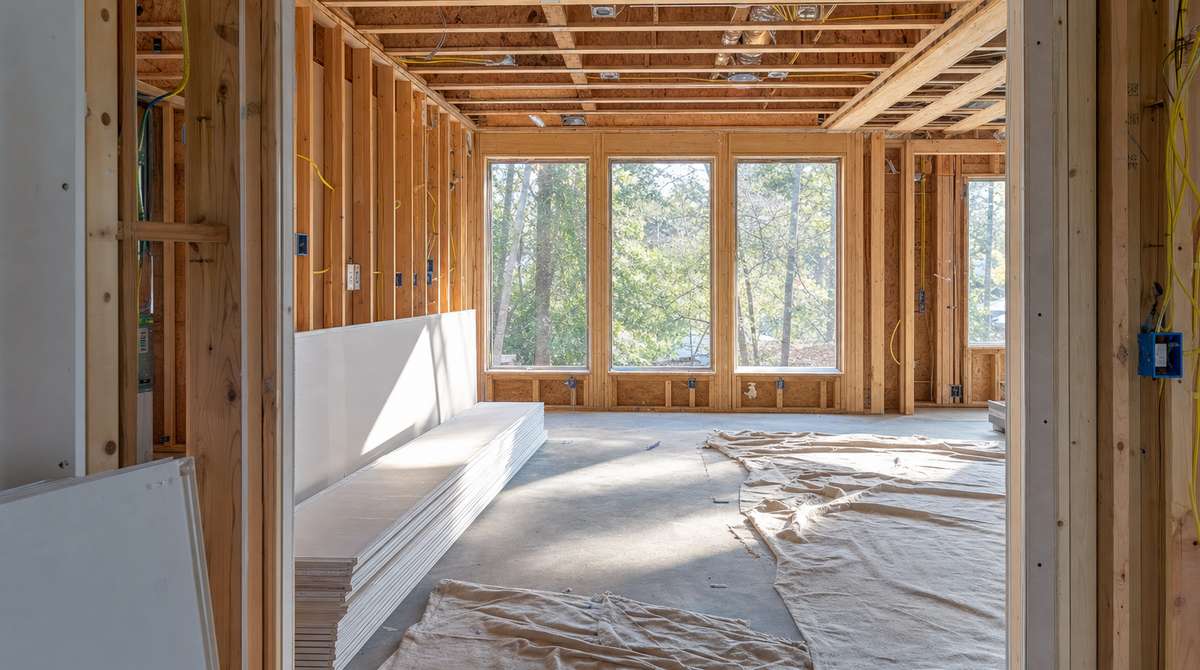
A realistic home renovation timeline in Charlotte, NC for a 6-month studs-out remodel breaks the work into 26 working weeks across six phases. The home renovation timeline below is built around pre-construction, demo, framing and structural, mechanical rough-in, drywall and finishes, and punch list. We run this sequence on every home renovation timeline across the Charlotte metro and York County, SC, and the variable that wrecks most schedules is not construction itself — it is how long inspections sit in queue with Mecklenburg County or York County before a trade can move forward.
Below is the week-by-week home renovation timeline we hand clients on contract day, including the 2026 permit and inspection waits, the trades locked in each week, and the slip points that cause most delays.
Weeks 1 to 4: Pre-Construction Lockdown
Pre-construction is technically before the 26-week construction calendar starts, but it owns the home renovation timeline. We typically run 4 to 8 weeks of pre-construction on a whole home renovation; for the 6-month timeline below we are assuming the client has already completed a thorough project feasibility analysis and the design is at scope-freeze.
During this phase we finalize permit drawings, submit to the AHJ (Mecklenburg County or York County, SC), order long-lead materials, and lock the trade schedule. Cabinets and windows are the two items that usually drive this phase — cabinets are running 10 to 16 weeks lead time and wood-clad windows are 12 to 22 weeks as of early 2026. If we wait to order until demo day we have already lost the timeline.
What happens in pre-construction
- Permit submission to Mecklenburg County or York County, SC
- Cabinet, window, and tile orders placed against locked selections
- Trade partners scheduled with start dates against the construction calendar
- Existing furniture and contents moved or staged
- Temporary kitchen, dust containment, and dumpster placement planned
Permit timelines vary. Mecklenburg County is currently running 3 to 6 weeks for a residential building permit on a renovation that includes structural work. York County, SC residential permits are running 2 to 5 weeks. Permits with stamped engineering attached (load-bearing wall removals, additions) take the longer end of those ranges. Our permit acquisition coordination service runs the AHJ submittals so the construction crew is not waiting on a desk in Charlotte.
- Pre-construction is 4 to 8 weeks before any demo starts
- Mecklenburg County permits run 3 to 6 weeks; York County, SC runs 2 to 5
- Cabinets and windows must be ordered now, not after demo
- Trade partners are locked in with start dates on the construction calendar
Weeks 1 to 3: Demo and Site Protection on the Home Renovation Timeline
Construction week 1 is demo. We set up dust containment with negative-pressure HEPA filtration on whichever side of the home we are tearing into, lay floor protection on any areas we are keeping, drop a 30-yard dumpster, and start tear-out. A 2,500 to 3,500 sq ft home typically takes 8 to 12 working days to fully demo to the studs, including removing existing flooring, cabinets, plumbing fixtures, drywall, and selective framing.
The honest hidden risk during demo is what we find behind the walls. On homes built before 1980 we routinely uncover knob-and-tube wiring, galvanized supply lines, undersized floor joists, asbestos in old vinyl tile mastic, or rotted sill plates from prior water intrusion. Each finding triggers a change order discussion before we move forward. We carry a 10 to 15 percent contingency on whole home whole home renovations specifically for these conditions.
Demo phase deliverables
- HEPA-filtered dust containment installed on adjacent occupied spaces
- Floor and wall protection on areas being preserved
- Selective demo to studs, subfloor, and ceiling joists per plan
- Hazardous material assessment if homeowner is unsure of pre-1980 history
- Site cleaned daily; dumpster swapped as needed
- Demo runs 8 to 12 working days for a typical 2,500 to 3,500 sq ft home
- Hidden conditions on pre-1980 homes hit roughly 70 percent of projects
- Carry 10 to 15 percent contingency for hidden-condition discoveries
- Daily cleaning and dumpster management is part of the line item
Weeks 3 to 7: Framing, Structural, and Window Install
With demo complete we move into structural and framing. This is where load-bearing walls get removed and replaced with engineered LVL beams, new openings get framed, the primary suite gets reframed if the floor plan is changing, and any exterior structural work (header replacements, sister joists, sill plate repairs) gets handled. New windows go in toward the end of this phase so the building is dried in before mechanical rough-in begins.
Structural work on a Charlotte home renovation timeline hits two inspection gates. The framing inspection happens after framing is complete and before we cover anything. The window install does not require an inspection on its own but the framing of the new openings does. Mecklenburg County and York County, SC inspectors are typically scheduling framing inspections within 2 to 5 business days of request. If a framing inspection fails we lose at minimum a week between corrections and re-inspection.
What gets built during framing
- LVL beam installation for any removed load-bearing walls
- New interior partition framing per the design
- Header replacement for new window and door openings
- Sister joists or new floor framing where existing joists are undersized
- Window and exterior door installation, dried-in to weather
- Framing phase runs 4 to 5 weeks on a typical 6-month renovation
- Framing inspections schedule 2 to 5 business days after request
- Failed inspections add a minimum of one week to the calendar
- Windows install at the end so the home is dried in before mechanical
Weeks 7 to 12: Mechanical Rough-In on the Home Renovation Timeline
Mechanical rough-in is the phase where the renovation either holds the schedule or slips badly. Three trades — plumbers, electricians, HVAC contractors — have to sequence cleanly through the open walls and ceilings, each with their own inspection. We schedule plumbing first (because supply and drain lines often need the most space and the longest runs), HVAC second (ductwork and refrigerant lines), and electrical third (the most flexible because Romex can route around what is already there).
Each trade requires a rough-in inspection before insulation goes in. That is three separate inspection requests in this phase, each running 2 to 5 business days. If any inspection fails — common reasons are improper drain slope, missing nail plates on Romex, or undersized HVAC supply lines — the trade has to correct and re-inspect, which usually adds 5 to 8 working days.
Mechanical sequence and inspection order
- Plumbing rough: drain lines, supply lines, vent stacks — then plumbing rough inspection
- HVAC rough: ductwork, refrigerant lines, condensate drains — then mechanical rough inspection
- Electrical rough: panel work, branch circuits, low-voltage — then electrical rough inspection
- All three roughs must pass before insulation installation
- Insulation inspection follows insulation, before drywall
For energy code compliance, the U.S. Department of Energy’s insulation guidance outlines the R-value targets that current code in our climate zone is enforcing. Mecklenburg County is currently enforcing 2021 IECC, which requires R-15 in walls and R-49 in attics on most renovations.
- Mechanical rough-in runs 5 to 6 weeks across all three trades
- Three separate inspections are required before insulation
- Failed roughs typically add 5 to 8 working days each
- Insulation goes in after all three mechanical roughs pass
Weeks 12 to 18: Drywall, Tile, and Cabinetry
With mechanical and insulation behind us, we move into the longest single phase of the renovation: closing up the walls and starting finishes. Drywall hang and finish typically runs 2 to 3 weeks for a level 4 finish across a 2,500 to 3,500 sq ft home, including taping, three coats of mud, sanding, and primer. Painters move in behind drywall to spray prime and apply the first finish coat.
Tile and cabinetry start in parallel with the back end of paint. Bathroom tile is typically the longest single trade in this phase — a primary bath with full-height shower walls, niche, bench, and floor pattern can take 8 to 12 working days for one tile setter. Cabinet installation lands late in this phase because the cabinets need to arrive on site, get unpacked, inspected against the order, and installed before counter templating.
Counters template the day after cabinet install. Quartz and natural stone counters then take 7 to 14 working days to fabricate and install. This is the single most common point where the home renovation timeline in Charlotte slips because counter shops are typically running at capacity. We lock the counter fabricator with a deposit during pre-construction, not at template day, to hold the slot.
- Drywall hang and finish runs 2 to 3 weeks
- Bathroom tile is the longest single trade in finishes
- Cabinets install late in this phase, before counter template
- Counter fabrication takes 7 to 14 working days post-template
- Counter shops booked at capacity — lock the slot during pre-construction
Weeks 18 to 24: Trim, Flooring, and Final Finishes on the Home Renovation Timeline
This phase brings the house back together visually. Hardwood flooring goes in (or refinishes if existing), trim carpentry installs all base, casing, crown, and door packages, painters do final coats and touch-ups, and the three mechanical trades return for trim-out — switches and outlets get devices, plumbers set toilets and faucets, HVAC techs install registers and start up the system. Each trade has a final inspection at the end of trim-out.
The big surprise on most timelines in this phase is the cumulative effect of small punches. A door that does not latch, a tile grout line that is wider than spec, a cabinet door that scrubs the frame — none of them is a real problem on its own, but together they typically generate a punch list of 80 to 200 items by the end of this phase. We run weekly walkthroughs starting at week 20 to surface punches as early as possible.
- Hardwood flooring or refinish runs 1 to 2 weeks
- Trim carpentry runs 2 to 3 weeks across full-house base, casing, and doors
- Mechanical trim-out and final inspections happen in this phase
- Punch list builds to 80 to 200 items by week 24
- Weekly walkthroughs from week 20 catch punches early
Weeks 24 to 26: Punch List, Final Inspection, and Closeout
The final two weeks are punch and closeout. Painters, trim carpenters, and mechanical trades cycle back through to clear the punch list. The final building inspection happens once everything from rough through finish has passed and the home is move-in ready. Once the final passes we receive the certificate of occupancy (or certificate of completion on a renovation that did not require a CO) and hand the keys back.
Closeout includes the warranty walk-through, delivery of all manuals and warranties for installed equipment, final cleaning, and a 60-day warranty visit scheduled out. Our standard warranty is one year on workmanship plus manufacturer warranties on materials and equipment, consistent with what we cover on a renovation contract in our service area. Industry baselines from the National Association of Home Builders’ remodeling industry data back the warranty norms we use.
- Final inspection happens once all punches are closed
- Certificate of occupancy or completion is issued by the AHJ
- Warranty walk-through covers all installed work and equipment
- Standard warranty is one year on workmanship plus material warranties
- 60-day return visit is scheduled at handover
Frequently Asked Questions
How long is the typical home renovation timeline in Charlotte, NC?
A studs-out 2,500 to 3,500 sq ft renovation runs 6 to 7 months of construction plus 4 to 8 weeks of pre-construction. Smaller cosmetic-plus scopes run 4 to 5 months. Studs-out renovations with an addition run 9 to 14 months. These are realistic working ranges as of 2026, not best-case marketing numbers.
What slows down a Charlotte renovation timeline the most?
Three things in order: long-lead materials (cabinets, windows, counters), inspection queues with Mecklenburg County or York County, SC, and hidden conditions discovered during demo on older homes. Owner-driven scope changes are the fourth and add 5 to 12 percent to most timelines.
Can I live in the house during a whole home renovation?
For a true studs-out renovation, no. The mechanical systems are out of service for stretches and dust containment cannot fully isolate a working construction zone from a lived-in space. For phased renovations where one wing stays untouched, sometimes — but plan for at least 4 to 6 weeks of off-site living during peak phases.
How accurate are these renovation timeline estimates?
On frozen-scope projects we close out within 2 to 4 weeks of the contracted timeline on roughly 85 percent of jobs. On projects where scope changes during construction or hidden conditions appear, slippage is typically 4 to 10 weeks beyond original. The single biggest predictor of an on-time renovation is how well pre-construction was run.
Ready to Plan Your Charlotte Home Renovation Timeline
If you are weighing a whole home renovation in Charlotte, NC or York County, SC and want a working timeline tied to your specific scope, we can run a feasibility analysis on your house and produce a week-by-week schedule before you commit to anything. Call us at (704) 619-6293 or reach out through our contact form and we will set up a walkthrough.