
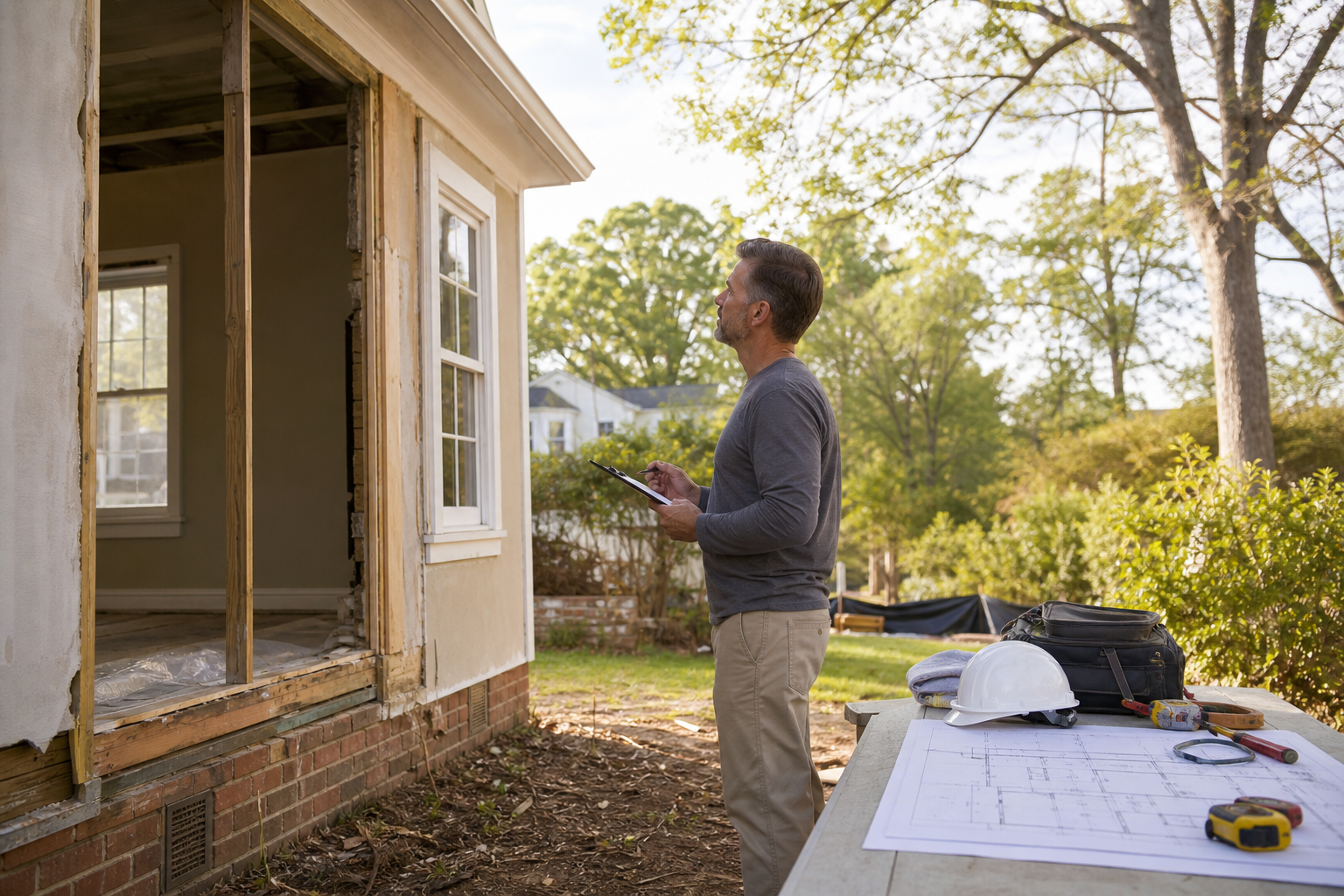
Before any wall, floor, ceiling, or pipe insulation in a pre-1978 home is cut, sanded, drilled, or pulled out, homeowners should treat the material as unknown rather than assuming it is safe. The U.S. Environmental Protection Agency notes that asbestos was widely used in building products through the late 1970s, and materials such as vinyl floor tile, popcorn ceiling texture, pipe wrap, siding, and some plaster and joint compounds may contain it. The practical stop-and-assess framework is simple: do not disturb suspect material, do not guess based on appearance, and route sampling and removal decisions to a qualified professional or laboratory rather than a general contractor's visual opinion.
This article summarizes publicly available EPA guidance on asbestos in residential remodeling and pairs it with general planning steps that Cooper Development Group uses internally when a pre-1978 structure is part of a remodeling scope. It is not a substitute for a site-specific asbestos inspection, a laboratory analysis, or a determination made by the environmental professional or regulatory authority with jurisdiction over the property. Asbestos identification, sampling protocols, and abatement requirements are established by federal, state, and sometimes local rules that can change, so any homeowner beginning a pre-1978 renovation should verify current requirements directly with the EPA, the applicable state environmental or health agency, and a licensed asbestos inspector before any demolition begins.
What the EPA Establishes About Asbestos in Older Homes
The EPA's public guidance, found in Protect Your Family from Exposures to Asbestos and in its remodeling-specific page, is the factual floor for this article. Asbestos was commonly used in the United States in a range of building products until it was significantly reduced after 1978, though some products manufactured after that date may still contain it in smaller amounts. The EPA notes that materials in good, undisturbed condition generally pose less risk than materials that are damaged, deteriorating, or about to be cut, sanded, drilled, or removed during a remodeling project.
The EPA also states plainly that homeowners often cannot tell whether a material contains asbestos just by looking at it. Vinyl floor tile, sheet flooring and adhesives, textured ceiling and wall coatings, pipe and duct insulation, some cement siding and shingles, and certain plasters and joint compounds are all called out as products that may contain asbestos depending on age and manufacturer. Because visual identification is unreliable, the EPA's guidance consistently points toward professional inspection and, where indicated, laboratory sampling before any work that would disturb these materials.
- The EPA identifies deterioration and disturbance, not mere presence, as the primary trigger for increased exposure risk.
- Materials commonly flagged include vinyl flooring products, textured ceilings, pipe insulation, some siding, and certain plasters or compounds.
- Age of the home and product alone cannot confirm asbestos content, which is why the EPA points to professional testing rather than homeowner judgment.
Inputs and Existing Conditions to Document Before Any Work Begins
Before a remodeling plan is finalized, it helps to build a simple record of what is already known about the home. This is not a substitute for professional testing, but it gives the project team and any inspector a starting point and can reduce redundant questions later. A useful record includes the home's approximate construction date, any prior renovation history, and any documentation from past owners about materials that were tested, removed, or left in place.
Homeowners should also document the specific areas the remodeling project intends to touch, since asbestos-containing materials are typically assessed room by room and material by material rather than for the house as a whole. A kitchen remodel that will remove vinyl tile and drywall texture has different inputs than a bathroom project touching only fixtures and paint. Recording these scope boundaries early helps a qualified inspector prioritize sampling in the areas that actually matter for the planned work.
- Approximate year the home or addition was built, since this affects which materials are plausible candidates.
- Any prior remodeling, repair, or demolition records that mention asbestos testing or abatement.
- A room-by-room list of surfaces and materials the current project intends to disturb.
- Visible condition notes, such as cracking, water damage, or prior patching, for materials suspected of containing asbestos.
A Step-by-Step Review for Owners and the Project Team
A source-led framework keeps sampling and removal decisions with qualified professionals while giving homeowners a clear sequence to follow. The first step is always the same regardless of project size: identify every material the renovation will disturb before any tool touches it, and treat unknown materials as suspect until testing says otherwise. This applies to seemingly minor tasks like pulling up a single floor tile as much as it applies to a full gut renovation.
The second step is arranging for a qualified inspector or accredited laboratory to sample suspect materials, following the EPA's guidance that testing should be performed by someone trained to collect samples safely and interpret results correctly. Homeowners should not attempt to collect their own samples from damaged material, since improper sampling can release fibers. Once results are known, the project team can plan the sequence of demolition, protective measures, and any required abatement steps in coordination with the professionals responsible for that work.
- Step one: list every surface and material the project will cut, sand, drill, or remove.
- Step two: engage a qualified inspector or accredited lab for suspect materials rather than guessing from appearance or age.
- Step three: wait for sample results before scheduling demolition in the affected areas.
- Step four: coordinate abatement, disposal, and any required notifications with licensed professionals and the applicable authority.
- Step five: document the outcome so future remodeling phases are not retesting the same material unnecessarily.
Responsibilities, Dependencies, and Hold Points
Clear responsibility helps avoid the confusion that often stalls a pre-1978 remodel. The homeowner is generally responsible for disclosing known history and for authorizing testing before demolition begins. The remodeling contractor is responsible for sequencing work so that suspect materials are not disturbed until testing clears them, and for pausing work if unexpected material is discovered mid-project. The inspector or laboratory is responsible for sampling protocol and result interpretation, and any abatement contractor is responsible for removal methods and disposal that meet applicable requirements.
These responsibilities create natural hold points in a project schedule. A hold point is simply a stage where work should not proceed until a specific input is confirmed, such as sample results or an abatement clearance. Building hold points into the plan from the outset, rather than treating them as unexpected delays, keeps the project on a more predictable path and reduces the chance that a crew disturbs material before it has been cleared.
- Homeowner: disclose known history and authorize testing before demolition starts.
- Contractor: sequence demolition around suspect areas and stop work if new suspect material appears.
- Inspector or laboratory: perform sampling and provide documented results.
- Abatement professional, if needed: handle removal and disposal according to applicable requirements.
- Hold point: no disturbance of suspect material until results or clearance are documented.
Common Coordination Failures in Pre-1978 Remodels
Many of the problems that arise during older-home renovations are not technical failures but coordination failures. A common example is a demolition crew beginning work in one room while testing is still pending in an adjacent space, based on an assumption that the materials are similar enough to skip separate sampling. Another is a homeowner or contractor assuming that because a previous owner mentioned an old abatement project, every material in the home has already been addressed, when in fact only one area was ever tested.
Scheduling pressure is another frequent source of trouble. When a remodeling timeline is set before testing results are back, there is a temptation to start demolition in unaffected areas and hope the suspect material clears in time, which can create confusion about what has and has not been disturbed. Clear written scope boundaries, and a shared understanding among the homeowner, contractor, and inspector about which specific materials have been tested, help prevent these situations from recurring project after project.
- Assuming similar-looking materials in different rooms share the same test result.
- Treating a partial, historical abatement as coverage for the entire home.
- Starting demolition before sample results are confirmed for the affected area.
- Failing to document which specific materials were tested versus assumed safe.
Questions to Bring to the Responsible Authority or Qualified Professional
Homeowners get the most useful answers when they ask specific, scope-based questions rather than general ones. Instead of asking whether an old house has asbestos, it is more productive to ask whether a specific material in a specific room, such as the vinyl tile in a particular hallway or the texture on a particular ceiling, has been tested and what the result showed. This keeps the conversation focused on the areas the remodeling project will actually touch.
It is also worth asking the inspector or laboratory what their sampling method was, since the EPA notes that improper collection can affect reliability. Homeowners should ask a licensed abatement contractor, where one is involved, what removal and disposal method will be used and whether that method is consistent with the requirements of the state or local authority having jurisdiction. Because these requirements can vary and can change, the authority having jurisdiction, not this article, is the source for confirming what applies to a specific address and project scope.
- Has this specific material, in this specific location, been sampled, and what did the result show?
- What sampling method was used, and is the person performing it qualified to do so?
- If abatement is needed, what method will be used and does it meet current state or local requirements?
- Who is the authority having jurisdiction for this property, and how can current requirements be verified directly with them?
Next Step for Homeowners Planning a Pre-1978 Remodel
A pre-1978 remodel benefits from slowing down at the planning stage rather than rushing into demolition. Building a simple record of the home's history, identifying every material the project will disturb, and routing testing decisions to a qualified inspector or laboratory gives the project a much steadier foundation than assuming an older material is fine because it looks intact. This source-led framework does not replace professional judgment, it exists to make sure that professional judgment is brought in at the right point, before rather than after materials are disturbed.
Cooper Development Group's remodeling planning process is built around these same sequencing principles, coordinating with the homeowner and with independent inspection or abatement professionals as needed for a given scope. Homeowners who want to talk through how a pre-1978 renovation might be sequenced can review the remodeling services overview, browse related planning articles on the blog, or set up a consultation to discuss project-specific scope and next steps.
- Start with a written list of materials the remodeling project will disturb, room by room.
- Bring in a qualified inspector or laboratory before demolition, not after.
- Verify current asbestos-related requirements with the EPA and the applicable state or local authority.
- Review /remodeling/ for general planning context, /blog/ for related articles, and /consultation/ to discuss a specific project.
Questions homeowners ask
Can a homeowner tell if a material contains asbestos just by looking at it?
No. The EPA is clear that appearance and even the age of a product are not reliable ways to determine asbestos content. Materials that look identical can have different compositions depending on the manufacturer and production date, so a qualified inspector and laboratory sampling are needed for a reliable answer.
Is it safe to remove a small amount of old flooring or ceiling texture without testing first?
The EPA's guidance emphasizes that disturbance, including cutting, sanding, or removal, is the point at which risk increases if a material contains asbestos. Because small removals still disturb the material, the same stop-and-assess approach applies regardless of project size, and testing before disturbance is the safer sequence.
Who decides whether abatement is required before a remodel proceeds?
That determination depends on sample results from a qualified inspector or laboratory and on the requirements of the state or local authority having jurisdiction over the property. Homeowners and contractors should not make this call independently, since requirements can vary by location and can change over time.
Does Cooper Development Group perform asbestos testing or removal directly?
This article describes a planning framework for coordinating with qualified inspection and abatement professionals as part of a remodeling project. Property-specific testing, sampling, and abatement decisions should be verified with a licensed environmental professional and the applicable authority having jurisdiction, and homeowners can raise scope questions during a consultation.
Plan the next step
Use this article as a planning aid, then confirm project-specific requirements with the responsible authority and qualified professionals. Review CDG's related service, construction articles, or consultation page when you are ready to organize the next decision.
Official sources and verification
- U.S. Environmental Protection Agency: Protect Your Family from Exposures to Asbestos
- U.S. Environmental Protection Agency: Asbestos and Home Remodeling
Authority pages, forms, fees, review steps, and code references can change. Verify the current path for the property and scope before relying on a planning assumption.