
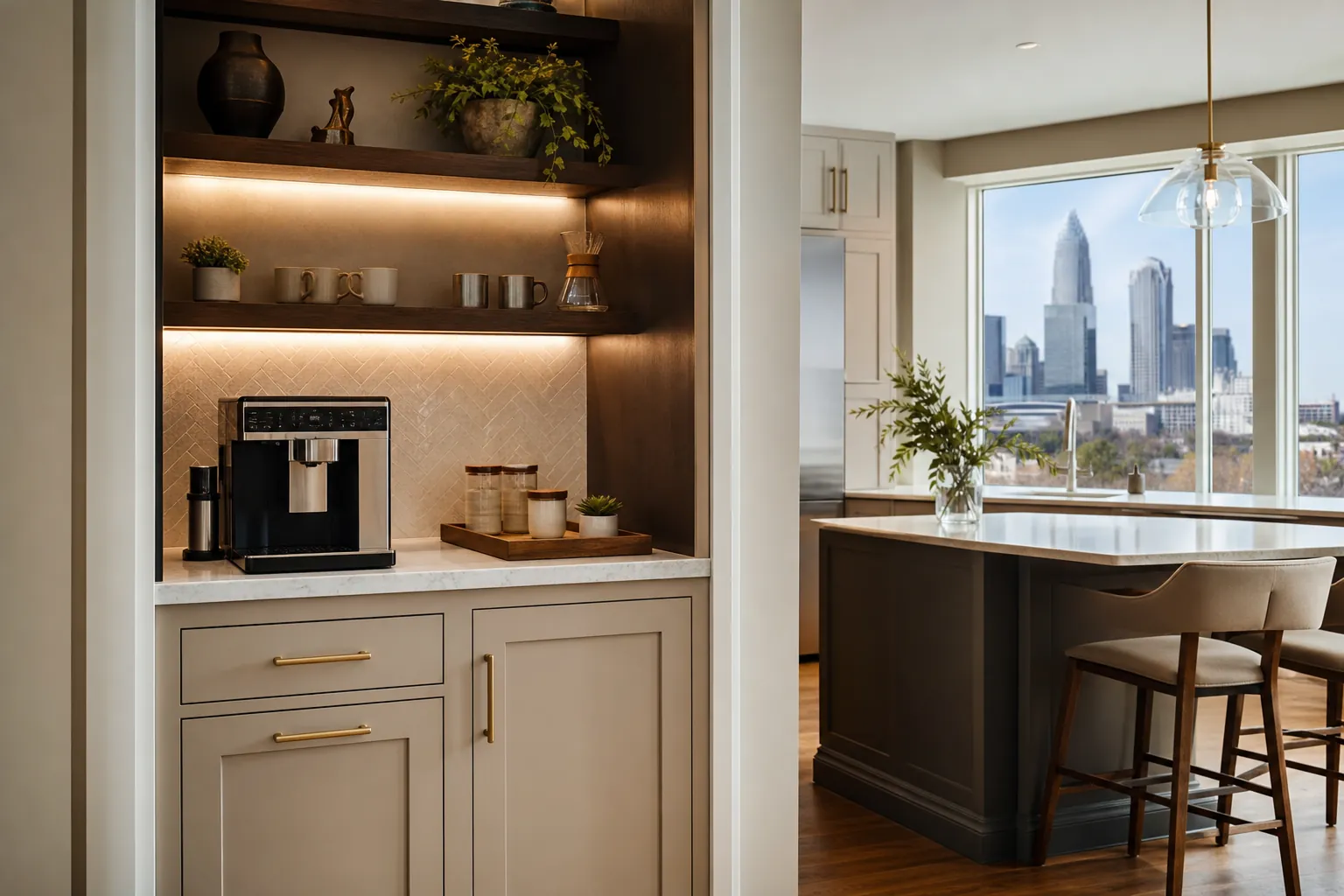
A coffee maker on the kitchen counter is convenient until mugs, beans, filters, and accessories start competing with dinner prep. A built-in coffee station gives those daily essentials a permanent home. Done well, it also makes mornings easier without making the kitchen feel more crowded.
For homeowners considering a built in coffee station in Charlotte, the best starting point is not a cabinet photo. It is a clear picture of how you make coffee, where people move through your home, and what you want to keep visible. CDG Carolinas can help you explore how a custom coffee area could fit into a broader home remodeling plan in North Carolina.
Start With Your Morning Routine, Not A Trend
A useful coffee station should support the way your household already works. Someone who makes one cup before leaving for work needs a different setup from a couple who prepare espresso drinks together. Frequent entertaining adds another consideration: guests should be able to reach cups and supplies without interrupting cooking.
List everything that belongs in the station before choosing cabinetry. Include the brewer, grinder, kettle, mugs, beans, filters, measuring tools, and cleaning supplies. If you use flavored syrups or several brewing methods, include those too. Small accessories can take up more storage than the main appliance.
Think about the full process, from filling the water reservoir to emptying grounds. A beautiful cabinet loses its appeal if every cup requires several trips across the kitchen. The goal is a comfortable sequence with an obvious place for each item.
- Measure your actual coffee equipment, including handles, cords, lids, and removable reservoirs.
- Decide whether appliances should stay on display or disappear behind doors when not in use.
- Count the mugs and glasses you use regularly rather than planning around your entire collection.
- Identify where used cups, spent grounds, and packaging will go after preparation.
- Leave some flexibility for a replacement machine that may have a different footprint.
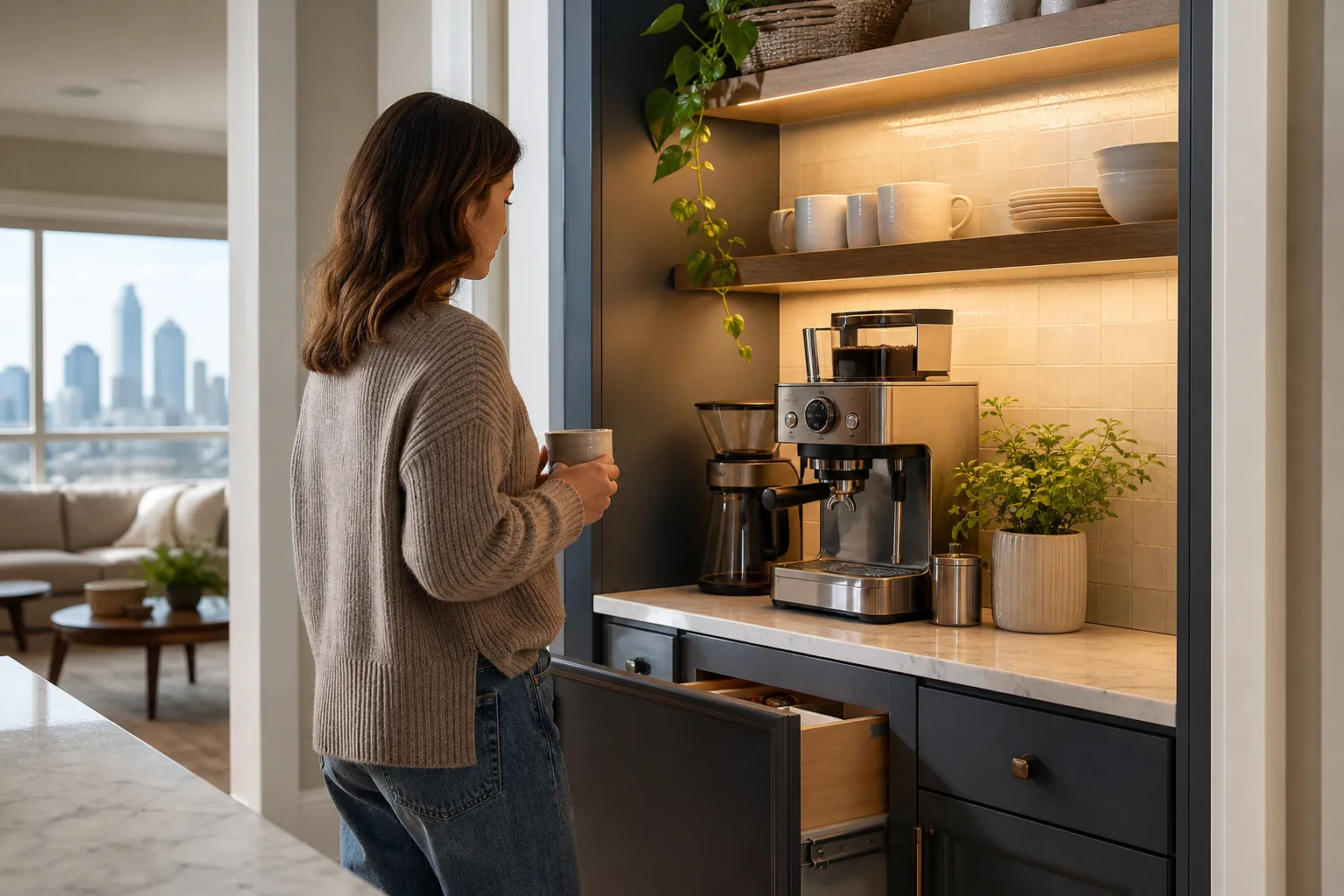
Choose A Location That Reduces Kitchen Congestion
Placement often matters more than the size of the station. A small coffee area in the right location can function better than a large one beside a busy cooking surface. Look for a spot that keeps beverage preparation out of the primary path between the refrigerator, sink, and range.
In some Charlotte homes, the end of a kitchen cabinet run offers a practical location. In others, a breakfast area, adjacent pantry, or underused dining room wall provides more breathing room. Each option has tradeoffs involving storage, utilities, circulation, and how closely the new cabinetry should match the existing kitchen.
Within The Kitchen
A kitchen coffee station keeps water, refrigeration, and cleanup nearby. It can work especially well near the edge of the room, where someone can prepare a drink without standing in the cooking zone. Check that open drawers and cabinet doors will not block an adjacent appliance.
In A Pantry Or Scullery
A pantry station can hide equipment and supplies while keeping the main kitchen visually calm. However, a pantry must provide enough counter depth, lighting, outlets, and room to operate the machine. A narrow storage closet is not automatically a good appliance workspace.
Beside A Breakfast Or Dining Area
A separate beverage area can serve morning coffee and after-dinner drinks. This arrangement may be useful when the kitchen is compact or frequently busy. Consider how far users must travel for water and milk, and whether plumbing or refrigeration would improve the setup enough to justify the added work.
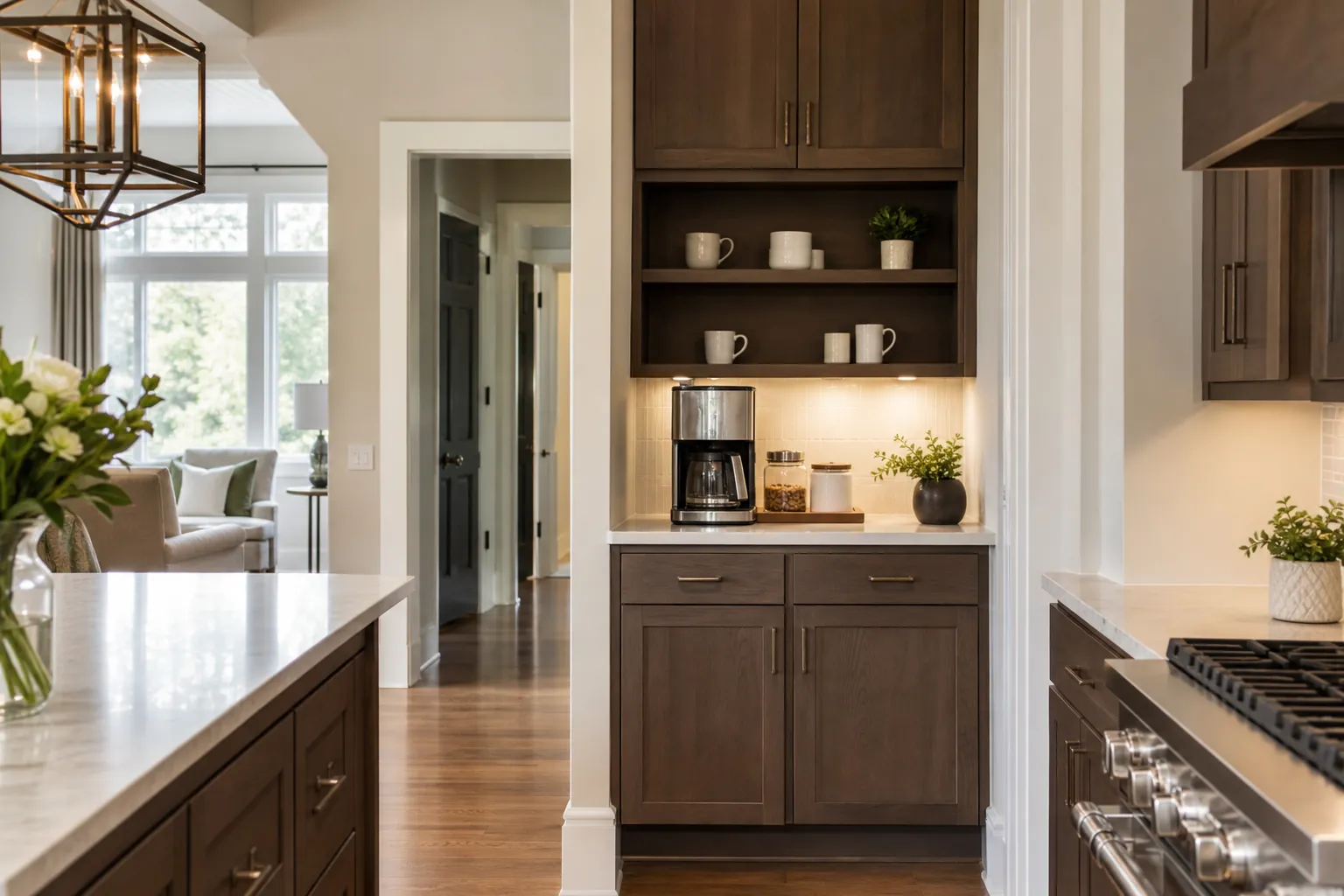
Size The Cabinetry Around The Equipment
There is no single cabinet width that makes every coffee station successful. Start with the equipment footprint, then add room for preparation and maintenance. A brewer may fit on a counter but still be difficult to use if an upper cabinet prevents its lid from opening.
Check the manufacturer's clearance requirements for every appliance. Espresso machines may need room above for warming cups, beside the machine for a steam wand, and in front for removing a drip tray. Grinders need access for adding beans and cleaning. Some brewers release heat and moisture upward during operation.
Counter depth deserves the same attention. Allow space for cords and plugs behind the equipment without pushing it so far forward that the work surface becomes awkward. Leave a usable landing area for a mug, milk pitcher, or bag of beans rather than filling the entire counter with appliances.
If the station will have doors, evaluate it both open and closed. Pocket doors, retractable doors, and appliance-garage doors have different hardware requirements and consume space differently. Confirm that doors can remain safely open during use and that the enclosure follows appliance ventilation instructions.
- Provide enough clearance to remove water tanks and drip trays without relocating the machine.
- Reserve a clear preparation surface next to the primary brewer.
- Choose drawer dimensions that fit the supplies you actually intend to store.
- Check whether cabinet hardware could interfere with appliance handles or door movement.
- Review the layout with all cabinet doors and nearby drawers shown in their open positions.
Plan Electrical And Plumbing Before Finishes
Utility planning should happen early, not after cabinets are ordered. Coffee equipment can place meaningful demands on an electrical system, particularly when a brewer, kettle, and other appliances operate together. An existing outlet does not necessarily mean the location is ready for the proposed setup.
A qualified electrician should evaluate the appliance ratings, available circuits, outlet placement, and applicable protection requirements. Electrical work must meet the North Carolina codes and local requirements that apply to the project. Permit needs should be confirmed with the appropriate Charlotte-area jurisdiction rather than assumed.
Place outlets where they are accessible without creating a tangle of visible cords. Do not rely on extension cords or an improvised power strip as the permanent solution. If outlets will be inside cabinetry, the design needs to account for safe access, ventilation, and the intended appliances.
Plumbing is optional for many coffee stations. A nearby kitchen sink may be sufficient for filling reservoirs and rinsing accessories. A dedicated sink can be useful when the station sits farther from the kitchen or serves several people throughout the day.
A plumbed espresso machine introduces additional requirements. Review water supply, filtration, shutoff access, and any drainage needs with the equipment manufacturer and qualified trades. Connecting an appliance is not simply a matter of adding a water line behind the cabinet.
Before committing to plumbing, compare the everyday benefit with the cost and disruption. Routing supply and drain lines through an existing home can change the project substantially, especially when access is limited.
Select Surfaces That Handle Water, Heat, And Coffee
A coffee station is a working surface, even when it looks like furniture. Water drips, coffee splashes, milk residue, and cleaning products all influence material choices. Select finishes that suit your maintenance habits as well as the surrounding room.
Quartz is often considered for its relatively straightforward care, but it still needs protection from excessive heat and must be maintained according to the manufacturer's instructions. Natural stone can offer distinctive character, although sealing and stain resistance vary by material. Solid surface and laminate may also be worth discussing when budget or design goals point in those directions.
A backsplash protects the wall behind the machine and gives the station a finished appearance. Tile offers many design options, while a matching counter-material backsplash can create a quieter look. Consider grout maintenance, outlet locations, and the height needed to protect the splash zone.
Cabinet finishes should tolerate routine wiping. Highly detailed profiles and open shelving can collect coffee dust and residue more readily than simpler surfaces. That does not rule them out, but it makes cleaning part of the design decision.
Use trays or mats selectively beneath equipment if the appliance manufacturer allows them. They can help manage small drips, but they should not obstruct ventilation, create instability, or hide moisture against cabinetry.
Make Storage Easy To Use Every Day
The best storage arrangement puts frequently used items within comfortable reach. Mugs should not require moving decorative objects, and coffee supplies should not disappear behind rarely used serving pieces. Organize around frequency of use rather than filling every cabinet equally.
Drawers are often useful for filters, scoops, tea bags, and cleaning accessories because their contents are easier to see. Adjustable shelves offer flexibility for taller containers and spare equipment. A cabinet designed around today's supplies should still accommodate reasonable changes later.
Open shelves can keep everyday cups accessible and make a compact station feel lighter. Closed cabinetry keeps packaging out of sight and reduces visual clutter. A combination often works well, especially when the station is visible from a living or dining area.
Store beans according to the roaster's guidance, typically away from unnecessary heat, moisture, and direct light. A cabinet beside a heat-producing appliance may be less suitable than it first appears. Do not assume an attractive clear container is the best long-term storage choice.
- Place daily mugs close to the machine so preparing a drink takes fewer steps.
- Use removable dividers to separate filters, measuring tools, and small accessories.
- Keep cleaning supplies in a designated area separate from food and beverage ingredients.
- Provide a practical spot for recycling and waste if the main kitchen bins are distant.
- Reserve upper or less accessible storage for occasional-use serving pieces.
Use Lighting To Improve Function And Appearance
Room lighting alone may leave the coffee counter in shadow, especially beneath upper cabinets. Task lighting makes it easier to read machine controls, measure ingredients, and notice spills. It also helps a small station feel intentional rather than tucked into a dark corner.
Under-cabinet lighting is one option, but placement matters. The fixture should illuminate the work surface without shining directly into the eyes of someone standing at the machine. A visible backsplash can reflect light differently depending on its finish, so review materials and lighting together.
Choose a light color that works with the surrounding kitchen or dining area. A sharply different color temperature can make the new station feel disconnected from the room. Dimming can be useful when the station doubles as a quiet evening beverage area.
Coordinate switching and wiring before cabinet installation. Integrated lighting is easier to plan when the cabinet layout, outlet locations, and backsplash details are still being developed.
Connect The Station To Your Home's Style
A built-in should look like it belongs, but that does not always mean copying every existing kitchen detail. Matching cabinetry can create continuity. A complementary finish can give the station the appearance of a furniture piece, especially in a breakfast or dining area.
Consider the home as a whole. An older Charlotte house may call for cabinetry proportions and trim that respect existing details. A newer home with an open floor plan may benefit from a restrained design that connects visually with adjacent living spaces.
Before choosing a contrasting cabinet color, compare it with flooring, nearby wood tones, countertops, and wall paint. Small samples viewed separately can be misleading. Reviewing them together under the room's lighting gives a more reliable picture.
Decorative features should not compromise function. Shelves need adequate mug clearance, hardware should be comfortable to grasp, and trim should not interfere with appliance access. A station feels custom when these practical details are resolved, not simply when it has an unusual finish.
Understand What Changes The Remodeling Scope
The scope of a coffee station can range from a focused cabinetry project to a larger kitchen renovation. Cost depends on dimensions, cabinet construction, countertop selection, electrical needs, plumbing access, appliance choices, and how much existing material must be altered.
A dry station using nearby utilities generally involves fewer components than one with a sink, dedicated refrigeration, and a plumbed machine. Custom doors and specialty hardware can also affect both cost and scheduling. No single online price range can capture these differences reliably.
Ask for a clear description of what the proposed work includes. Cabinet installation, backsplash work, painting, electrical changes, plumbing, and repairs to adjacent surfaces should be identified rather than left as assumptions. Clarify whether appliances are homeowner-supplied and when their specifications must be available.
Scheduling also depends on material availability and trade coordination. Finalize appliance selections early enough for accurate cabinet measurements. Changing a machine after cabinetry is built can create avoidable clearance and utility problems.
- Confirm which existing cabinets, walls, or finishes will be removed or modified.
- Ask how permits and inspections will be handled when they are required.
- Review material selections and appliance specifications before approving fabrication.
- Discuss how the work may affect access to the kitchen during construction.
- Request clarity about exclusions and the process for approving scope changes.
Plan Your Charlotte Coffee Station With CDG Carolinas
A successful coffee station combines a comfortable location, properly sized cabinetry, suitable utilities, and finishes that support daily use. The most valuable design choices are often straightforward: a place to set a cup, a drawer that holds your supplies, and enough clearance to clean the machine easily.
Before discussing your project, gather photos of the proposed area, equipment dimensions, and a short list of priorities. Note what frustrates you about your current setup and whether the coffee station is part of a larger kitchen or home renovation. This information helps focus the conversation on practical options.
If you are planning a built-in coffee station in Charlotte or considering how one could fit into your North Carolina home, call CDG Carolinas at (704) 619-6293 to discuss your goals. A thoughtful plan can turn a crowded countertop into an organized space that feels natural to use every day.
Call (704) 619-6293 to talk through next steps.