
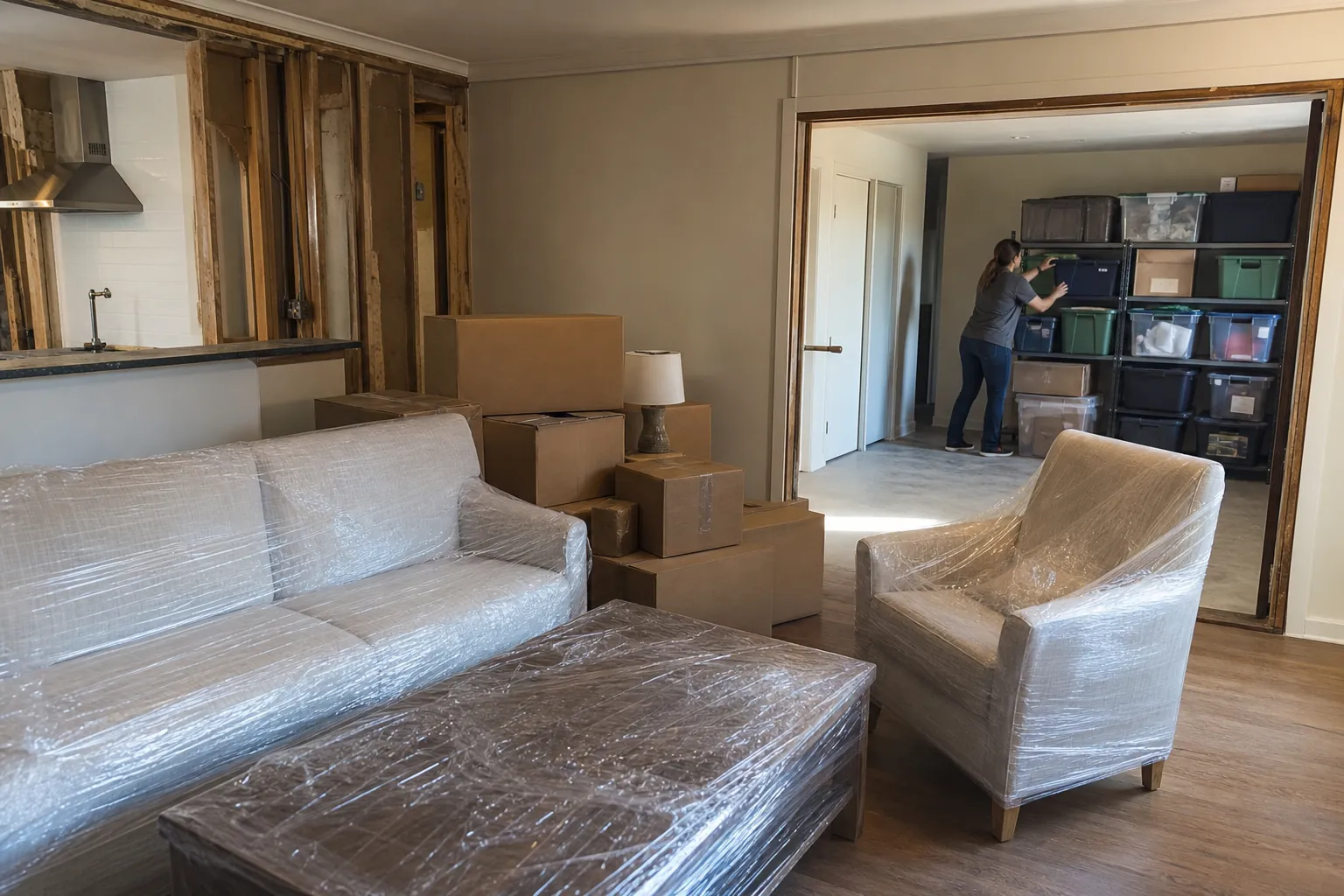
A phased remodel creates a storage question before work begins: where should everyday belongings, displaced furniture, and packed items go at each stage? A useful plan protects what matters, keeps necessities accessible, and prevents stored items from interfering with the next phase. Charlotte homeowners can make that decision by mapping the sequence of spaces, sorting belongings by access needs, and assigning every category a temporary destination.
Start With the Remodel Sequence, Not the Boxes
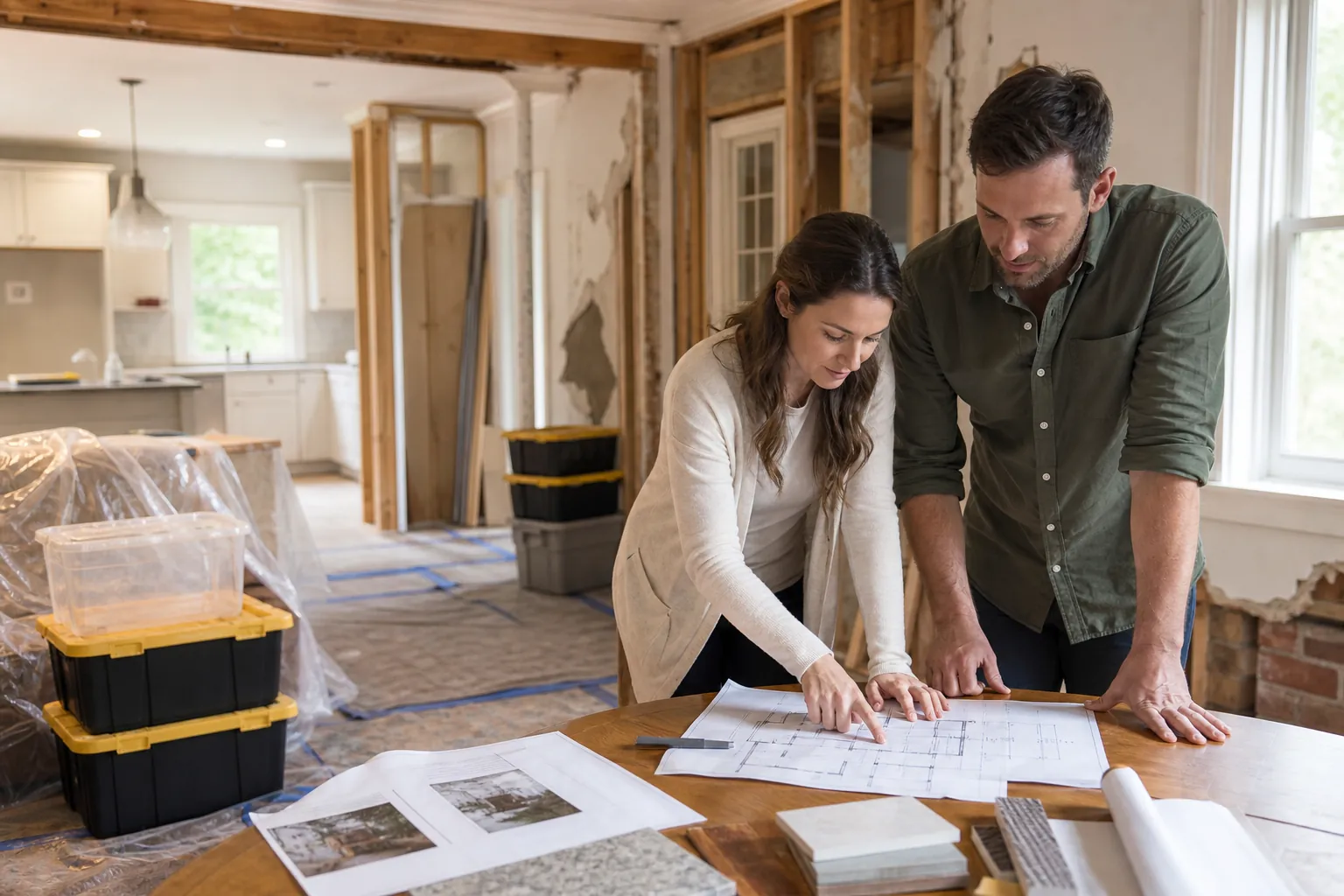
Storage planning should follow the order in which rooms will be addressed. Write down each phase, the spaces affected, and the areas that must remain usable. Then identify any room that appears available now but may be needed later. A guest room, hallway, garage, or spare closet may look like convenient temporary storage, but moving the same boxes repeatedly adds work and makes important items harder to find.
Create a simple floor plan and mark three types of areas: active spaces, protected storage areas, and clear travel paths. Avoid assigning belongings to a room that will soon become part of the work sequence. If an item can remain in one safe location until its original room is ready, that is usually easier than shifting it between phases.
Also consider doors, stairs, and routes through the home. Storage should not narrow the path needed to move materials, furnishings, or household essentials. The goal is a workable plan for the entire sequence, not merely an empty first room.
Sort Belongings by When You Will Need Them
Do not pack solely by room. During a phased remodel, access level is often more useful than original location. Divide belongings into groups based on how soon they will be needed, then choose storage locations that match those needs. Items used every day should stay near the household areas that remain functional. Seasonal or rarely used belongings can go deeper into a designated storage area.
- Daily access: medications, work materials, chargers, basic clothing, toiletries, and frequently used household items.
- Weekly access: backup linens, additional cookware, hobby supplies, and documents that may be needed.
- No access until completion: décor, books, out-of-season clothing, collections, and nonessential furnishings.
- Special handling: fragile, sentimental, valuable, temperature-sensitive, or moisture-sensitive belongings.
Keep the daily group small and deliberate. Too many “essential” boxes recreate the clutter you were trying to remove. Before sealing anything, ask whether it will realistically be used during the relevant phase and whether it can be replaced temporarily by one multipurpose item.

Choose Between On-Site and Off-Site Storage
On-site storage can simplify access, but only when the chosen area stays outside every planned phase and offers enough room to organize items without blocking movement. Off-site storage may be more practical when several rooms are involved, large furnishings must be displaced, or the home has no stable holding area. The right choice depends on the remodel sequence, available space, access frequency, and how many times items would otherwise need to move.
Compare the complete effort rather than focusing only on where items will fit. Consider packing, transportation, retrieval, and the final return. For off-site storage, prepare a detailed inventory and place potentially needed boxes where they can be reached. For on-site storage, leave aisles and keep labels visible rather than turning the area into a tightly packed wall.
A hybrid approach may be useful: keep daily and weekly items accessible at home while moving furniture and long-term boxes elsewhere. Whatever arrangement you choose, decide before packing begins so each item has one intended destination.
Build an Inventory That Supports Every Phase
A clear inventory reduces unnecessary searching and helps belongings return to the right rooms. Give each box a number and record its contents, original room, temporary destination, and expected return phase. Labels such as “miscellaneous” are rarely helpful. Use specific descriptions, such as “hall bath towels and unopened toiletries,” so the contents are understandable without opening the box.
Place labels on more than one side. If boxes are stacked, a top-only label can disappear from view. Consider taking a photo of each box before closing it and another photo showing where numbered boxes are stored. Maintain one list that household members can access and update when an item is removed.
Use the inventory to plan the return process as well. Boxes for an early completed phase should not be buried behind belongings that will remain stored longer. When a box returns to its room, mark it accordingly. This simple step keeps the list accurate and prevents uncertainty about whether an item is stored, unpacked, or misplaced.
Coordinate Storage With Allowances and Decisions
Storage is connected to broader planning. If selections, purchases, or room decisions remain unresolved, belongings may stay packed longer than expected or need to move again. Review each phase before it starts and confirm which items must leave, which can remain, and what needs to return before the next phase begins.
Keep a small transition zone for objects that do not yet have a final destination, but set a limit for that area. An unrestricted holding zone quickly becomes difficult to manage. At the end of each phase, sort it before opening the next room. This creates a regular checkpoint for donating, relocating, or repacking items instead of carrying every decision forward.
Financial planning also affects sequencing and timing. For a related decision-making framework, read bathroom remodel allowance planning in Charlotte. Aligning storage decisions with the phase plan and allowance discussions can clarify what must be available, what can remain packed, and when each room is ready to receive its belongings again.
Discuss Your Phased Remodel Plan
Before moving boxes, document the sequence, access needs, and temporary destinations. To discuss planning for a phased remodel with CDG Carolinas, call (704) 619-6293.
Call (704) 619-6293 to talk through next steps.