
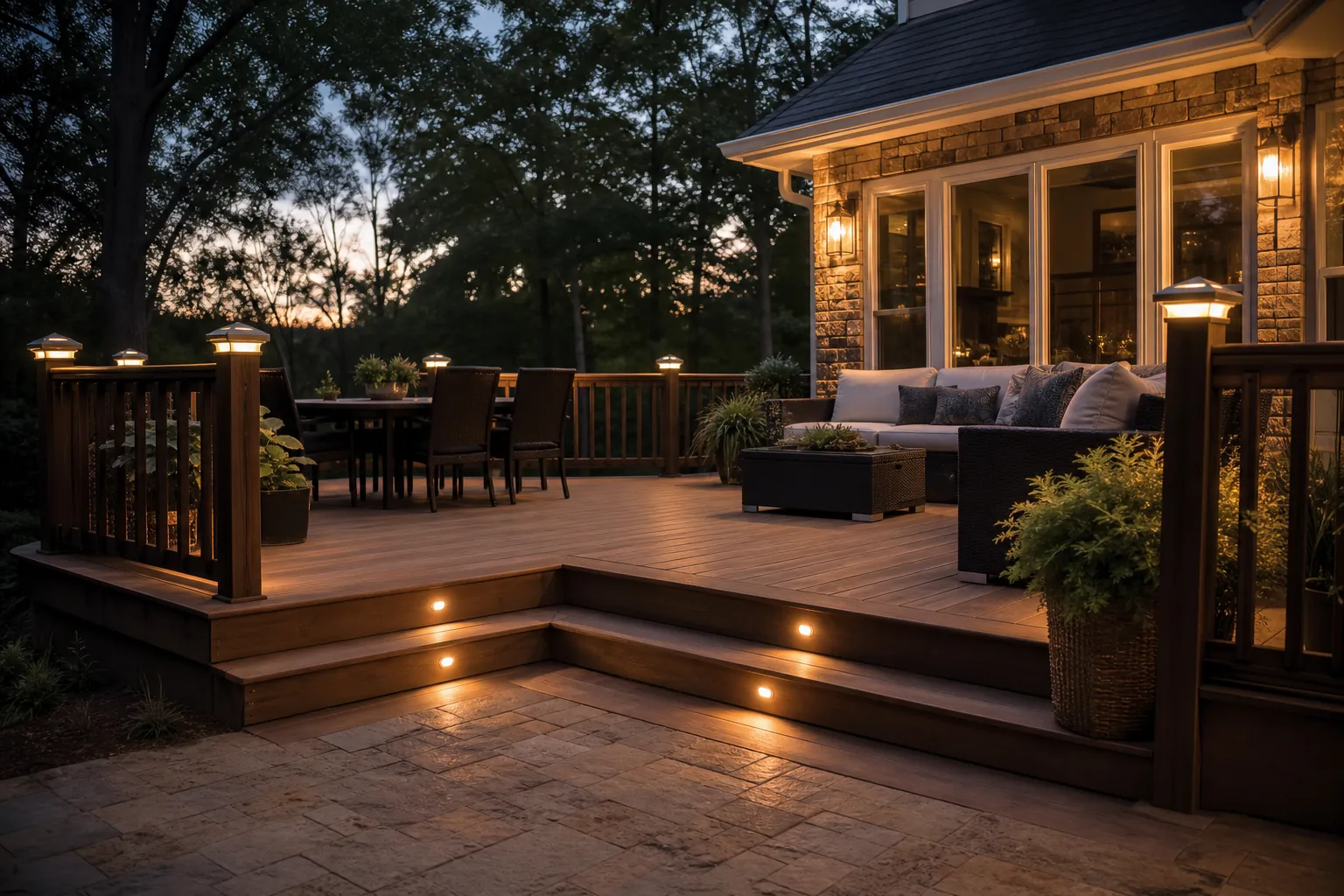
A deck should feel as inviting after sunset as it does on a bright afternoon. The right lighting helps you see stair edges, move comfortably between seating areas, and enjoy dinner without a harsh floodlight overhead. It can also highlight the craftsmanship of a custom deck without turning the backyard into a spotlighted stage.
For homeowners researching deck lighting installation in Charlotte, the best starting point is not a fixture catalog. It is a clear picture of how you use your outdoor space. A quiet reading corner, a busy grilling station, and a deck connecting to a backyard pool each need a different lighting approach.
CDG Carolinas can help you discuss deck lighting as part of a broader custom home remodeling plan. This guide explains what to consider before installation, where lights work best, and how to make choices that remain practical through North Carolina's changing seasons.
Start With How You Use Your Deck
Walk through your deck at dusk before choosing fixtures. Notice where you hesitate, where shadows hide elevation changes, and where you need more light for everyday activities. A lighting plan should solve those problems first, then add atmosphere.
Think about the route from the house to the yard. A well-lit doorway is helpful, but it does not necessarily illuminate the first stair tread or the landing below. Changes in level deserve particular attention because decorative lighting alone may leave important edges difficult to see.
Also consider who uses the space. Children carrying snacks, guests unfamiliar with the layout, and adults navigating steps all benefit from clear, comfortable visibility. Avoid assuming that one powerful fixture will cover every need.
- Identify the walking routes between doors, stairs, seating, and yard access so lighting supports the full journey.
- Mark places where people cook, serve food, or read because those activities need focused illumination.
- Note views from inside the house so bright fixtures do not create distracting glare through windows.
- Consider nearby homes and property boundaries so light stays directed toward your deck.
A simple sketch with furniture, railings, stairs, and doors is often enough to begin a productive conversation. Include any planned changes, such as replacing a railing or adding a covered seating area, before deciding on fixture locations.
Build A Lighting Plan With Three Useful Layers
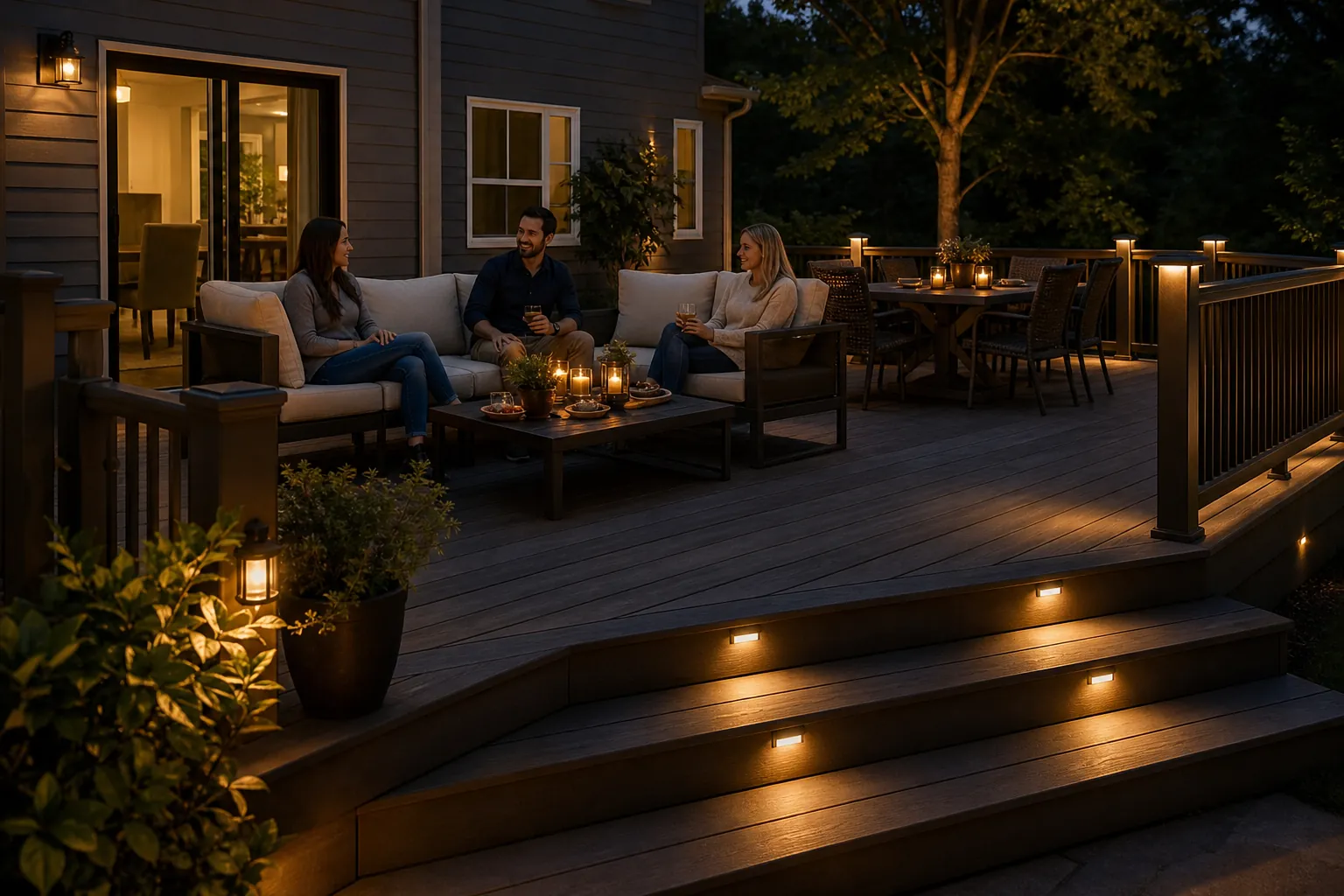
Good deck lighting usually combines movement lighting, task lighting, and ambient lighting. Each layer has a specific job. Together, they create a space that feels usable without requiring every fixture to operate at maximum brightness.
Movement lighting for stairs and transitions
Step lights, carefully positioned railing lights, and lighting at landings help define routes. The goal is to make changes in elevation visible without shining directly into people's eyes. Fixture placement matters as much as brightness.
Depending on the stair construction, lights may fit into risers, beneath tread overhangs, or on adjacent posts. The chosen arrangement should illuminate the walking surface and help people distinguish one tread from the next. A bright light at the top of a staircase can still leave the lower steps in shadow.
Task lighting for cooking and dining
A grill area needs lighting that helps you see food, utensils, and nearby work surfaces. Positioning the light behind the cook may cast a shadow over the grill. A better plan considers where the person stands and how lids, cabinets, or overhead structures affect the beam.
Dining areas benefit from controlled light that makes plates and faces visible. If a pergola or roof is available, overhead fixtures may work well. On an open deck, nearby post or rail lighting can provide softer coverage, supported by portable table lighting when needed.
Ambient lighting for a relaxed setting
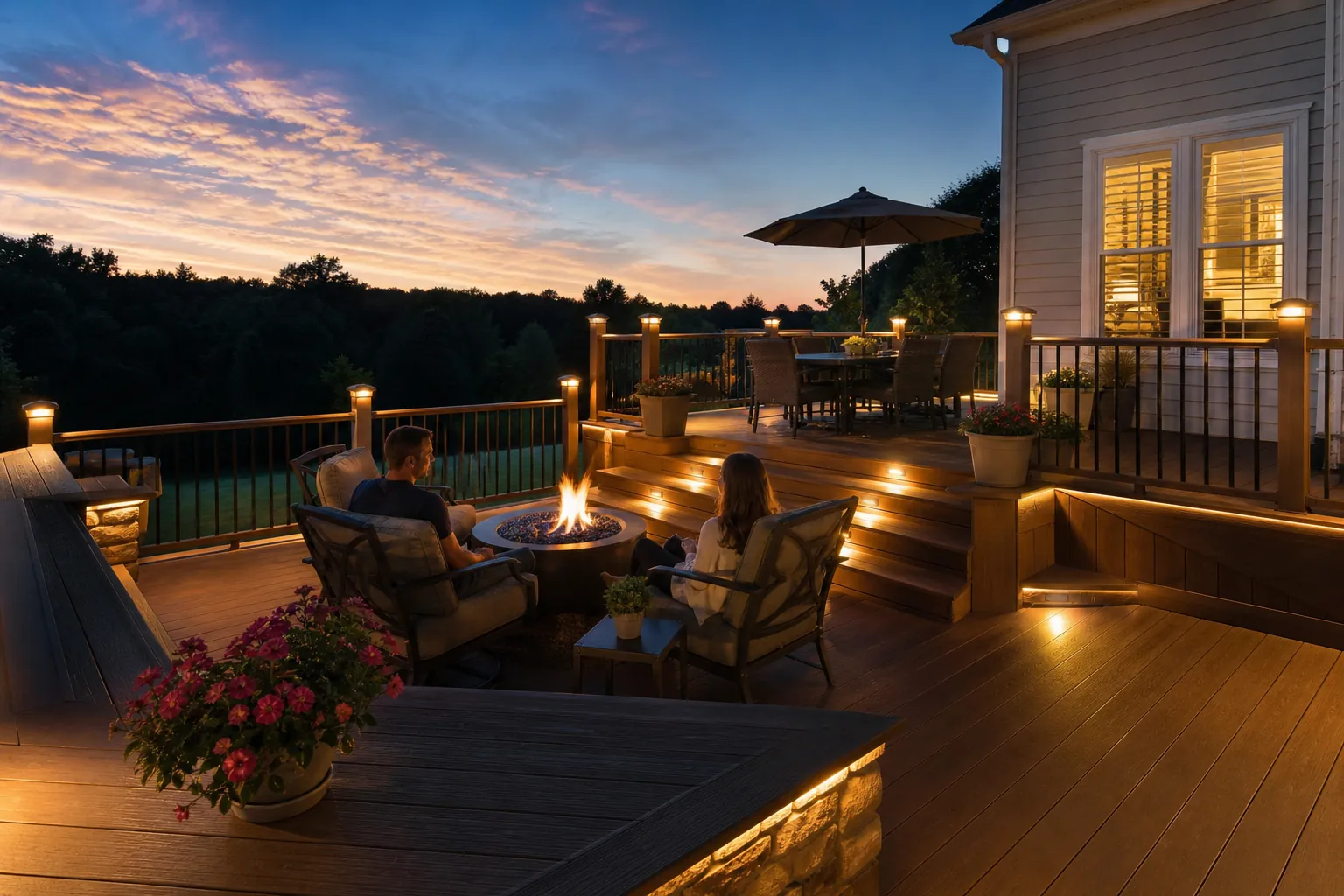
Ambient light ties the space together. Subtle post caps, downward-facing fixtures, or concealed lighting beneath a rail can create a comfortable background. These elements should complement the movement and task layers rather than compete with them.
You do not need to light every board or architectural feature. Leaving some areas dim helps the deck retain depth and preserves views into the yard. A restrained plan often feels more welcoming than a uniformly bright one.
Choose Fixtures That Fit Your Deck's Construction
Fixture selection should reflect both the appearance and the physical structure of the deck. Wood, composite decking, metal railings, and manufactured railing systems offer different mounting opportunities. Before drilling or cutting, check relevant manufacturer instructions and warranty requirements.
Post-cap lights can be attractive when compatible caps exist for the installed posts. However, their light distribution varies. Some primarily create a decorative glow, while others direct useful light downward. Evaluate what the fixture actually illuminates, not just how it looks in a product photo.
Recessed step lights offer a cleaner appearance but require room for the fixture body and wiring. Surface-mounted options may be more practical on an existing deck. Either choice should allow future access for maintenance without unnecessary dismantling.
- Select fixtures rated for their actual outdoor exposure, including rain or splash conditions where applicable.
- Confirm that mounting hardware and finishes are suitable for the deck materials and expected weather exposure.
- Use compatible accessories when installing lights in a manufactured railing system.
- Choose replaceable components when practical so a failed part does not require replacing an entire assembly.
- Check that fixtures will not protrude into walking paths or interfere with hands moving along a railing.
Concealed linear lighting can work beneath rails, benches, or built-in features. It needs appropriate protection, secure attachment, and a location that avoids direct view of individual LEDs. Adhesive alone may not provide dependable long-term support on an exposed outdoor surface.
Balance Brightness, Color, And Glare
More light does not automatically mean better visibility. A bright exposed source can make surrounding areas appear darker and reduce visual comfort. Shielding and beam direction are especially important on decks where people sit close to fixtures.
Warm white light, often around 2700K to 3000K, is a common starting point for residential outdoor spaces. It tends to suit wood tones, brick exteriors, and relaxed seating areas. Personal preference matters, but consistency usually creates a more cohesive result than mixing noticeably different color temperatures.
Brightness should be selected for the task and fixture position. Low-output lights can be effective when located close to stair treads. A cooking area may need more focused output. Compare lumens, beam patterns, and dimming options rather than relying on wattage alone.
Consider how the deck looks from a seated position. A fixture that seems comfortable while you stand may shine directly into your eyes from a lounge chair. Review likely seating positions, including those facing toward railings or neighboring properties.
If possible, evaluate a sample fixture after dark before finalizing a large installation. Even a small test can reveal whether the light is too cool, too concentrated, or too visible. It can also help establish comfortable settings for dimmable zones.
Understand Power, Wiring, And Installation Requirements
Many deck lighting systems use low-voltage power supplied through a transformer. Others include line-voltage fixtures, particularly around covered decks or outdoor kitchens. The right arrangement depends on fixture requirements, existing electrical infrastructure, and the overall scope of work.
Low voltage does not remove the need for careful installation. Cable sizing, circuit length, connections, transformer capacity, and voltage drop all affect performance. An undersized or poorly planned system can produce uneven brightness or unreliable operation.
Power equipment should be accessible for service and installed according to the manufacturer's instructions and applicable electrical requirements. Outdoor receptacles, enclosures, and connections need appropriate protection for their locations. Wiring should not be left loose where it can snag, rub against sharp edges, or interfere with deck maintenance.
For Charlotte-area projects, confirm whether electrical work requires a permit and who will complete any work requiring a licensed electrical professional. Requirements depend on the project and jurisdiction. Do not assume that adding lighting to an existing deck is automatically exempt.
Ask how wiring will reach each fixture and how connections will remain serviceable. A tidy installation should account for appearance, but permanently hiding every connection behind inaccessible construction can create maintenance problems later.
Plan For Charlotte Weather And Everyday Maintenance
Charlotte decks experience humidity, rain, summer heat, and seasonal temperature changes. Lighting components need to suit those conditions, particularly where fixtures sit close to the deck surface or beneath areas that collect water.
Drainage matters. Fixtures and wiring should not block existing drainage paths or create pockets where moisture lingers. On composite decks, installation details should also respect required clearances and ventilation recommendations.
Landscape conditions can change the exposure around a deck. Mulch, soil, or climbing plants may gradually surround a fixture that originally had adequate clearance. Regular inspection helps catch these changes before they affect operation or make access difficult.
- Clean fixture lenses gently using methods recommended by the manufacturer to preserve useful light output.
- Inspect accessible cables and mounting points after major storms or nearby maintenance work.
- Keep leaves and debris away from lights, transformers, and ventilation openings.
- Review timer settings as daylight hours change so lights operate when you actually need them.
- Check stair illumination after moving furniture or adding planters because new objects can create shadows.
Pressure washing deserves special care. A fixture rated for outdoor use is not necessarily designed to withstand a concentrated pressure-washer stream. Protect lighting components and follow product instructions when cleaning the deck.
Use Controls That Match Your Routine
Controls should make the deck easier to use, not add another complicated household system. A basic timer or photocell may be enough for movement lighting. Dimming or separate zones can provide more flexibility for dining and entertaining.
Separating stair lighting from decorative lighting is often useful. You may want stairs illuminated while the rest of the deck remains softly lit. A grill light can also have its own control so cooking does not require turning on every fixture.
Smart controls can offer schedules and remote access, but check outdoor connectivity before relying on them. Wi-Fi coverage at the back of the house may be weaker than expected. Confirm fixture and control compatibility, especially when dimming LEDs.
Think through ordinary situations: returning home after dark, letting a pet outside, hosting dinner, or ending an evening on the deck. Each should have an easy lighting option. Keep a practical manual control available where appropriate rather than depending entirely on a phone.
Coordinate Lighting With A Deck Remodel
If you are rebuilding or significantly remodeling a deck, lighting is easier to plan before construction details are finalized. Wiring routes, blocking for fixtures, and equipment locations can be coordinated with framing, railing installation, and finish work.
This is also the right time to consider how the deck connects with the house. Doorway lighting, nearby windows, exterior outlets, and covered areas influence the overall plan. Treating them as connected elements can prevent conflicting fixture styles or overlapping pools of light.
For an existing deck, begin with its condition. Lighting should not distract from loose railings, deteriorated stairs, or structural concerns. Address necessary repairs first, especially where fixtures will attach or wiring will pass through.
A staged project can still work well. Start with stairs and essential routes, then add task or accent lighting later. Plan capacity and cable routes in advance so future additions do not require undoing finished work.
What To Discuss Before Requesting An Estimate
A useful estimate starts with a defined scope. The number of lights matters, but so do access, wiring distance, power availability, mounting complexity, and whether the project includes deck repairs or remodeling.
A straightforward retrofit is different from integrating lighting into a new railing system or adding electrical infrastructure for a covered outdoor kitchen. Rather than comparing prices by fixture count alone, compare what each proposal includes.
- Describe the deck's size, materials, stairs, and relationship to the house so the layout can be assessed realistically.
- Share which activities need better lighting and which existing lights you intend to keep.
- Ask whether the proposal identifies fixture models, controls, wiring work, and any required electrical coordination.
- Clarify responsibility for permits, inspections, surface repairs, and cleanup where applicable.
- Discuss product warranties, replacement availability, and access for future maintenance.
Photos taken during daylight and after dark can help explain the current conditions. Include views of the stairs, underside of the deck, nearby power sources, and seating areas. A site assessment may still be necessary to verify installation details.
Create A Deck You Enjoy After Dark
The most successful deck lighting installation in Charlotte supports real daily use. It makes steps easier to see, puts useful light where you cook and gather, and adds a comfortable atmosphere without overpowering the backyard.
Start with function, choose fixtures suited to the construction and weather, and coordinate electrical details before installation. Those decisions matter more than adding the largest possible number of lights.
If you are planning deck improvements or a custom home remodeling project in North Carolina, call CDG Carolinas at (704) 619-6293 to discuss your goals. A conversation about your layout, priorities, and existing deck can help establish a sensible next step.
Call (704) 619-6293 to talk through next steps.