
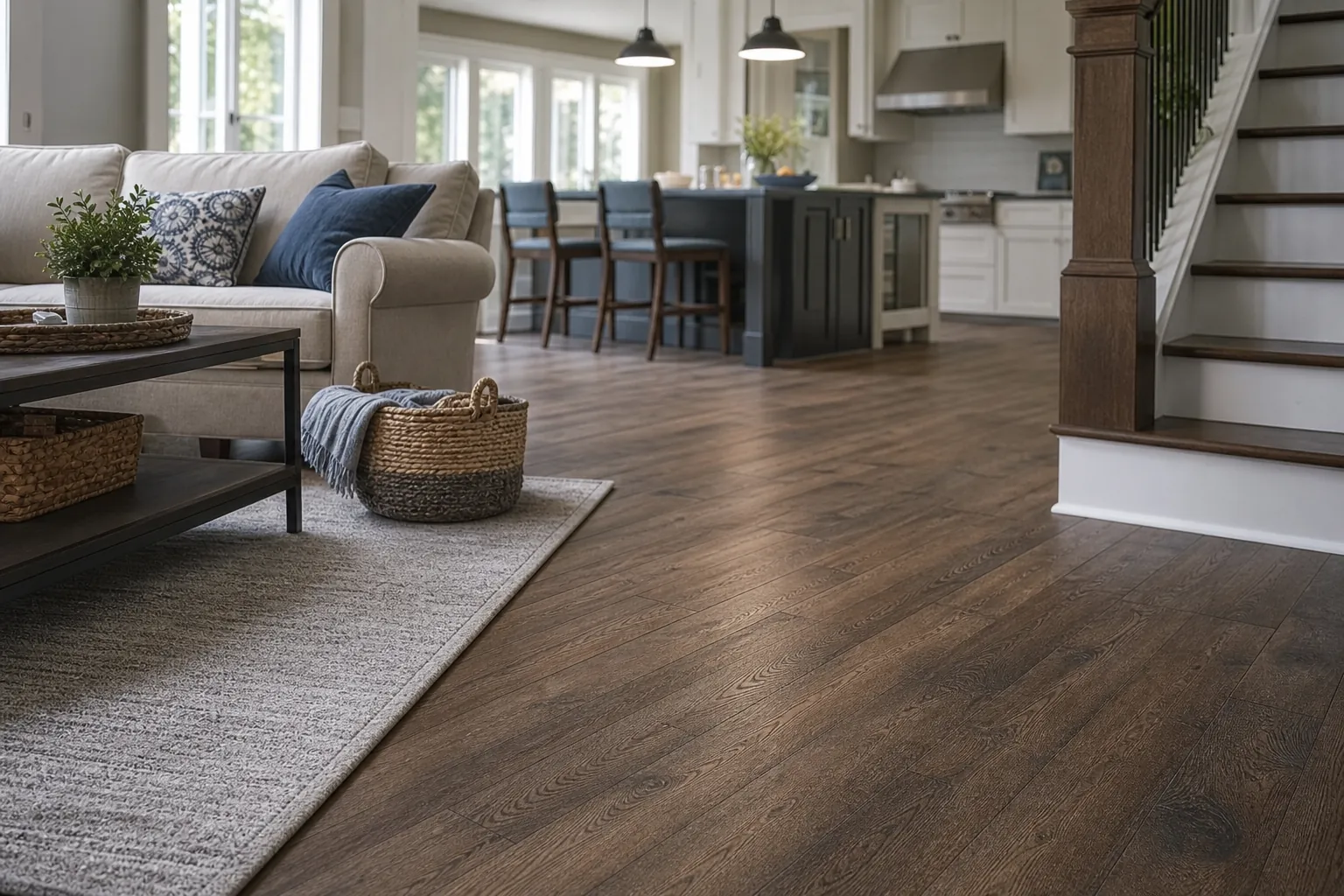
Flooring decisions become easier when you evaluate how each room is actually used. A busy Charlotte home may need to handle frequent foot traffic, tracked-in moisture, pets, children, spills, furniture movement, and changing design preferences. Instead of choosing by appearance alone, define the conditions the floor must withstand, compare materials using the same criteria, and review the full project cost before making a final selection.
Start With Each Room’s Daily Demands
Begin by examining where people enter, gather, cook, work, and move through the home. An entryway experiences different wear than a bedroom, while a kitchen must tolerate spills and frequent cleaning. Bathrooms introduce regular moisture, so their flooring criteria should not simply copy those used in adjoining spaces.
Write down the demands of each room before comparing products. Consider foot traffic, exposure to water, direct sunlight, pet activity, rolling chairs, dropped objects, and the likelihood of scratches. Also note transitions between rooms. If you want a continuous visual flow, confirm that the selected material is appropriate for every space where it will be installed.
Household routines matter as much as room labels. A rarely used dining room and a dining area used for homework, meals, and projects need different priorities. This room-by-room assessment gives you a practical standard for judging samples and helps prevent appearance from outweighing performance.
Compare Durability Using Specific Questions
“Durable” can describe several qualities, including resistance to scratches, dents, stains, fading, moisture, or surface wear. Ask which types of damage are most likely in your household. A floor that performs well against stains may still be vulnerable to scratching, while a hard surface may resist wear but feel less forgiving when objects fall.
When reviewing a flooring option, ask for the product’s care requirements, moisture limitations, wear information, and installation conditions. Determine whether damaged areas can be repaired individually or whether a larger section would need replacement. If the material has a surface layer or finish, understand how that layer affects long-term appearance.
Use physical samples to consider texture, color variation, and how dirt or minor marks may show. Test samples under the lighting found in the intended room, because daylight and artificial light can change their appearance. Keep product details with each sample so visual comparisons do not become disconnected from practical specifications.
Balance Cleaning Needs, Comfort, and Safety
A floor’s upkeep should fit the time and methods your household can realistically maintain. Before selecting a material, learn what routine cleaning involves and whether special products or precautions are required. Consider how easily crumbs, pet hair, mud, and spills can be seen and removed. Highly textured surfaces may add visual interest but can require more attention during cleaning.
Comfort also affects satisfaction. Think about how the surface feels underfoot, whether family members commonly walk barefoot, and how sound travels through active areas. Hardness may be useful in one room but less desirable in another. Rugs can add softness, but they also introduce edges that should be placed thoughtfully.
- Ask what cleaning products and tools are appropriate.
- Check whether water must be removed immediately.
- Consider traction in entries, kitchens, and bathrooms.
- Evaluate surface temperature and underfoot comfort.
- Plan for furniture pads, mats, or area rugs where needed.
These practical details often determine whether a floor remains convenient after its initial appearance is no longer new.
Review Moisture, Subfloor, and Installation Factors
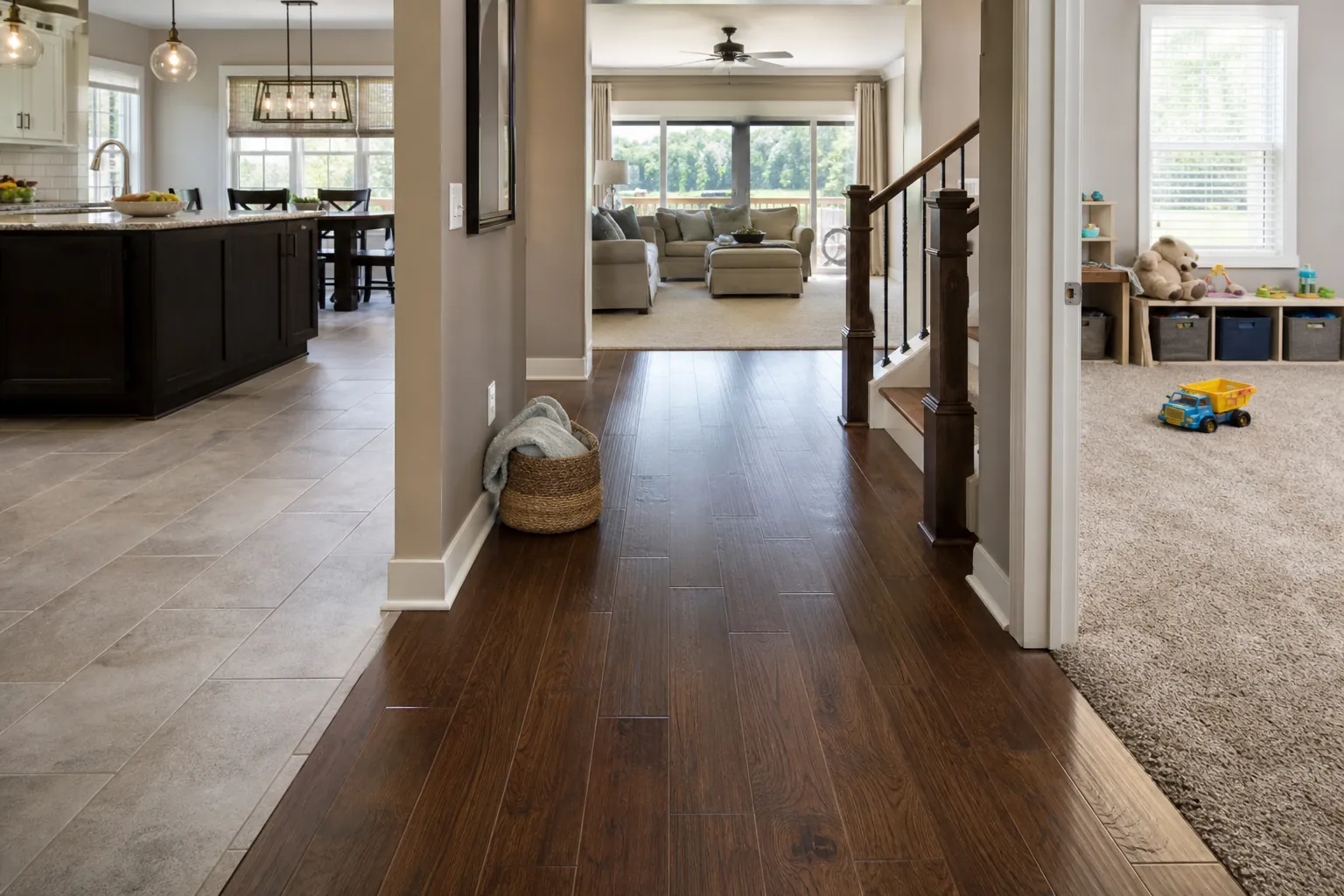
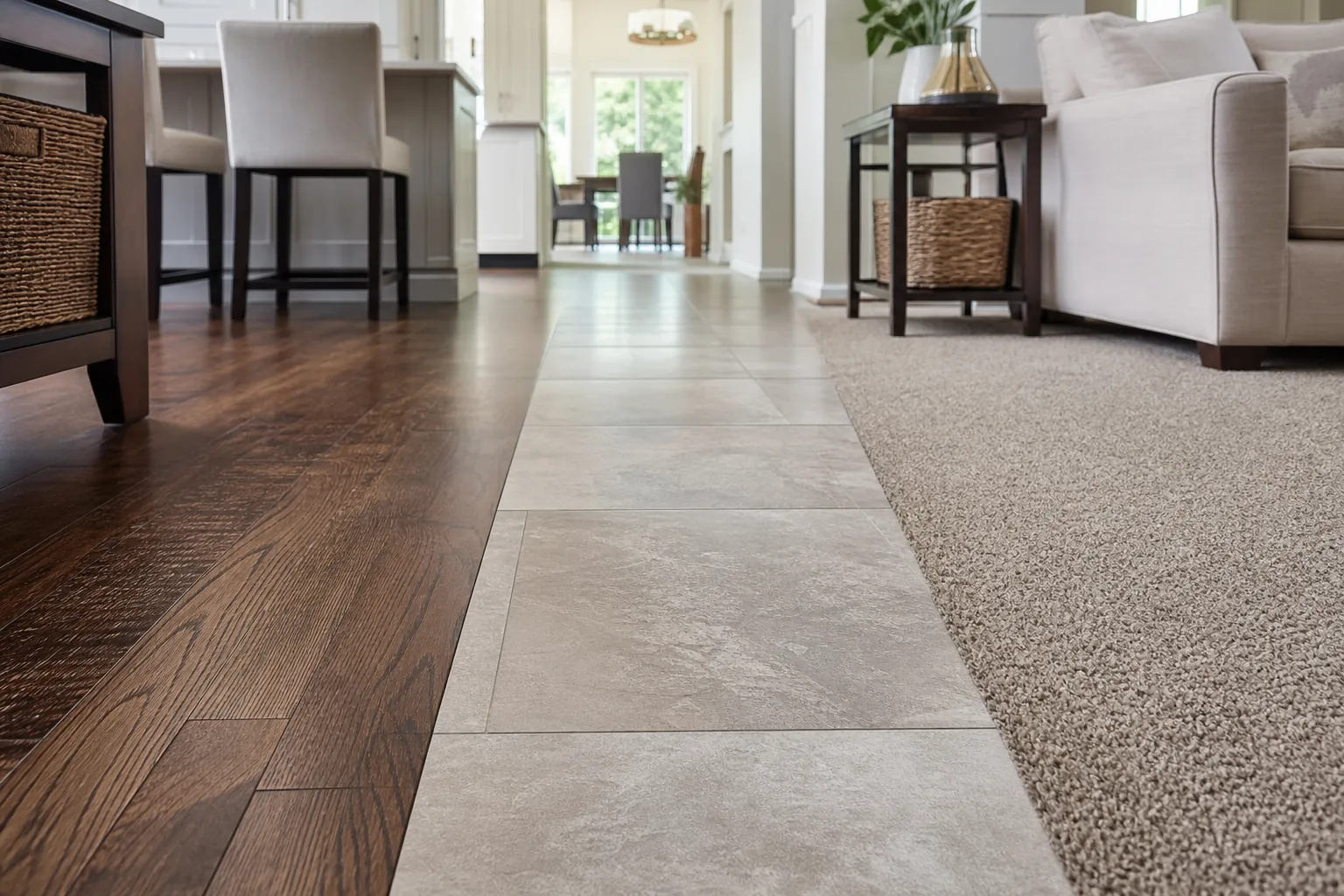
Even a well-chosen flooring material depends on the conditions beneath and around it. Before committing, identify the existing floor or subfloor, check whether leveling or preparation may be needed, and clarify how the new material will meet doorways, cabinets, stairs, and adjacent rooms. Product thickness can affect transitions and door clearance.
Moisture deserves particular attention in bathrooms, laundry areas, kitchens, and entry zones. Ask whether the complete flooring assembly is appropriate for the expected exposure, not merely whether the visible surface is described as water resistant. Seams, edges, transitions, and the underlying structure can all influence performance.
If flooring is part of a broader bathroom update, coordinate the material choice with fixture placement, project scope, and available funds. The related guide to bathroom remodel allowance planning in Charlotte, NC can help you organize selection amounts before final decisions are made. Early coordination reduces the chance that flooring choices conflict with other project requirements.
Compare the Full Cost Before Deciding
The material price is only one part of a flooring decision. Build a comparison that includes the quantity required, preparation, removal or disposal considerations, installation materials, transitions, trim details, and any changes needed at doors or adjoining surfaces. Also allow for an appropriate amount of extra material based on the product, room layout, and installation plan.
Compare options in a simple worksheet. Give each material a rating for room suitability, moisture tolerance, scratch and stain concerns, cleaning requirements, comfort, appearance, repairability, and total anticipated cost. Weight the categories according to your household rather than treating every factor equally. For example, easy cleaning may matter more than softness in an entry, while comfort may carry greater importance in a bedroom.
Finally, review the selected sample alongside wall colors, cabinetry, furnishings, and nearby flooring. Confirm product details before purchasing, and keep a record of the exact selection. A disciplined comparison helps you choose based on daily use and long-term fit, not a showroom impression alone.
Discuss Your Flooring Priorities
If you are weighing flooring choices for a busy Charlotte home, CDG Carolinas can help you discuss the decision factors that matter to your project. Call (704) 619-6293 for a calm, practical conversation about your priorities.
Call (704) 619-6293 to talk through next steps.