
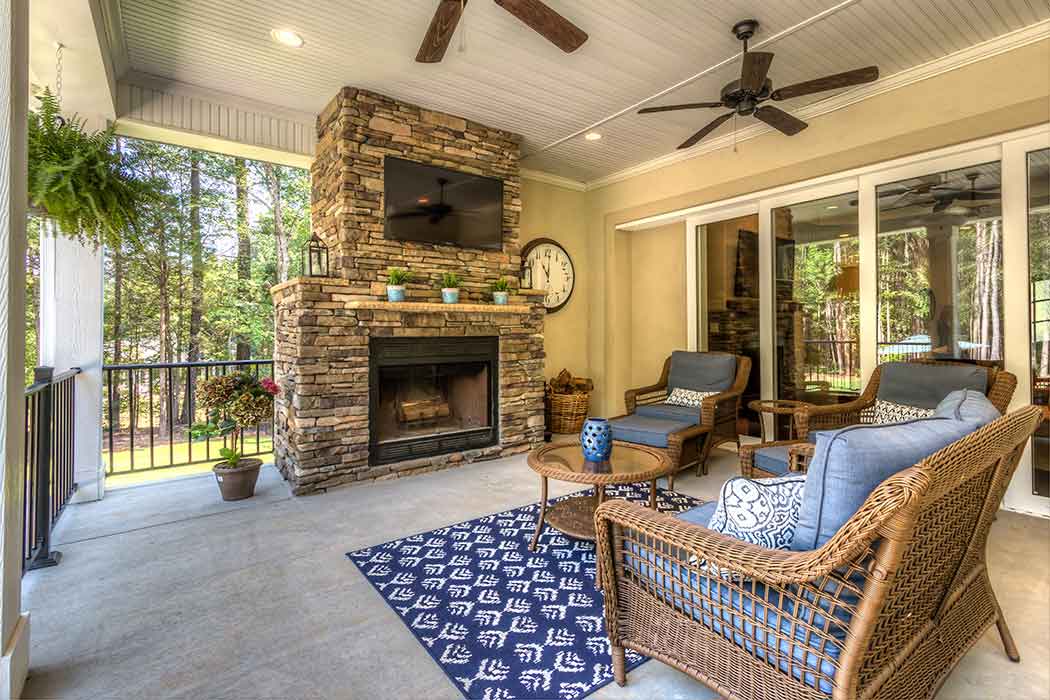
Hiring the right home addition contractor in Charlotte, NC is the single biggest factor in whether your room add, second story, or in-law suite finishes on time, on budget, and inspector-ready the first try. We have built and added onto homes across Mecklenburg County, Union County, and the Lake Norman corridor for thirty years, and the projects that go smoothest all start the same way: a real structural plan, a permit timeline mapped to the season, and one general contractor accountable for everything from footing to final paint.
This guide walks through how Charlotte additions actually work in 2026, what each addition type costs and takes, and the questions to ask before you sign anything.
How Does a Home Addition Differ From New Construction in Charlotte?
An addition is harder than new construction because the contractor must tie new framing, MEP, and roof lines into a house that has already settled, rather than building on a clean slate. Charlotte's mix of 1970s-80s ranch homes and newer two-story builds each present different structural constraints that must be read and designed around before drawings ever get stamped.
An addition is harder than a custom build for the same square footage, and the reason is simple: we have to tie new framing, new MEP runs, and a new roof line into a house that has already settled. Your existing foundation, floor heights, rafter spacing, and electrical service were not chosen with a 600-square-foot bump-out in mind, so the first job of the contractor is to read what is already there and design the new work around it.
In Charlotte specifically, we deal with a lot of 1970s and 1980s ranch-style homes with crawl spaces, plus newer two-story builds in neighborhoods like Ballantyne, Steele Creek, and Highland Creek that have engineered floor trusses you cannot just cut into.
The structural read-through alone can take a week of site visits and old-permit research at Mecklenburg County Land Use and Environmental Services. Skipping that step is how additions end up with cracked tie-in walls and roof leaks two winters later. Our approach borrows the same diligence we apply to project feasibility analysis on ground-up custom homes — we want to know what the addition will cost, take, and require before any drawings get stamped.
- Additions tie new framing into existing structure, which forces extra engineering on every project.
- Charlotte ranch homes from the 1970s-80s often need foundation underpinning before a second story is feasible.
- Existing electrical service (100A vs 200A) usually has to be upsized for any addition over 400 square feet.
- The contractor’s first job is reading the existing structure, not drawing the new addition.
- Skipping the structural read is the most common cause of long-term moisture and settling problems.
Room Addition, Second Story, or In-Law Suite: Which Is Right for You?
The right addition type depends on budget, lot footprint, and goals: first-floor room additions are the cheapest per square foot, second stories maximize square footage on a fixed lot but need structural verification, and in-law suites add rental or multi-generational value but trigger zoning and separate egress requirements. Matching the type to your goals early avoids costly redesigns.
The three most common Charlotte addition types each solve a different problem, and choosing wrong is expensive. A first-floor room addition (often a great room, primary suite, or sunroom) is the cheapest per square foot because we are extending out at grade and tying into existing framing on one side only.
A second-story addition gives you the most square footage for a fixed lot footprint, but it requires structural verification of the existing foundation and walls — sometimes including new steel beams or stiffening in the first-floor walls below. An in-law suite (technically an accessory dwelling unit, or ADU, or a separate sub-unit inside the main house) adds value for multi-generational families and rental income, but it pulls in zoning, separate egress, and sometimes a separate utility meter.
Charlotte zoning realities
Charlotte’s Unified Development Ordinance (UDO), updated in 2023, allows ADUs in most single-family zones, but lot size, setbacks, and parking still gate what is buildable. We pull the property’s zoning and overlay before we sketch a plan — pretending the rules do not exist makes the permit a nightmare.
For homes in Charlotte, NC proper, we coordinate with the City; for clients in unincorporated Mecklenburg County or in adjacent Union, Iredell, or Cabarrus counties, the rules and review timelines differ. Our whole-home renovation team often combines a second-story add with a first-floor refresh on the same permit to save 3-4 weeks.
- First-floor room additions are typically 15-25% cheaper per square foot than a second story.
- Second-story additions require a structural engineer’s stamp on the existing foundation and load-bearing walls.
- In-law suites must satisfy Charlotte UDO rules on egress, parking, and sometimes separate utilities.
- Combining a second-story add with a whole-home renovation can shorten the total permit timeline.
- County boundaries (Mecklenburg vs Union vs Iredell) change which rules apply, so check zoning first.
What Drives Charlotte Addition Permit Timelines?
Permit timelines run 4-6 weeks for a simple room addition, 6-10 weeks for a second story with structural changes, and 8-12 weeks for an in-law suite requiring zoning review. The biggest driver of delay is first-review plan rejection caused by missing energy calcs or mismatched electrical load summaries, which a hard internal QC pass before drop-off can largely prevent.
Permit timing is where most Charlotte additions slip, and almost always it is preventable. A straightforward room addition under 1,000 square feet inside the City of Charlotte typically takes 4-6 weeks from drop-off to issued permit when the plans are clean. A second-story addition with structural changes runs 6-10 weeks.
An in-law suite with new utilities or a separate kitchen pushes 8-12 weeks because zoning review is added on top of building review. These numbers reflect 2026 staffing levels at the City and County offices and assume a single review cycle.
The biggest driver of delay is plan rejection on the first review. Common reasons we see: missing energy code calcs, undersized footings, unclear demolition scope, and electrical load summaries that do not match the existing service. We handle this with a hard internal QC pass before any drawing leaves our office and through our permit acquisition and coordination service, which keeps a single point of contact between the design team, the inspector, and the client.
Our Mecklenburg County building permits guide walks through the actual office workflows in detail, including drop-off, plan review checkpoints, and inspection sequencing.
- Charlotte room additions under 1,000 sq ft: typical 4-6 week permit window in 2026.
- Second-story additions with structural changes: 6-10 week window from clean drop-off.
- In-law suites with zoning review: 8-12 weeks because zoning and building reviews stack.
- First-cycle plan rejections cost an average of 3-4 weeks; QC before drop-off is the cheapest fix.
- A single permit coordinator on the project prevents the inspector-architect-builder ping-pong that kills timelines.
What Do Charlotte Home Additions Actually Cost in 2026?
Charlotte home additions in 2026 typically run $325-$475 per square foot for a first-floor room addition, $400-$575 for a second story, and $475-$650 for an in-law suite due to duplicated MEP work. Finish level alone can swing a 600-square-foot addition budget by $40,000-$60,000, so locking in selections before the foundation is poured avoids expensive mid-framing change orders.
Pricing additions honestly is hard because two projects with the same square footage can vary 40% based on foundation work, finish level, and how much existing house has to be opened up. That said, here are typical ranges we see in the Charlotte market as of 2026 for completed, permitted, fully finished work — not lowest-bidder rough-in numbers.
A first-floor room addition with mid-range finishes typically runs $325-$475 per square foot. A second-story addition over an existing footprint typically runs $400-$575 per square foot because of the structural work. An in-law suite with full kitchen, bath, and separate entry typically runs $475-$650 per square foot due to the doubled MEP scope.
Why finishes swing the budget
Finish level is where homeowners control a huge part of the cost. Cabinet grade, counter material, tile vs LVP, and window package alone can move a 600-square-foot addition by $40,000-$60,000. We line that up early in pre-construction so the budget reflects what you actually want, not a generic per-foot number.
The cleanest cost discipline comes from picking finishes before the foundation is poured — change orders during framing are 2-3x more expensive than line-item swaps in pre-construction.
- Charlotte first-floor room addition typical range: $325-$475 per square foot in 2026.
- Charlotte second-story addition typical range: $400-$575 per square foot in 2026.
- Charlotte in-law suite typical range: $475-$650 per square foot due to full MEP duplication.
- Finish level can swing a 600 sq ft addition budget by $40,000-$60,000.
- Pre-construction change orders cost 2-3x less than mid-framing change orders.
What Engineering Details Matter Most for Structural Tie-Ins, Roof Lines, and HVAC?
The details that separate a clean addition from years of callbacks are the foundation tie-in, the roof line match, and correct HVAC sizing. Charlotte's clay soils demand stepped footings and expansion joints, roof pitch and flashing must shed water correctly at the tie-in valley, and a fresh Manual J load calculation prevents uneven temperatures between the addition and the rest of the house.
Three tie-in details separate a clean addition from one that calls back warranty work for years. The first is the structural connection between the new footing and the existing foundation, which on Charlotte’s heavy red clay soils almost always requires a stepped footing and proper expansion joints.
The second is the roof line: matching pitch, shingle, and flashing so water sheds correctly off the new tie-in valley. The third is HVAC zoning. Adding 600 square feet to a house with a 3-ton system without recalculating the Manual J is how we end up with one wing that is 78 degrees in July while the rest of the house is 71.
We do a Manual J load calculation on every addition and decide between extending the existing system, adding a dedicated mini-split for the new space, or replacing the whole system if the existing equipment is at end-of-life. The energy code in Charlotte (currently 2018 NC Energy Conservation Code with the 2024 amendments coming online) sets minimum insulation values, and you can find official Energy Star addition guidance at energy.gov on home additions.
The cleanest builds invest in continuous exterior insulation and a properly air-sealed envelope at the new construction.
- Foundation tie-ins on Charlotte clay soils require stepped footings and expansion joints.
- Roof line matching (pitch, shingle, flashing) is the #1 source of long-term leak callbacks.
- Every addition over 400 sq ft needs a fresh Manual J HVAC load calculation, not a guess.
- Mini-split zoning is often cheaper than upsizing the existing central system for one wing.
- The 2018 NCECC + 2024 amendments dictate minimum insulation values for any new conditioned space.
How Do You Vet a Home Addition Contractor in Charlotte?
Vet a Charlotte home addition contractor by confirming NC licensing, general liability and builders risk insurance, and real addition photos with drivable addresses, not just new-build portfolios. Ask directly whether the company self-performs supervision or subs the entire job to a stranger crew, and prioritize references from owners three to five years out, since that is when tie-in problems surface.
The home addition contractor in Charlotte, NC who is right for your project is licensed in North Carolina, carries general liability and builders risk insurance, has actual addition photos (not just new builds), and will share addresses of completed jobs you can drive past.
Ask whether the contractor is the general or a sales-focused middleman — many “design build” outfits in Charlotte sub the entire project to a third party they have never worked with before. We self-perform the supervision and core trades, sub only specialty work to long-term partners, and put one project manager on your job from feasibility through punch list.
References from owners three to five years out matter more than recent ones, because that is when tie-in problems actually surface.
Insurance and licensing checks every Charlotte homeowner should run
Verify the contractor’s license status with the North Carolina Licensing Board for General Contractors, ask for a current certificate of insurance naming you as additional insured, and confirm the builder’s risk policy covers the full project value. We also recommend reviewing our home additions service page and our Lake Wylie home additions guide as starting points to compare scope conversations.
- Confirm North Carolina general contractor license status before signing any contract.
- Require a builder’s risk certificate of insurance naming you as additional insured.
- Ask for addresses of additions completed 3-5 years ago, not just new builds.
- Beware of “design build” outfits that sub the entire project to a stranger crew.
- One project manager from feasibility through punch list is the single best quality signal.
Frequently Asked Questions
How long does a typical Charlotte home addition take from contract to move-in?
For a 400-800 square foot first-floor room addition, plan on 5-7 months from signed design contract to final inspection. A second-story addition runs 7-10 months. An in-law suite with zoning review and full MEP runs 8-12 months. These ranges assume permits land on the first review cycle and that no major structural surprises emerge during demo.
Do I need to move out during a Charlotte home addition?
Most clients stay put. We seal the addition off from the existing house with temporary dust walls, schedule loud demo work and HVAC shutdowns in advance, and protect floors and finishes with hardboard runners. The exception is a second-story add that opens the existing roof, where weather risk plus 4-6 weeks of structural noise pushes most families to relocate temporarily.
Will an addition increase my Charlotte property taxes?
Yes. Mecklenburg County reassesses the property after the final certificate of occupancy, and the new conditioned square footage is added to the tax base. The exact dollar increase depends on your neighborhood’s assessment ratio, but most clients see $1,500-$4,500 per year in additional property tax for a typical 600-1,000 square foot addition.
A good real estate appraisal during planning gives you the realistic number.
Can you build a second story over a slab-on-grade Charlotte ranch?
Sometimes, but it requires a structural engineer to verify the existing slab and footings, often followed by underpinning or steel beams at the first-floor wall lines. Slab-on-grade ranches in Charlotte tend to have shallower footings than crawl-space homes, so the engineering work is usually more involved.
We always start with a feasibility study before promising anyone a second story over a slab.
Ready to Plan Your Charlotte Home Addition
If you are ready to talk through a room addition, second-story, or in-law suite for your Charlotte, NC home, call us at (704) 619-6293 or use our contact page to schedule a feasibility walk-through. We will look at the existing structure, pull the zoning, and give you a real range — not a sales pitch — before you commit to drawings.