
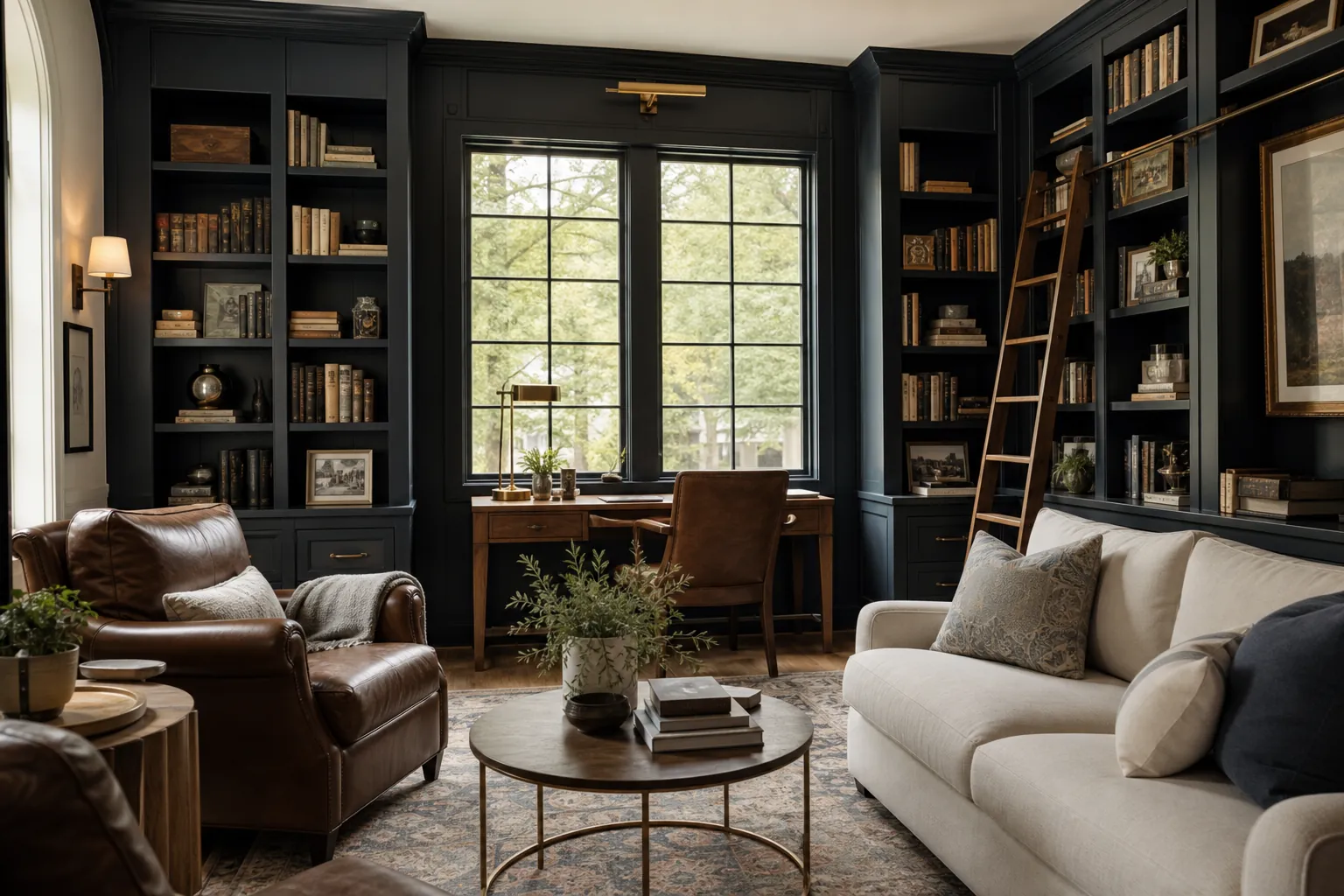
A home library can be much more than a room lined with books. It can serve as a quiet retreat, a focused workspace, a family reading room, or an inviting place to display collections gathered over time. The best libraries feel connected to the home while offering a distinct atmosphere of their own.
For homeowners considering a home library remodel in Charlotte, thoughtful planning matters. Shelf dimensions, lighting, electrical access, seating, and climate all affect how the room looks and functions. CDG Carolinas helps North Carolina homeowners bring these elements together through a custom remodeling process shaped around the house, the collection, and the people who will use the space.
Start With How You Want To Use The Library
Before choosing wood finishes or cabinet styles, decide what the room needs to support. A dedicated reading library has different requirements from a combined office and study. A family room may need durable lower storage for games and children's books, while a collector may prioritize adjustable shelves, glass doors, and controlled lighting.
Consider when the library will be used and by whom. If two people often work or read at the same time, the layout should provide comfortable circulation and separate task lighting. If the room will host guests, flexible seating may be more useful than a large built-in desk. Defining these priorities early helps prevent beautiful features from taking up space without adding practical value.
The room itself also offers clues. An underused dining room can become a welcoming library near the main living areas. A spare bedroom provides privacy and may already have a closet that can be converted into concealed storage. A bonus room can accommodate larger shelving runs, reading tables, or multiple activity zones.
Design Custom Shelving Around Your Collection
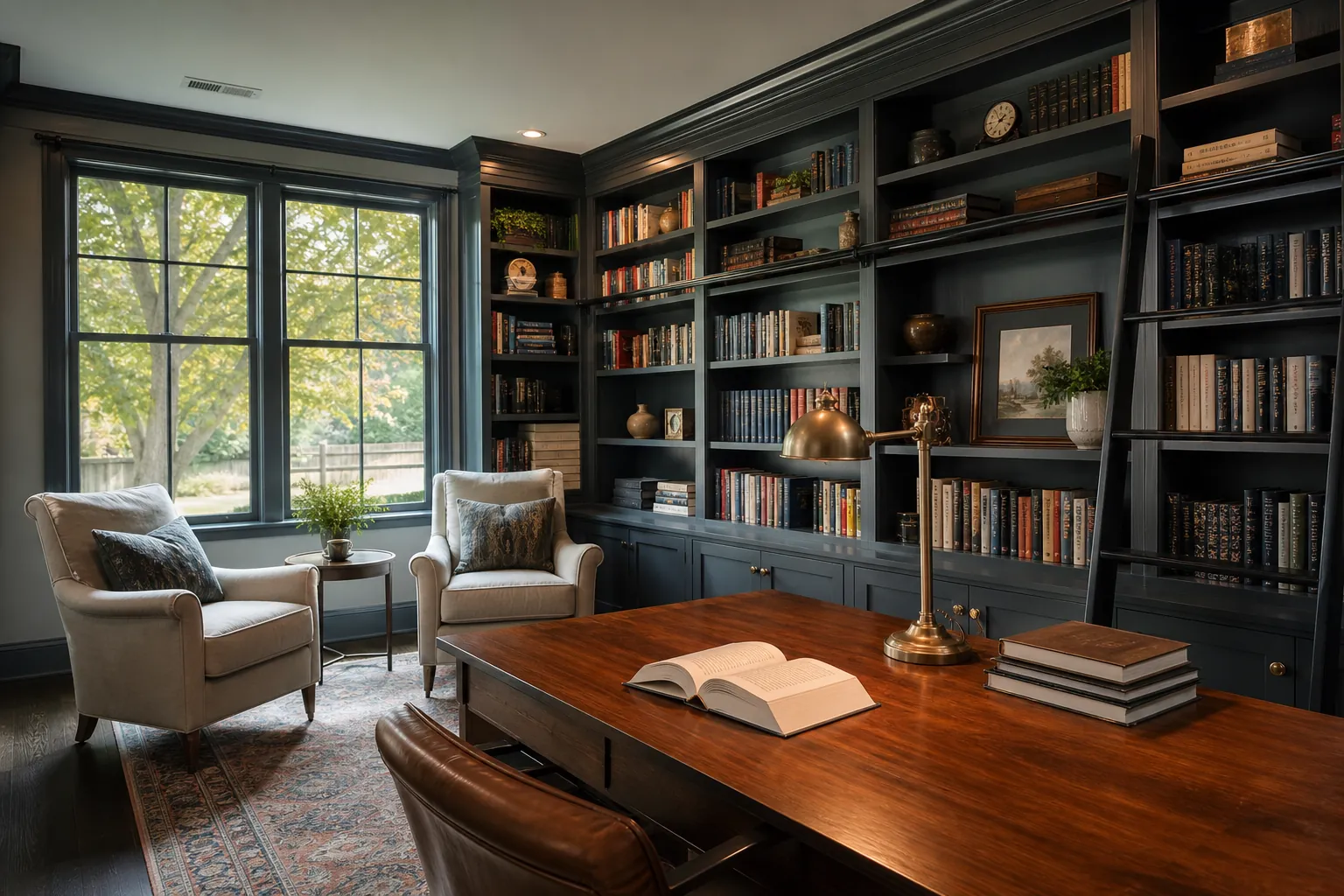
Built-in shelving gives a library architectural presence, but good design goes beyond filling every wall. Shelves should fit the height, depth, and weight of the materials they will hold. Standard novels need less depth than art books, record albums, archival boxes, or displayed objects. Long unsupported spans may also sag under heavy books, so shelf construction and spacing require careful consideration.
Adjustable shelves provide flexibility as a collection changes. Fixed shelves can add structural stability and create intentional sightlines. Many successful designs combine both. Lower cabinets offer a place for office supplies, electronics, files, and items that would create visual clutter on open shelves.
Useful features to evaluate include:
- Varied shelf heights: Accommodate paperbacks, reference books, albums, and decorative pieces without wasting vertical space.
- Closed base cabinets: Keep less attractive necessities accessible but out of sight.
- Integrated outlets: Support lamps, device charging, printers, and audio equipment without visible extension cords.
- Display lighting: Highlight selected shelves or artwork while limiting glare and excessive heat.
- A rolling or fixed ladder: Improve access to upper shelves when room dimensions and safe installation allow.
- Ventilation clearance: Prevent cabinetry from blocking supply vents, returns, or essential airflow.
- Purposeful trim details: Connect new built-ins with existing baseboards, crown molding, doors, and window casings.
Material selection affects both appearance and performance. Paint-grade cabinetry can create a clean, integrated look, while stained wood brings warmth and visible grain. The right choice depends on the home's architecture, available natural light, maintenance preferences, and the desired mood.
Plan Lighting For Reading And Display
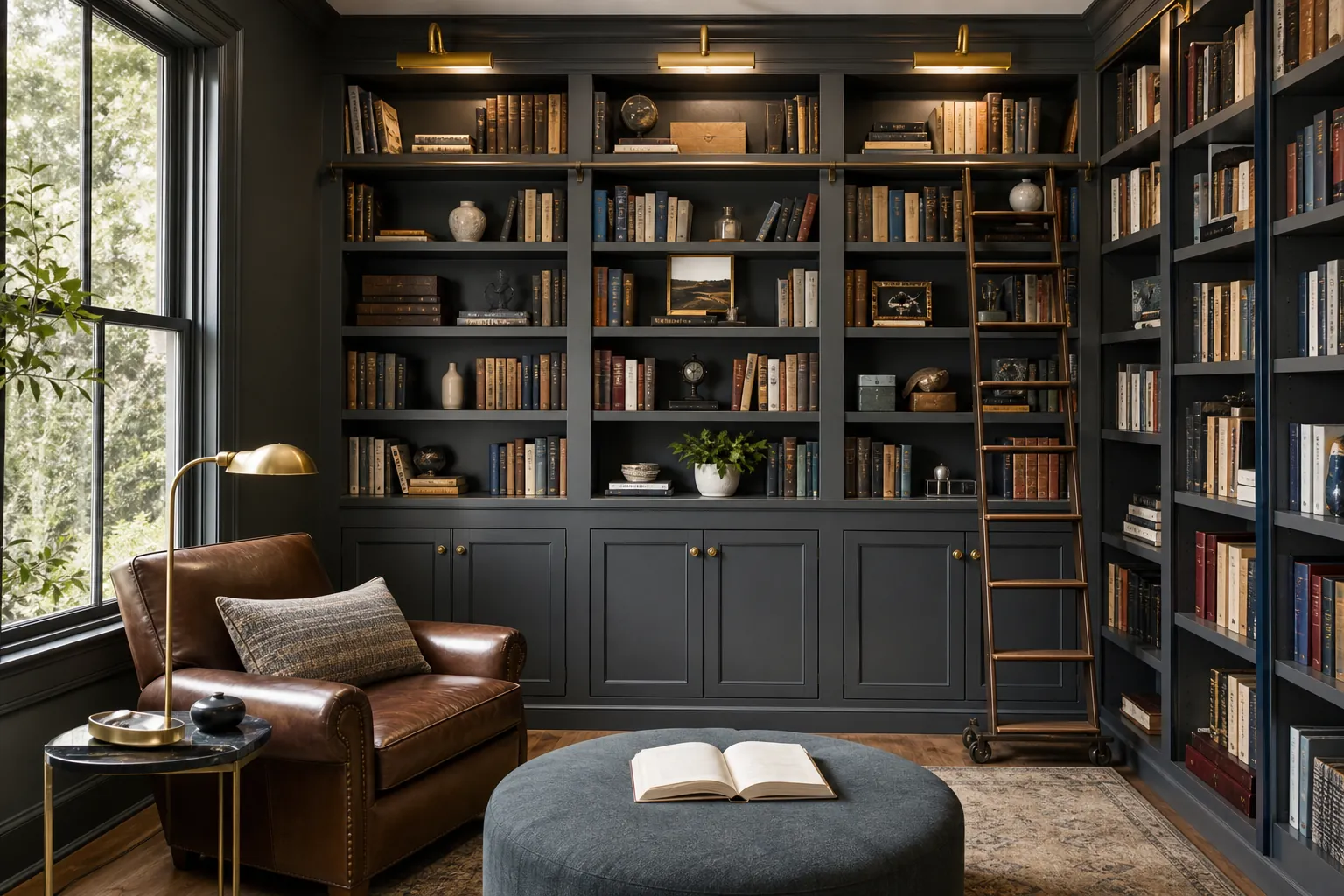
A single ceiling fixture rarely provides enough flexibility for a library. Layered lighting makes the room more comfortable and allows it to adapt throughout the day. Ambient lighting establishes overall brightness, task lighting supports reading or desk work, and accent lighting draws attention to shelves, artwork, or architectural details.
Wall sconces can frame a window seat or reading chair. Adjustable recessed fixtures can illuminate shelf faces without occupying valuable wall space. Cabinet-integrated lighting can create depth, especially in darker built-ins. Dimmers help shift the room from bright daytime work to relaxed evening reading.
Charlotte's changing seasonal light should also inform the plan. Strong direct sunlight can cause fading on book spines, fabrics, and artwork. Window treatments, UV-filtering options, and furniture placement can reduce exposure while preserving natural light. A remodeling plan should coordinate lighting, switching, and electrical work before cabinetry is installed.
Create Comfort Through Layout And Materials
A library should invite people to stay. Comfortable seating is essential, but scale matters. Oversized chairs can restrict circulation in a compact room, while small accent chairs may not provide adequate support for longer reading sessions. Measure furniture and allow clear paths to doors, windows, cabinets, and high-use shelves.
Acoustic comfort also contributes to the room's atmosphere. Rugs, upholstered seating, lined window treatments, and books themselves help soften sound. If the library shares a wall with a television room or active hallway, insulation or other sound-management improvements may be worth discussing during construction.
Color and texture can make the space feel distinct without separating it visually from the rest of the home. Deep colors often create an intimate setting, while lighter finishes can help a smaller room feel open. Durable flooring, washable paint, and quality cabinet hardware support everyday use. In North Carolina's humid climate, material stability and indoor moisture management are also important, particularly for valuable books and wood cabinetry.
Respect The Character Of Your Charlotte Home
A custom library should look as though it belongs in the house. In a traditional Charlotte residence, paneled ends, inset cabinetry, detailed trim, and warm finishes may complement existing architecture. A transitional home might call for simplified molding and a restrained color palette. Contemporary spaces often benefit from clean lines, concealed hardware, and open areas that balance the shelving.
Matching every existing detail is not always necessary. The goal is to create a clear relationship through proportion, finish, and craftsmanship. Door heights, window placement, ceiling transitions, and nearby flooring should guide the design. Careful field measurements are especially important in older homes, where walls and floors may not be perfectly square.
Prepare For A More Predictable Remodel
A well-defined scope helps the remodeling process move efficiently. Before work begins, confirm which furnishings will remain, how many books need temporary storage, and whether adjacent rooms require protection. Design decisions involving electrical changes, cabinetry, paint, flooring, and trim should be coordinated rather than addressed separately.
Homeowners should also discuss schedule expectations, access, dust control, and daily cleanup. Custom cabinetry may require fabrication time before installation starts. Final adjustments, touch-ups, and hardware alignment are normal finishing steps that contribute to a polished result.
CDG Carolinas approaches each library as part of the larger home, not as an isolated set of shelves. If you are ready to explore a comfortable, functional library tailored to your Charlotte-area residence, call (704) 619-6293 for a calm conversation about your ideas, priorities, and next steps.
Call (704) 619-6293 to talk through next steps.