
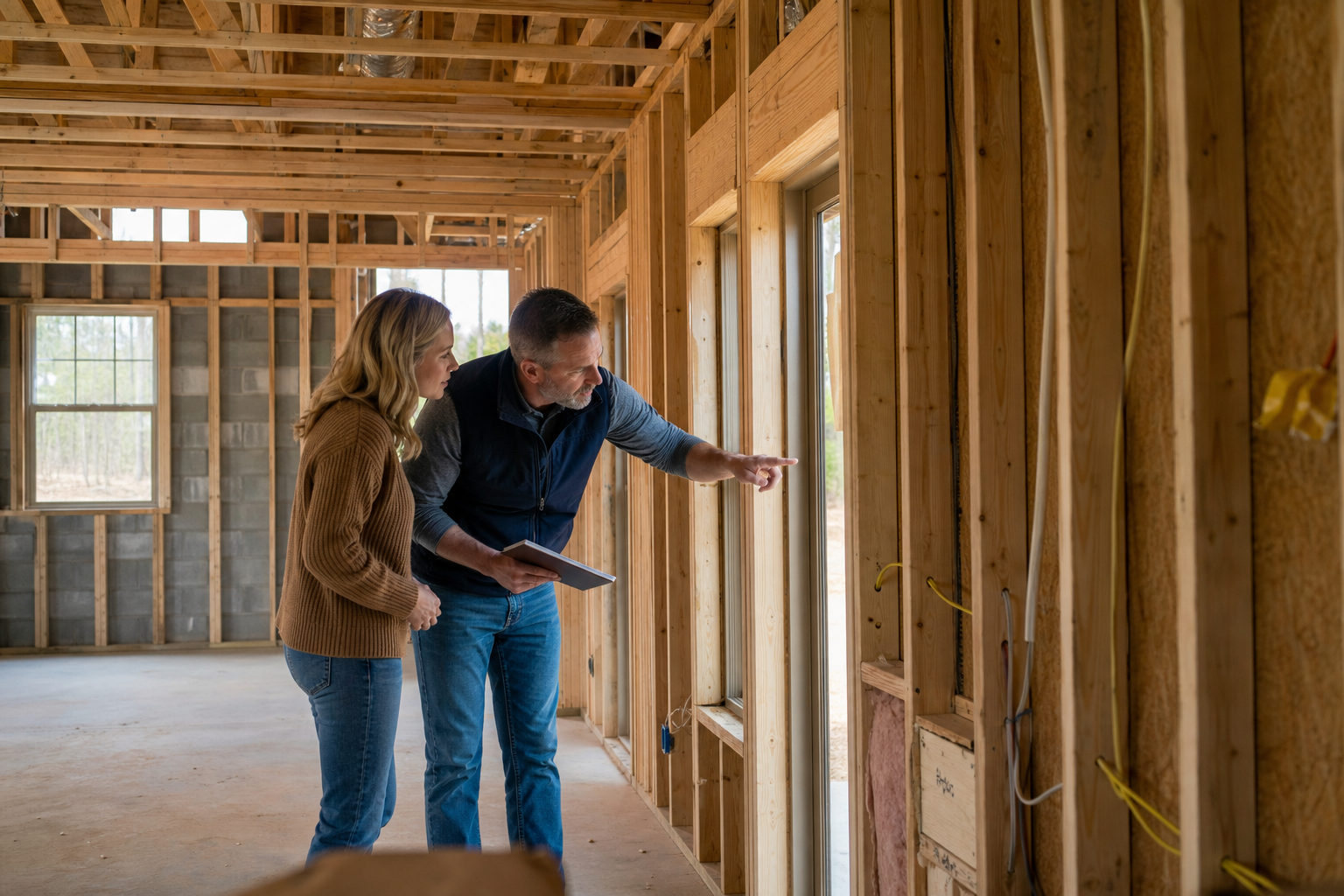
Before a renovation scope and price can be finalized, certain assumptions about what is hidden behind walls, floors, and ceilings need to be tested with targeted openings rather than accepted on sight. These typically include the composition of suspect building materials, the condition of framing and structural connections behind finished surfaces, the routing and condition of plumbing and electrical systems, moisture history inside wall and floor assemblies, and the presence of prior repairs or modifications that were not documented. A visual walkthrough can raise these questions, but it generally cannot answer them with the certainty a final scope and price require.
This article explains what publicly available guidance from the U.S. Environmental Protection Agency establishes about remodeling-related environmental concerns, and it separates that published floor from general CDG planning practices. It does not diagnose any specific property, does not estimate cost or schedule, and does not substitute for a site-specific evaluation by the authority having jurisdiction or a qualified professional. Any homeowner or investor using this article should treat it as a planning framework, not a final answer for a particular building.
What Current Public Sources Establish
The EPA publishes guidance on indoor environmental concerns that can surface during remodeling, including its overview on addressing indoor environmental concerns during remodeling, its page on asbestos in home remodeling, and its Renovation, Repair and Painting Program material aimed at contractors working in pre-1978 housing. Together these sources establish that older buildings can contain asbestos-containing materials, lead-based paint, and other conditions that are not identifiable by appearance alone, and that disturbing these materials during renovation work can create exposure risks if not handled according to applicable requirements.
These publications are a factual floor, not a complete regulatory manual for any single project. They describe general categories of concern and point toward programs and precautions that may apply, but they do not replace a jurisdiction-specific determination. Local, state, and federal requirements can change, and the applicability of any rule depends on the age of the structure, the material involved, and the scope of the work. Homeowners and investors should confirm current requirements with the authority having jurisdiction before finalizing plans, and should not rely on this article as a stand-in for that verification.
- EPA guidance addresses indoor environmental concerns broadly, asbestos specifically, and lead paint through the Renovation, Repair and Painting Program.
- None of these sources are project-specific; they describe categories of concern that a given property may or may not have.
- Confirming which rules apply to a specific address and scope is a task for the authority having jurisdiction, not a general article.
Why Renovation Destructive Verification Planning Matters Before Scope Is Set
Renovation destructive verification planning is the practice of identifying, in advance, which assumptions in a proposed scope of work are uncertain enough that they warrant a targeted opening, sample, or inspection before a final price is issued. This is different from routine demolition that happens once work begins. The purpose of destructive verification is to convert an assumption into a documented fact while there is still time to adjust the scope, budget, or sequencing without disrupting an active job.
Skipping this step does not make the underlying conditions disappear. It simply moves the discovery point later, often into a phase where change orders, schedule adjustments, and reworked plans are more disruptive and more visible to everyone involved. A ranked approach to renovation destructive verification planning helps a project team decide which unknowns are worth investigating before contract signing and which can reasonably be handled as encountered conditions during construction.
- Destructive verification means opening a small, targeted area to inspect what a visual walkthrough cannot reveal.
- The goal is to reduce the number of surprises that appear only after a scope and price are already set.
- Not every unknown needs pre-contract investigation; ranking helps separate the ones that do from the ones that do not.
Inputs and Existing Conditions to Document
Before deciding where to open anything, a project team benefits from gathering what is already known or reasonably inferred about the property. This includes the approximate age of the structure, any available records of prior permits or renovations, visible signs of past water intrusion or repair patching, and the general condition of accessible systems such as electrical panels and plumbing fixtures. Photographs, a written condition log, and any prior inspection reports form the baseline against which new findings are compared.
Documenting existing conditions also means noting what cannot be seen and why. If a wall cavity, crawlspace, or attic area is inaccessible during the walkthrough, that limitation should be recorded rather than assumed away. A clear record of what was observed, what was inferred, and what remains unknown gives the owner and project team a shared reference point when deciding which unknowns rise to the level of needing a targeted opening.
- Record the approximate age of the structure and any available permit or renovation history.
- Note visible signs of past repairs, patching, or water staining, even if the cause is not yet known.
- Identify areas that were inaccessible during the walkthrough and flag them for later evaluation rather than assuming a condition.
Step-by-Step Owner and Project-Team Review
A structured review helps an owner and project team move from a general walkthrough to a specific list of assumptions that need verification. The first step is compiling every assumption embedded in the proposed scope, such as the type of insulation behind a wall, the presence of asbestos-containing material in flooring or ceiling texture, or the condition of framing behind a finished ceiling. The second step is ranking those assumptions by the consequence of being wrong, since an incorrect assumption about structural framing carries different weight than an incorrect assumption about paint color under a later layer.
Once assumptions are ranked, the team can assign an access permission process, a hazard screening step where applicable, an investigation method, a decision owner, and a restoration plan for each item before any opening occurs. This sequence keeps the investigation organized and gives the owner a clear record of why each opening was made and what it resolved.
- List every embedded assumption in the proposed scope of work, not just the ones that seem risky.
- Rank assumptions by the potential consequence of being wrong, not just by how uncertain they feel.
- Confirm access permission before any opening, including landlord, tenant, or co-owner sign-off where applicable.
- Apply hazard screening for suspect materials before disturbing them, consistent with EPA guidance on asbestos and lead paint.
- Choose an investigation method proportional to the question, such as a small probe, a borescope, or a larger controlled opening.
- Assign a decision owner who will review findings and approve or adjust scope based on what is found.
- Plan restoration of the opening as part of the investigation, not as an afterthought.
Responsibilities, Dependencies, and Hold Points
Destructive verification does not happen in isolation. It depends on who owns the property, who occupies it, and who holds decision-making authority over scope changes. An investor working with a tenant-occupied property may need written access permission before any opening, and a homeowner working with a shared wall or party structure may need to coordinate with a neighbor or association. These dependencies should be resolved before a targeted opening is scheduled, not discovered afterward.
Hold points are the moments in a project where work should not proceed until a specific piece of information is confirmed. A hold point might be placed before removing flooring suspected of containing asbestos, before opening a wall near a known plumbing stack, or before proceeding with any work that depends on the hazard screening outcome. Clearly naming these hold points in the project plan gives the owner and contractor a shared understanding of when to pause and confirm before continuing.
- Identify who holds decision authority over scope changes before investigation begins.
- Confirm access permission from all relevant parties, including tenants, co-owners, or neighboring property owners where applicable.
- Name specific hold points where work should pause until hazard screening or investigation results are reviewed.
- Assign a single decision owner for each hold point to avoid delays caused by unclear authority.
Common Coordination Failures
Several recurring problems show up when destructive verification is not planned in advance. One is treating every unknown the same way, which either leads to excessive openings that raise cost and disruption or to skipping openings that were genuinely necessary. Another is failing to secure access permission before scheduling an opening, which stalls the investigation and can create friction with tenants or co-owners. A third is neglecting hazard screening for suspect materials before disturbing them, which can create exposure concerns addressed in EPA guidance on asbestos and lead-based paint.
A less obvious failure is skipping the restoration step. When a targeted opening is made to answer a specific question, leaving it unrepaired or poorly patched can create new problems, including moisture entry points or unfinished-looking areas that complicate later work. Restoration should be planned alongside the investigation itself, with the decision owner confirming what the opening revealed before the area is closed back up.
- Treating all unknowns as equally urgent, which either inflates the investigation scope or misses genuine risks.
- Scheduling openings before access permission is confirmed with tenants, co-owners, or other relevant parties.
- Skipping hazard screening for suspect materials before disturbing them.
- Failing to plan restoration of the opening as part of the investigation rather than as an afterthought.
- Leaving decision ownership unclear, which delays scope adjustments after findings come in.
Questions for the Responsible Authority or Qualified Professional
Because destructive verification often intersects with hazard screening, structural conditions, and jurisdiction-specific requirements, an owner should prepare specific questions for the authority having jurisdiction or a qualified professional before openings begin. These questions should focus on what is required for the specific property, given its age, location, and proposed scope, rather than relying on general guidance alone.
Bringing a documented list of ranked unknowns to that conversation makes it easier for the authority or professional to give a focused response, and it gives the owner a record of what was asked and what was confirmed.
- Which suspect materials in this specific structure require hazard screening before any disturbance, based on its age and location.
- What access, notification, or permitting steps apply before a targeted opening can be made in this jurisdiction.
- Whether any results from a screening or investigation trigger additional requirements before work can continue.
- What documentation the authority having jurisdiction expects to see once an opening is made and restored.
Next Action and Related CDG Service Resource
A ranked list of assumptions that may need destructive verification is a planning tool, not a substitute for a site visit or a jurisdiction-specific review. Once that list is drafted, the next reasonable step is to walk through it with a project team that can help sequence access permission, hazard screening, investigation, decision ownership, and restoration in a way that fits the property and the proposed scope.
Investors and homeowners exploring a renovation project can review CDG's investor services overview, browse related planning topics on the CDG blog, or request a consultation to discuss how a specific property's unknowns might be organized into a ranked verification plan before scope and price are finalized.
- Review the investor services overview at /investors/ for related planning context.
- Browse additional planning topics on the CDG blog at /blog/.
- Request a consultation at /consultation/ to discuss a property-specific verification plan.
Questions homeowners ask
What does renovation destructive verification planning actually mean for a homeowner?
It means identifying, before a final scope and price are set, which assumptions about hidden conditions are uncertain enough to warrant a small targeted opening, sample, or inspection. Rather than waiting for a surprise during construction, the owner and project team decide in advance which unknowns are worth checking and how each check will be handled, including access permission, hazard screening where relevant, the investigation method, who makes the final call, and how the opening will be restored.
Does every wall or floor need to be opened before a renovation can be priced?
No. The purpose of a ranked approach is to identify which unknowns carry enough consequence to justify an opening and which can reasonably be treated as conditions encountered during construction. Openings are typically targeted to specific questions, such as suspect flooring material or an area with a history of water intrusion, rather than applied uniformly across a property.
How does hazard screening for asbestos or lead relate to destructive verification?
EPA guidance notes that older buildings can contain asbestos-containing materials or lead-based paint that are not identifiable by appearance, and that disturbing these materials during remodeling can create exposure concerns. Because of this, any targeted opening that might disturb suspect materials should include a hazard screening step before the opening proceeds, consistent with EPA's published guidance on asbestos and its Renovation, Repair and Painting Program information for contractors. Current requirements should be confirmed with the authority having jurisdiction for the specific property.
Who should decide whether a targeted opening is worth doing?
This article recommends assigning a specific decision owner to each ranked unknown before any opening occurs, since unclear authority is one of the most common sources of delay once findings come in. Depending on the project, that decision owner might be the property owner, an investor's representative, or another party with authority to approve scope changes, but the key is naming that person in advance rather than after the opening is made.
Plan the next step
Use this article as a planning aid, then confirm project-specific requirements with the responsible authority and qualified professionals. Review CDG's related service, construction articles, or consultation page when you are ready to organize the next decision.
Official sources and verification
- U.S. Environmental Protection Agency: Addressing Indoor Environmental Concerns During Remodeling
- U.S. Environmental Protection Agency: Asbestos and Home Remodeling
- U.S. Environmental Protection Agency: Renovation, Repair and Painting Program for Contractors
Authority pages, forms, fees, review steps, and code references can change. Verify the current path for the property and scope before relying on a planning assumption.