
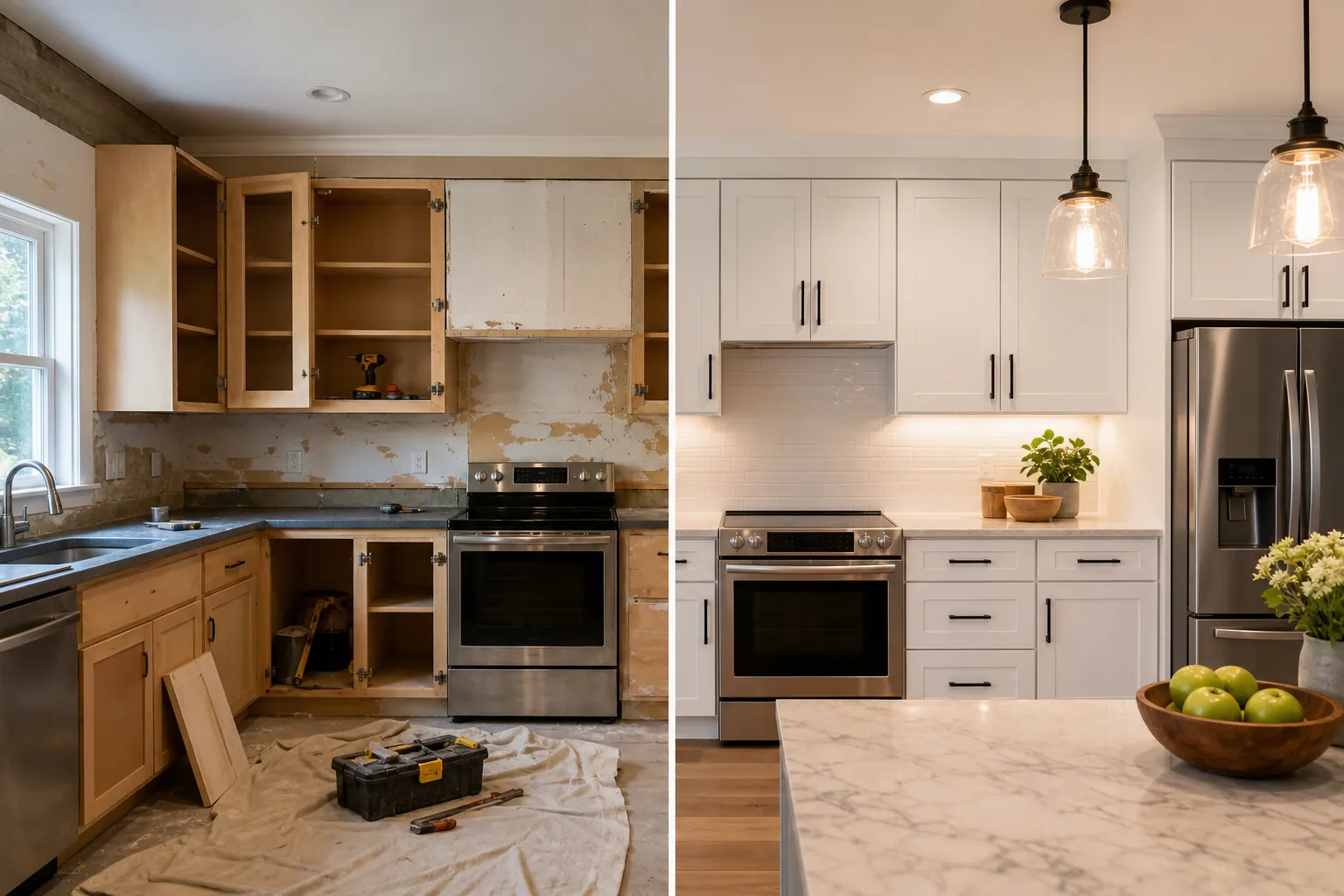
Cabinets shape how a kitchen looks, stores everyday essentials, and supports daily routines. When they feel dated or no longer work well, homeowners often face a key decision: preserve the existing cabinet boxes or start over with new cabinetry.
The right choice depends on more than appearance. Cabinet condition, layout, budget, storage needs, and long-term remodeling plans all matter. This guide to kitchen cabinet refacing vs replacement explains the differences so North Carolina homeowners can make a practical, informed decision.
What Cabinet Refacing Actually Changes
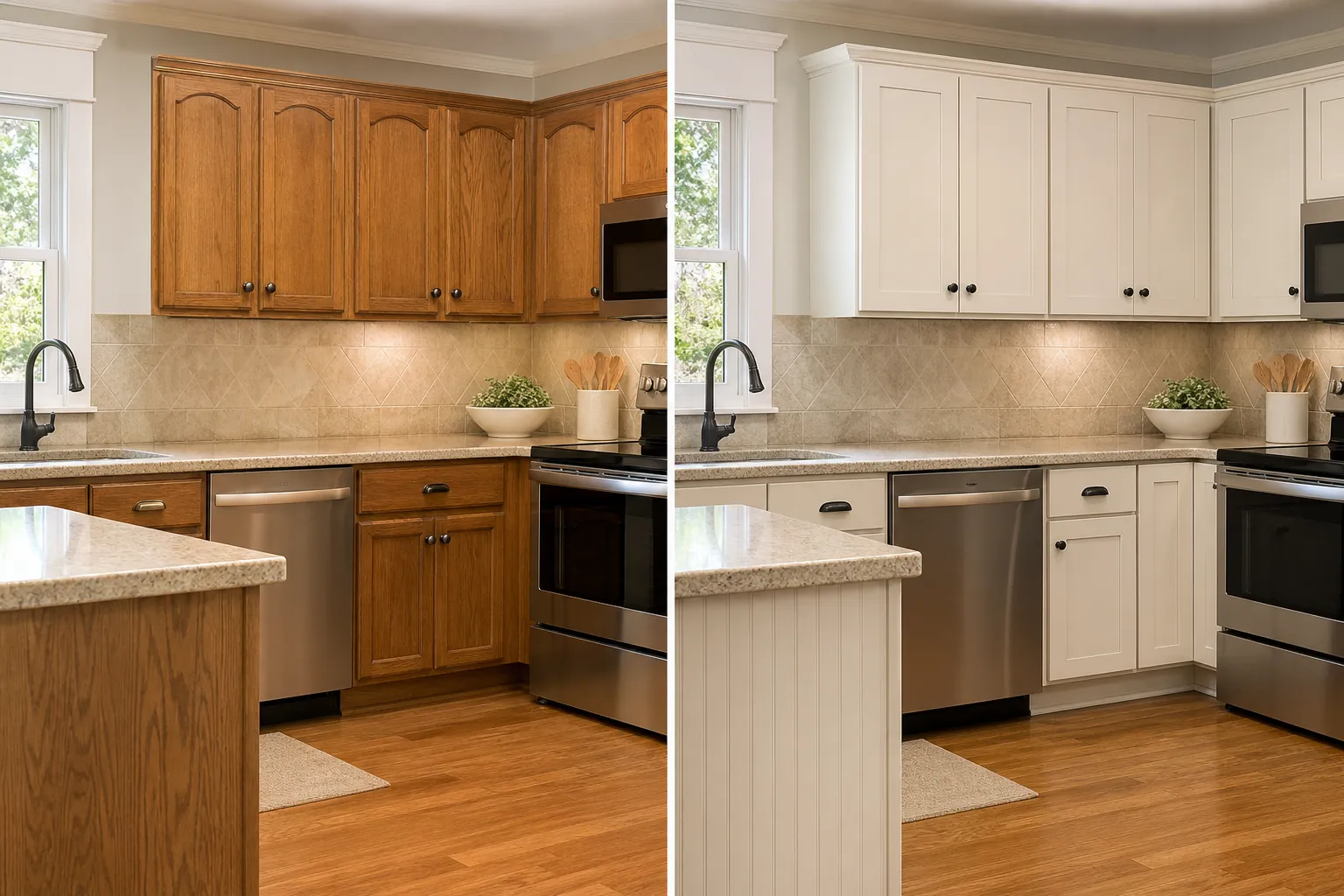
Cabinet refacing keeps the existing cabinet boxes in place. The visible frames and exposed sides receive a new veneer or finish, while doors, drawer fronts, hinges, and often hardware are replaced. The result can look like a new kitchen even though the underlying cabinet structure remains.
Refacing is best suited to cabinets that are sturdy, level, and free from major moisture damage. It also works best when the current kitchen layout already functions well. If appliances, sinks, and work zones are in convenient locations, changing the cabinet appearance may be enough.
Homeowners can select new door styles, colors, finishes, pulls, and knobs. Soft-close hinges and updated drawer hardware may also improve daily use. However, refacing does not automatically correct shallow cabinets, awkward corners, undersized drawers, or inefficient storage.
What Full Cabinet Replacement Includes
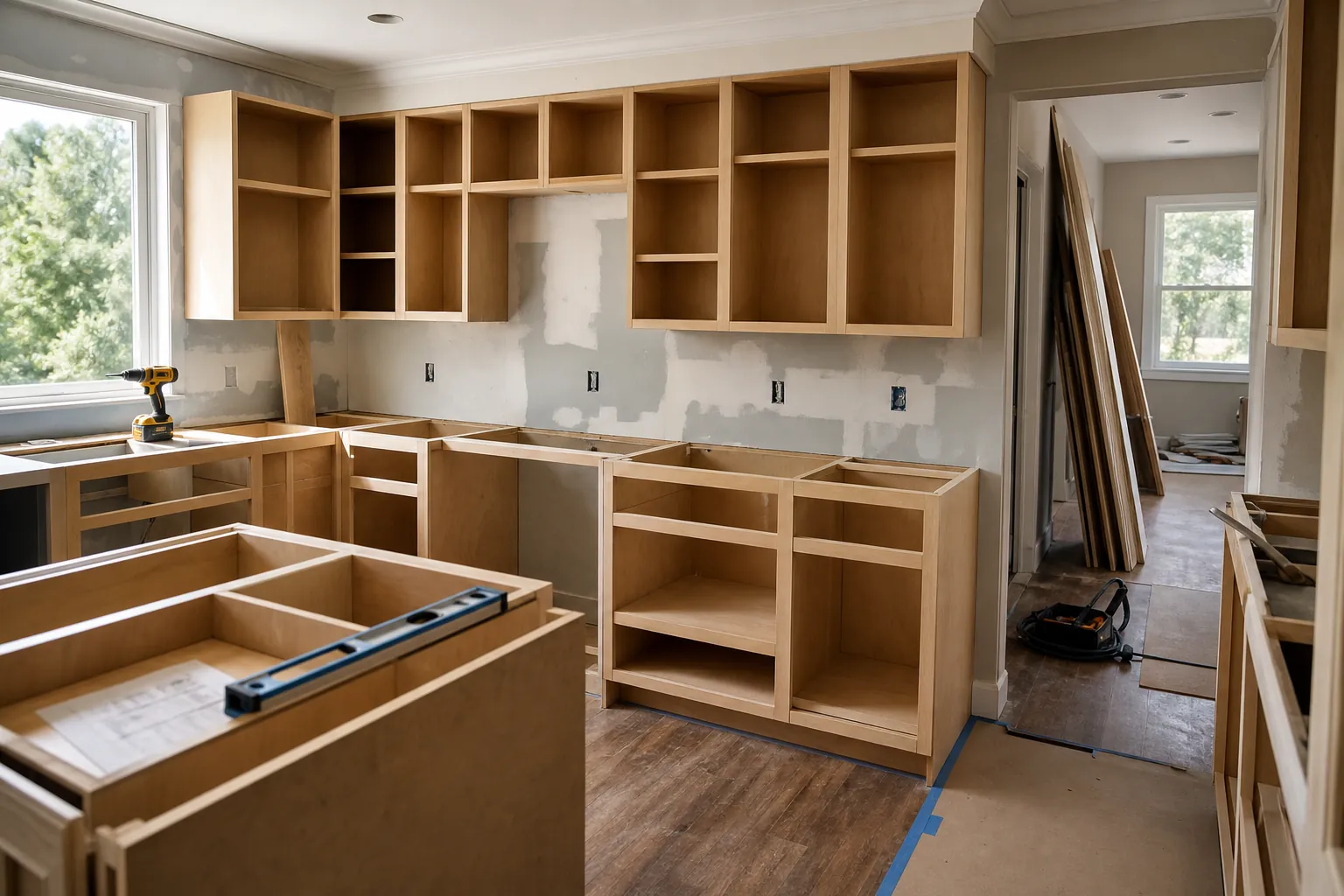
Replacement removes the existing cabinetry and installs new cabinet boxes, doors, drawers, and hardware. This approach offers more freedom to change the room. Cabinet heights can be adjusted, islands can be resized, pantry storage can be added, and problem areas can be redesigned.
New cabinets may be stock, semi-custom, or custom. Custom cabinetry provides the greatest flexibility for unusual dimensions, specialized storage, distinctive finishes, and architectural details. This can be particularly valuable in older North Carolina homes where walls, floors, or openings may not follow standard dimensions.
Replacement also makes it easier to coordinate broader improvements, such as new countertops, electrical work, plumbing changes, flooring, lighting, or appliance placement. Because the project is more extensive, it generally requires a larger investment and a longer schedule than refacing.
How Costs And Timelines Compare
Refacing typically costs less because it reuses the cabinet boxes and involves less demolition. Labor, materials, door style, finish selection, and the number of cabinets still influence the final price. Premium doors, decorative panels, and extensive hardware upgrades can narrow the cost gap between refacing and replacement.
Replacement usually costs more due to demolition, new cabinet construction, installation, and possible changes to surrounding finishes. Countertops may need to be removed or replaced, and plumbing or electrical work can add expense. Custom features also increase the investment, but they can deliver a kitchen designed around the household rather than the existing layout.
Refacing can often be completed with less disruption. Replacement takes longer, especially when cabinetry is made to order or the project includes structural and mechanical updates. A realistic schedule should include design decisions, material lead times, site preparation, installation, inspections when required, and finishing work.
When Refacing Is The Practical Choice
Refacing can be a smart option when the cabinets are structurally sound and the kitchen already has an efficient footprint. It gives homeowners a meaningful visual update without removing usable materials or expanding the scope unnecessarily.
Consider refacing when most of these conditions apply:
- The cabinet boxes are solid, dry, square, and securely attached.
- The existing layout supports comfortable cooking, cleaning, and movement.
- Storage capacity is adequate for the household.
- Doors and finishes are dated, but the cabinet interiors remain serviceable.
- Countertops are staying in place and are in good condition.
- A shorter project with less demolition is a priority.
- The desired door style and finish are compatible with the existing frames.
Before committing, inspect areas near sinks, dishwashers, exterior walls, and plumbing lines. Swelling, staining, persistent odors, soft panels, or separated joints can signal water damage. Covering damaged boxes with new surfaces will not resolve the underlying issue.
When Replacement Offers Better Value
Replacement is usually the stronger choice when function is as important as appearance. If narrow walkways, poor appliance placement, limited pantry space, or inaccessible corner cabinets cause daily frustration, retaining the same boxes preserves those problems.
New cabinetry also makes sense when boxes are deteriorated, particleboard has swollen, shelves sag, or previous repairs have compromised stability. In these situations, investing in new doors and veneers may provide only a temporary cosmetic improvement.
Replacement can add useful features such as deep drawers for cookware, tray dividers, pull-out waste storage, appliance garages, spice organizers, and full-height pantry cabinets. Thoughtful cabinet design can reduce clutter and improve access without necessarily increasing the kitchen's footprint.
North Carolina Remodeling Factors To Consider
North Carolina homes range from historic properties to newer suburban construction, so cabinet conditions and installation challenges vary. Older houses may have uneven walls, settled floors, limited electrical capacity, or layers of previous remodeling. New cabinets can be fitted to these conditions, while refacing relies on the existing installation being sound.
Humidity is another consideration. Kitchens need effective ventilation, properly sealed surfaces, and prompt attention to leaks. Material quality and professional installation help cabinets perform reliably through seasonal changes. If a remodel alters plumbing, wiring, walls, or ventilation, local permit requirements may apply.
Homeowners should also consider how long they plan to remain in the house. Refacing can refresh a functional kitchen for a moderate update. Replacement may provide greater long-term satisfaction when the kitchen needs substantial improvements or is part of a larger custom home remodeling plan.
How To Make A Confident Final Decision
Start with an honest assessment of the cabinet boxes and layout. Then list the problems the project must solve. If the list focuses on color, door style, and hardware, refacing may meet the goal. If it includes storage, traffic flow, damaged materials, appliance locations, or accessibility, replacement deserves serious consideration.
Compare complete scopes rather than headline prices. A refacing estimate and a replacement estimate may include different hardware, trim, interior accessories, countertop work, disposal, and finishing. Clear specifications make it easier to understand both immediate cost and long-term value.
CDG Carolinas helps North Carolina homeowners evaluate existing kitchens and plan updates around the home's condition, the household's needs, and the desired result. For calm, practical guidance on whether to reface or replace your cabinets, call (704) 619-6293 to discuss your project.
Call (704) 619-6293 to talk through next steps.