
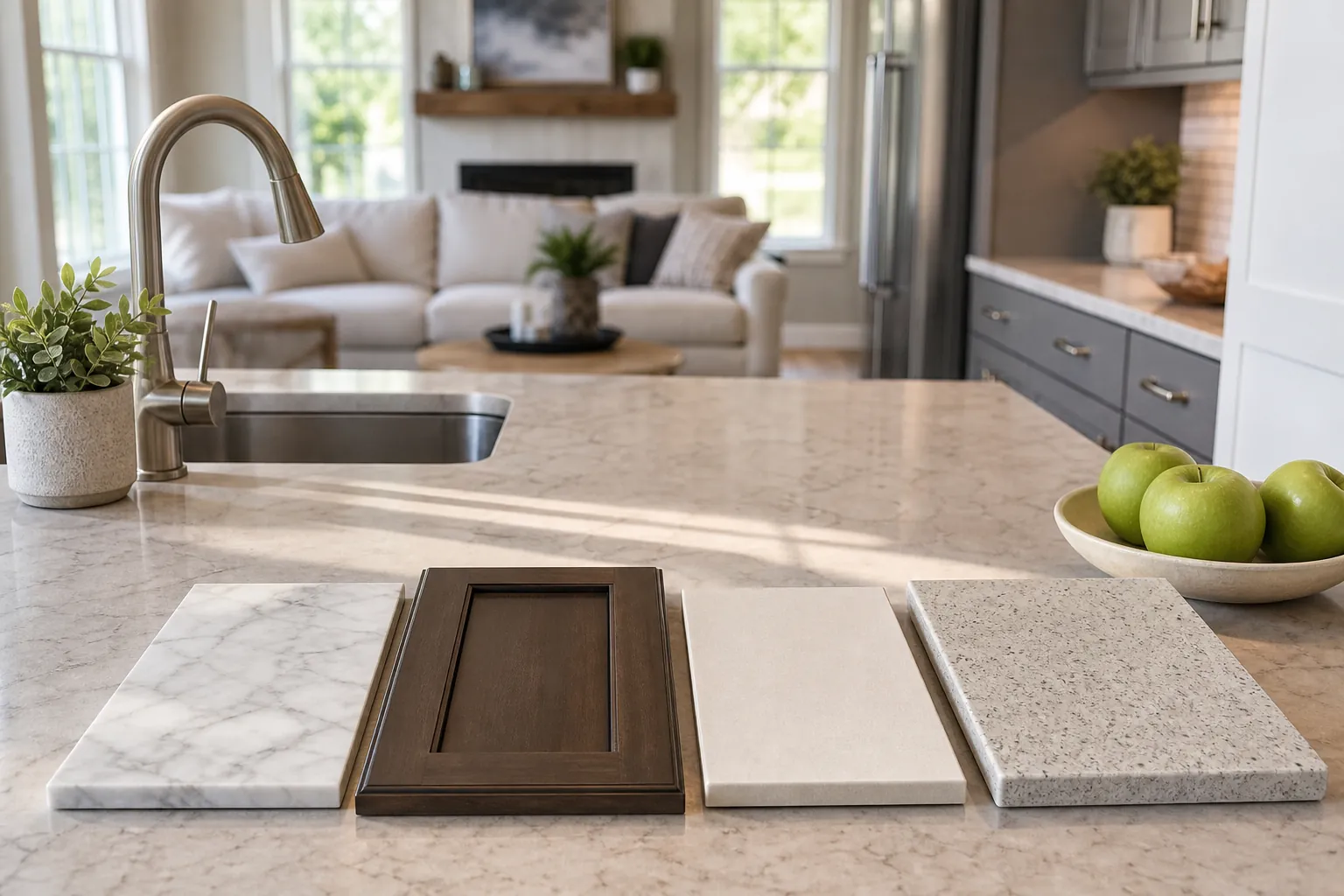
Low-maintenance remodel finishes are not simply the materials that look easiest to clean in a showroom. A practical comparison should account for routine care, sensitivity to stains or moisture, repair options, replacement difficulty, and how each surface will be used. Charlotte homeowners can make a clearer decision by defining their priorities first, then asking the same maintenance questions about every finish under consideration.
Start With the Demands of Each Space
Begin by identifying what the remodeled space will face every day. A finish in a frequently used bathroom may encounter water, cosmetics, soap residue, and repeated cleaning. Kitchen surfaces may need to handle spills, grease, heat exposure, and food preparation. Floors near an entry may collect grit and moisture, while walls in a quiet room may require little more than occasional dusting.
Write down the conditions before comparing colors or patterns. Consider who uses the room, how often it is used, whether children or pets affect wear, and how quickly spills are typically addressed. Also note whether ventilation, direct sunlight, or tracked-in debris could influence upkeep.
This process prevents a common decision problem: choosing a finish based on appearance, then discovering that its care requirements do not match the household. A low-maintenance choice is specific to its setting. The same material can be convenient in one area and demanding in another, depending on exposure, installation details, and expected use.
Compare Routine Cleaning Requirements
Ask what ordinary cleaning looks like for each candidate. Some surfaces tolerate common household cleaning methods, while others may require particular products, prompt drying, or avoidance of abrasive tools. Obtain written care information when possible and review it before making a selection.
Use a consistent checklist so attractive finishes receive the same scrutiny as practical-looking options:
- How often does the surface typically need cleaning?
- Can residue, dust, or water spots remain visible between cleanings?
- Are specialized cleaners or tools recommended?
- Could abrasive pads, acidic products, or strong chemicals cause damage?
- Do joints, grout lines, edges, or textured areas collect debris?
- Does the finish need periodic sealing, polishing, or another treatment?
- Can common spills wait, or must they be removed immediately?
Think honestly about the maintenance routine you will follow, not the routine you hope to adopt. A finish that needs careful weekly attention may be reasonable for one household but impractical for another. The best comparison connects manufacturer care guidance with real household habits.
Look Beyond the Surface to Seams and Details
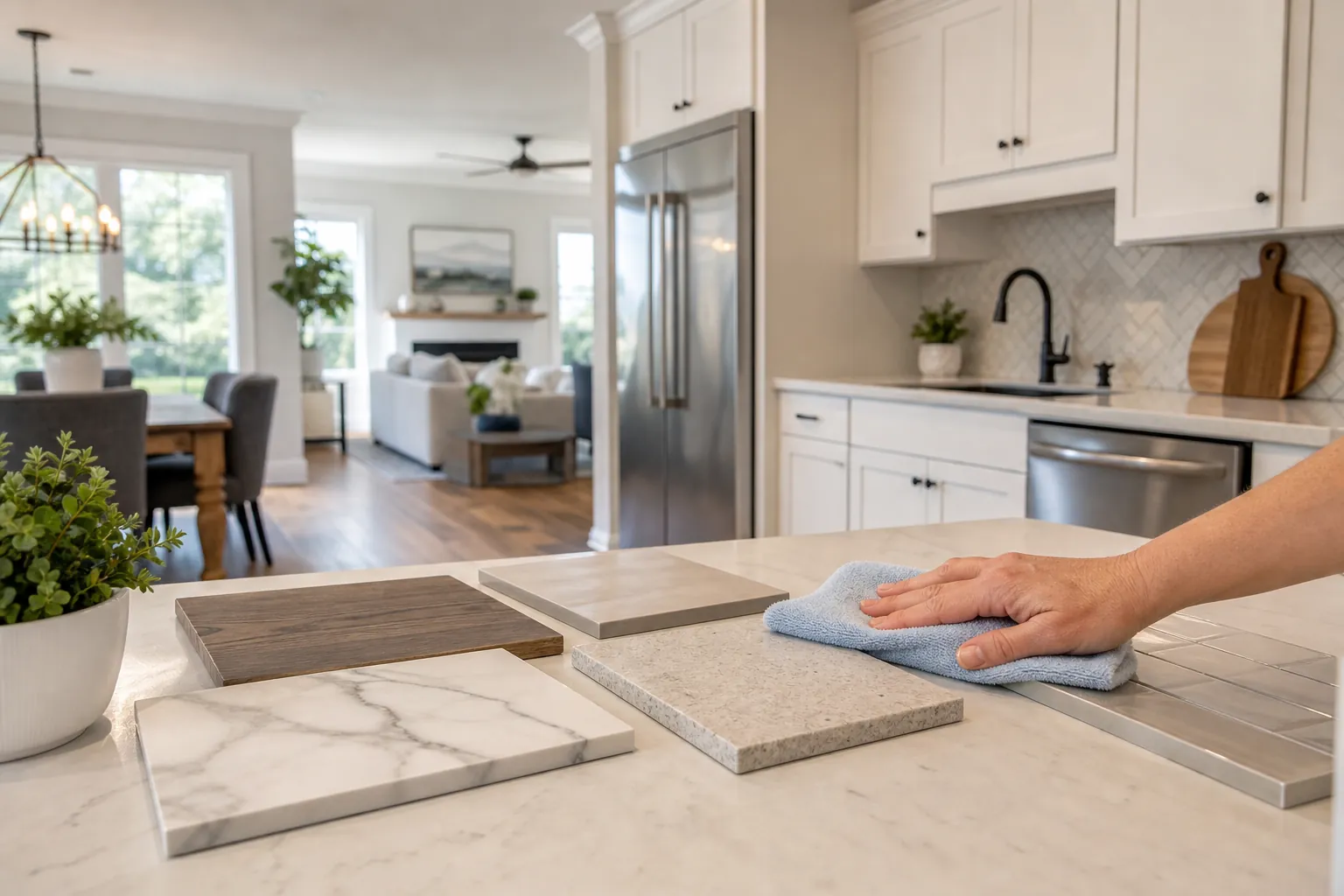
Maintenance is influenced by more than the main material. Seams, joints, grout, transitions, corners, hardware, and edges can create additional cleaning tasks. A broad surface may wipe clean easily, but numerous joints or deep textures can make the overall installation more time-consuming to maintain.
When reviewing samples, examine how the complete assembly may work rather than judging a small piece alone. Ask where seams may appear, which areas need caulk or grout, and how edges meet nearby materials. Consider whether dirt or water could gather around raised details, narrow gaps, or uneven textures. Color also affects perceived upkeep. Very light, very dark, glossy, and highly uniform surfaces can reveal certain marks more readily, even when the material itself is durable.
Installation quality and product-specific requirements matter, so avoid assuming that every version of a material performs identically. Compare the exact products and details being considered. Document those choices to keep care expectations clear during planning and after the remodel.
Evaluate Repairability and Long-Term Upkeep
Low maintenance should include what happens after ordinary wear. Ask whether a scratched, chipped, stained, or damaged area can be repaired locally. If not, determine whether replacement would involve one piece, a larger section, or surrounding finishes. A surface that is simple to clean may still create significant disruption if a small damaged area is difficult to address.
Also investigate recurring upkeep. Some finishes may need resealing or refinishing, while others may have joints or flexible sealants that require monitoring. Product care documents can clarify recommended procedures, but homeowners should also retain product names, colors, model information, and purchase records. Keeping a spare quantity may be worth discussing when future matching could be difficult.
Compare long-term demands alongside the initial selection price. This does not require predicting an exact lifespan or repair cost. Instead, identify likely maintenance tasks, who could perform them, and how replacement access may affect the room. A more informed choice balances appearance today with realistic care and repair decisions later.
Use a Simple Decision Matrix Before Choosing
Once you have narrowed the options, score each exact finish using the same categories. Useful categories include cleaning frequency, stain sensitivity, moisture considerations, specialized product requirements, recurring treatment, visibility of marks, repairability, and replacement complexity. A simple scale such as low, medium, and high maintenance can keep the comparison understandable.
Weight the categories according to your priorities. If minimal weekly cleaning matters most, give routine care greater importance. If you plan to remain in the home for years, recurring treatment and repair options may deserve more attention. Include appearance and initial cost, but keep them separate so they do not obscure maintenance tradeoffs.
For a bathroom project, finish decisions should also be considered alongside the broader spending plan. The related guide to bathroom remodel allowance planning in Charlotte can help organize selections before commitments are made. Take notes, request care instructions, and avoid finalizing a finish until its day-to-day demands are understood.
Discuss Your Remodel Priorities
If you are weighing finish options for a Charlotte remodel, clarify your maintenance priorities and questions before selecting materials. To discuss your project calmly and directly, call CDG Carolinas at (704) 619-6293.
Call (704) 619-6293 to talk through next steps.