
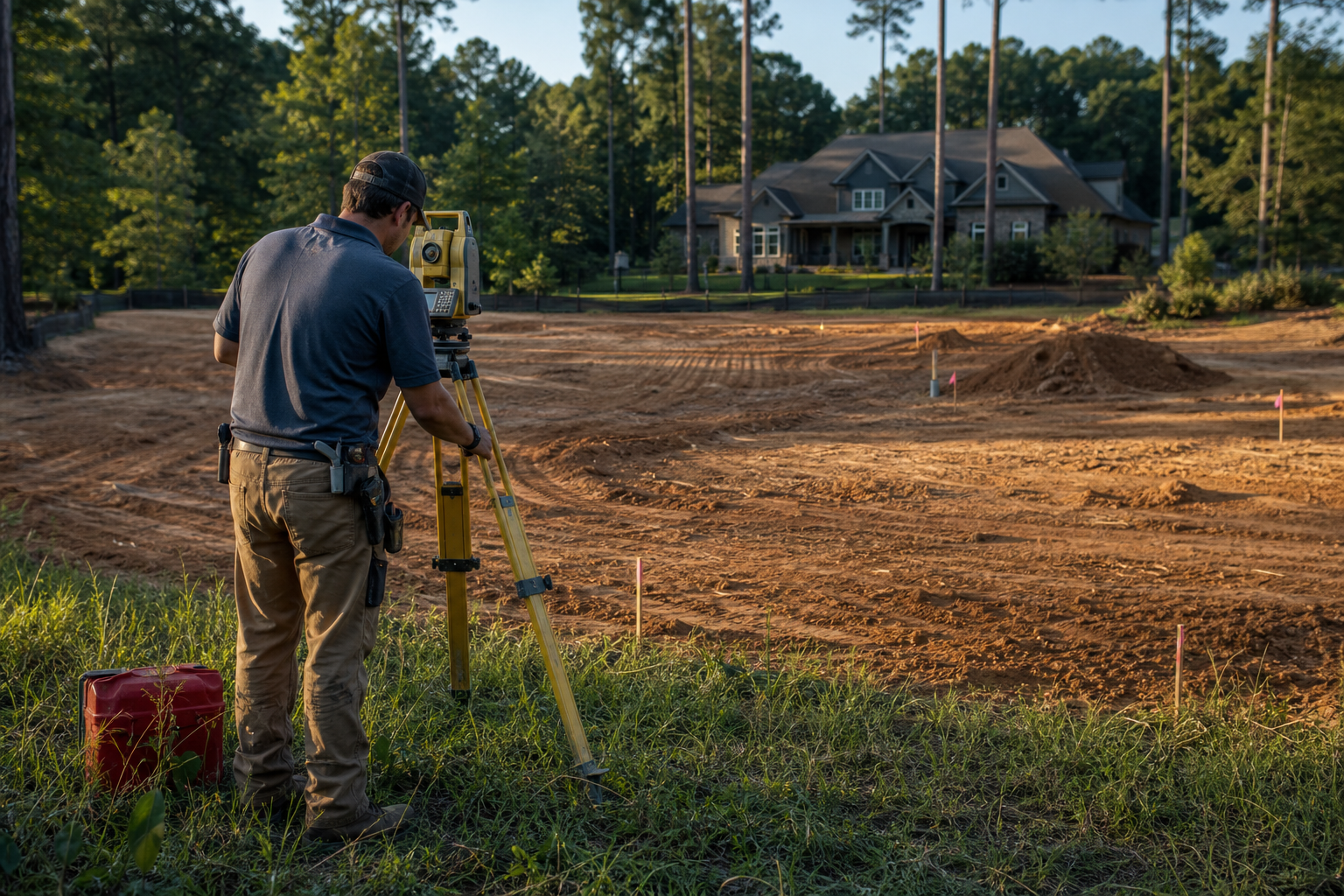
Mecklenburg well and septic lot preflight means gathering, before design or house placement decisions are finalized, the groundwater and wastewater information that Mecklenburg County Environmental Health already publishes and pairing it with a site-specific evaluation from the county and any other qualified professional the situation calls for. This includes existing well and septic records if the parcel was previously used, soil and site conditions relevant to a wastewater system, the proposed use of the property (single family, addition, accessory dwelling, or other), and confirmation of current fee schedules and process steps directly from the county before a budget or schedule is set.
This article summarizes what Mecklenburg County Environmental Health publishes on groundwater and wastewater services and on the septic system fee schedule and process, and it adds practical planning organization that Cooper Development Group uses when helping owners sequence due diligence. It does not replace a site evaluation, a permit application, or a determination made by Mecklenburg County Environmental Health. Program details, fees, application steps, and technical requirements change, and any figure or step mentioned here should be verified directly with the county before it is relied upon for a specific lot.
Direct Answer and Evidence Boundary
Owners considering a residential lot in Mecklenburg County often ask which groundwater and wastewater questions actually belong in early due diligence, before a house is sited or a design is finalized. The short answer is that a Mecklenburg well septic lot preflight should organize five categories of information: existing records for the parcel, current site observations, the proposed use of the property, an evaluation performed or reviewed by the county, and direct confirmation from Mecklenburg County Environmental Health of the process and fees that currently apply. Treating these as separate but connected categories helps an owner and a project team avoid gaps that surface later, often at a point when they are harder and more disruptive to correct.
This is informational planning guidance, not a substitute for the county's own review. Mecklenburg County Environmental Health, through its groundwater and wastewater services program, is the authority that determines what is required for a specific parcel, and the fee schedule and process page it publishes is the current source for procedural and fee information. Anything in this article should be checked against those published pages and against direct communication with the county before an owner or contractor makes a placement, budget, or scheduling decision.
What Current Public Sources Establish
Mecklenburg County Environmental Health maintains a groundwater and wastewater services page that describes the county's role in overseeing private wells and septic (onsite wastewater) systems within its jurisdiction. The county also publishes a septic system fee schedule and process page that lays out the general steps and associated fees connected to septic system permitting activity. These two pages, taken together, are the floor of factual information this article relies on, and they are the pages an owner should read first, before any site visit or design conversation begins.
Because these are official county resources, they are also the pages most likely to be updated when fees, forms, or process steps change. An owner should not assume that a fee, timeline, or step described in a secondary source, including this article, remains accurate on the date of reading. The county's published pages, and direct contact with the environmental health department, are the reference points that should be checked closest to the date any commitment is made.
- Mecklenburg County Environmental Health publishes a groundwater and wastewater services overview describing its oversight of private wells and septic systems.
- A separate fee schedule and process page from Mecklenburg County Public Health lays out septic system permitting fees and general process steps.
- Both pages are subject to change, so the dates of review matter as much as the content itself.
Inputs and Existing Conditions to Document
Before a lot can be evaluated for well or septic suitability, an owner benefits from assembling what already exists in the record and what can be observed on site. This is largely an information-gathering exercise rather than a technical evaluation, but it shapes what the county and any other professional involved will need to review. Missing or incomplete information at this stage is one of the more common reasons a preflight review takes longer than an owner expects.
Existing well or septic permits, if the parcel was previously developed or if a prior owner installed either system, are a natural starting point. Even a partial record, such as an old permit number or a rough site sketch, can help the county locate its own files faster. Where no prior record exists, that absence itself is useful information, since it tells the project team that the lot will likely require a fuller initial evaluation rather than a records-based confirmation.
- Any existing well or septic permit numbers, site plans, or as-built records connected to the parcel.
- General site conditions such as topography, wooded versus cleared area, and any visible drainage patterns or wet areas.
- Known or suspected soil characteristics, including any prior soil evaluations if they exist for the parcel or nearby lots.
- Location of existing utilities, easements, or shared access that could affect where a well or septic system could be placed.
- Any prior correspondence with Mecklenburg County Environmental Health regarding the parcel or an adjacent one.
Step-by-Step Owner and Project-Team Review
A practical preflight sequence starts with the owner, or the owner working alongside a project team, reviewing the county's published groundwater and wastewater services page and the septic fee schedule and process page in full before any other step is taken. This establishes a shared understanding of what the county's role covers and what general process steps and fees the county currently lists, so that later conversations with the county are more efficient and better informed.
From there, the review typically moves to gathering the existing records described in the prior section, followed by an on-site walk to note visible conditions that could affect well or septic placement, such as slope, existing structures, or standing water. Only after these steps does it make sense to contact Mecklenburg County Environmental Health directly to confirm what site-specific evaluation or application process applies, since the county is the party that determines the actual requirements for the parcel in question.
- Read the current groundwater and wastewater services page and fee schedule and process page from Mecklenburg County Environmental Health.
- Collect existing well or septic records and any prior soil or site evaluations connected to the parcel.
- Walk the site and document visible conditions relevant to water and wastewater placement.
- Contact Mecklenburg County Environmental Health to confirm the current process, required forms, and fees for the specific parcel and proposed use.
- Share the confirmed county requirements with the design and construction team before finalizing house placement.
Responsibilities, Dependencies, and Hold Points
A useful way to think about a Mecklenburg well septic lot preflight is as a responsibility map rather than a single checklist. Different parties hold different pieces of information, and the process depends on each piece arriving in a usable form before the next step can proceed. The owner is generally responsible for assembling existing records and describing the proposed use of the property. The county is responsible for confirming its current process, fees, and any required site evaluation. A qualified professional, such as a soil scientist, engineer, or licensed contractor, may be responsible for portions of a site evaluation or for translating county requirements into a workable design.
Hold points exist where one party's output is a prerequisite for another party's next step. For example, a design decision about house placement should generally wait until the county has confirmed what area of the lot is suitable, or potentially suitable, for a septic system, since moving a house closer to a suitable area later can be far more difficult than accounting for it from the start. Treating these hold points as deliberate pauses, rather than as delays to work around, tends to reduce rework.
- The owner typically holds responsibility for existing records, proposed use description, and site access for evaluation.
- Mecklenburg County Environmental Health holds responsibility for confirming current process, fees, and site-specific requirements.
- A qualified professional, when engaged, may hold responsibility for portions of a technical site evaluation.
- House placement and design decisions generally depend on county confirmation of suitable area before they are finalized.
- Budget and scheduling assumptions should depend on confirmed fees and process steps rather than on assumed figures.
Common Coordination Failures
Several recurring patterns show up when a Mecklenburg well septic lot preflight is skipped or rushed. One is a design or site plan that is drawn before the county has confirmed where a septic system could be placed, which can force a redesign once the suitable area is identified. Another is relying on an old or informal record, such as a neighbor's description of a prior septic layout, instead of confirming directly with the county what is actually on file for the parcel.
A third pattern involves proposed use changing after initial county contact, such as adding a bedroom count or accessory structure that affects wastewater system sizing, without going back to confirm whether that changes the county's evaluation or requirements. A fourth involves budget or timeline assumptions being set from a general fee schedule reading rather than from a fee and process confirmation specific to the parcel and its proposed use, which can leave a gap between what was planned and what the county ultimately requires.
- Site plans or house placement finalized before the county confirms a suitable area for a septic system.
- Reliance on informal or secondhand information about a prior well or septic system instead of the county's own record.
- Proposed use changing after initial county contact without confirming whether the change affects requirements.
- Budget or schedule assumptions based on a general reading of published fees rather than a parcel-specific confirmation.
Questions for the Responsible Authority or Qualified Professional
Because Mecklenburg County Environmental Health is the authority that determines site-specific requirements, an owner's direct questions to the department matter as much as any general reading of published pages. Before finalizing house placement or committing to a design, an owner or project team should be prepared to ask the county what evaluation is currently required for the parcel, what records the county already has on file, and what the current fee and process steps are for the specific proposed use.
It is also worth asking a qualified professional, separate from the county, whether the visible site conditions raise any questions that should be brought back to the county before design work proceeds. Since requirements, forms, and fees can change, these questions should be asked close to the point of decision rather than relying on information gathered earlier in the process.
- What evaluation is currently required for this specific parcel and proposed use.
- What records, if any, the county already has on file for this parcel.
- What the current fee schedule and process steps are, confirmed directly rather than assumed from a general reading.
- Whether any visible site conditions raise questions that should be addressed before design work proceeds.
- Whether a change in proposed use, such as added bedrooms or structures, would change the county's evaluation.
Next Action and Related CDG Service Resource
An owner working through a Mecklenburg well septic lot preflight does not need to manage every step alone. Cooper Development Group works with owners during pre-construction planning to help organize existing records, document site conditions, and coordinate the questions that go to the county and to any qualified professional involved, so that house placement and design decisions are made with confirmed information rather than assumptions. This planning approach is similar in spirit to the pre-construction process CDG describes for Lake Wylie, South Carolina lots, and readers working through a related pillar topic can review the companion article on septic feasibility before house placement on a Carolinas lot for broader context.
For owners who want to see how this kind of preflight fits into a wider pre-construction planning conversation, the CDG blog covers related planning topics, and the consultation page is where a specific parcel and proposed use can be discussed directly. Any next step involving a specific lot should still begin with, and be confirmed against, Mecklenburg County Environmental Health's current published requirements.
- Review the pillar article on septic feasibility before house placement on a Carolinas lot for broader planning context.
- See the related pre-construction planning approach described for Lake Wylie, South Carolina lots.
- Browse the CDG blog for additional pre-construction planning topics.
- Use the consultation page to discuss a specific parcel and proposed use with the CDG team.
Questions homeowners ask
Who determines whether a Mecklenburg lot can support a well or septic system?
Mecklenburg County Environmental Health is the authority responsible for groundwater and wastewater services in the county, including evaluating whether a parcel can support a well or septic system. Any determination about a specific lot should come from the county directly, and current process and fee information should be confirmed on the department's published pages before an owner relies on it.
What records should an owner gather before contacting the county about a lot?
An owner should gather any existing well or septic permits or site plans connected to the parcel, notes on visible site conditions such as topography and drainage, and a clear description of the proposed use of the property, including structure type and any planned additions. Having this information organized before contacting Mecklenburg County Environmental Health tends to make the initial conversation more efficient.
Does a Mecklenburg well and septic preflight replace a formal site evaluation?
No. A preflight is an organizing step that gathers records, observations, and proposed use information so that a formal evaluation by Mecklenburg County Environmental Health, or by a qualified professional the county's process may involve, can proceed with fewer gaps. The county's own evaluation and confirmation remain the step that determines actual requirements for the parcel.
How does proposed use of the property affect the well and septic review?
The proposed use, such as bedroom count, accessory structures, or a change from residential to another use, can affect how a wastewater system needs to be sized or evaluated. Any change in proposed use after initial contact with the county should be communicated back to Mecklenburg County Environmental Health to confirm whether it changes the evaluation or requirements that apply.
Plan the next step
Use this article as a planning aid, then confirm project-specific requirements with the responsible authority and qualified professionals. Review CDG's related service, construction articles, or consultation page when you are ready to organize the next decision.
Official sources and verification
- Mecklenburg County Environmental Health: Groundwater and Wastewater Services
- Mecklenburg County Public Health: Septic System Fee Schedule and Process
Authority pages, forms, fees, review steps, and code references can change. Verify the current path for the property and scope before relying on a planning assumption.