
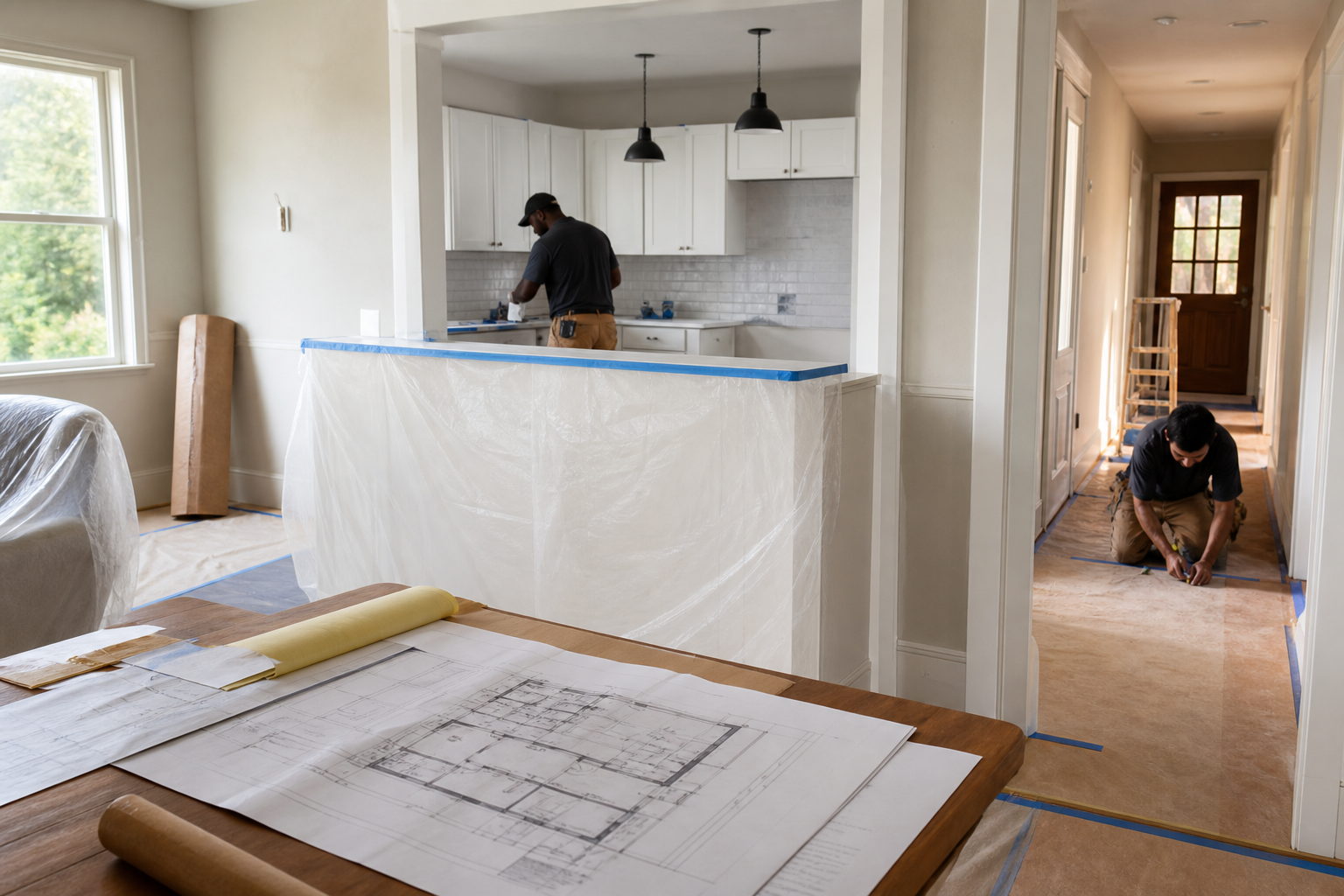
Before renovation work begins in an occupied rental, owners and their project team should resolve seven interlocking items: a communication plan for residents, an access and scheduling agreement, physical separation of the work area from occupied space, a utility interruption plan, a belongings and furniture protection plan, a daily closeout and cleanup standard, and a review of whether lead-safe work practice obligations apply to the property based on its age and the scope of work. Resolving these items in preconstruction, rather than during the first week of work, reduces the chance of disputes, delays, and habitability complaints once crews are on site.
The information below separates two categories of content. Some statements describe what published federal sources currently establish about lead-safe renovation practices and indoor air quality during remodeling; those statements are sourced to the U.S. Environmental Protection Agency and are noted as such. Other statements describe a general planning framework that Cooper Development Group uses to organize preconstruction conversations with owners; those statements are practical guidance, not a citation to any code or regulation. Every property is different, and current legal requirements, permitted scope, and inspection expectations must be verified with the authority having jurisdiction before work starts.
What Current Public Sources Establish
The EPA's Renovation, Repair and Painting Program page addresses lead-safe work practices for renovations that disturb painted surfaces in pre-1978 housing and child-occupied facilities. It describes firm certification, individual training, and specific containment and cleaning practices intended to reduce lead dust exposure during renovation activities. Because rules, certification requirements, and enforcement details can change, and because applicability depends on the age of the structure and the nature of the work, owners and contractors should confirm current requirements directly on the EPA page and with the relevant regulatory authority before scope is finalized.
The EPA's guidance on addressing indoor environmental concerns during remodeling discusses ventilation, dust control, and other indoor air quality considerations that arise when remodeling work is performed in or near occupied space. It does not set out a single occupied-rental workflow; it frames indoor air quality as a factor that remodeling activity can affect, and it encourages attention to ventilation and containment as work proceeds. Neither EPA source provides a step-by-step preconstruction checklist for occupied rental properties. The planning framework in the sections below is CDG's own organizing approach for owner conversations, built around the general themes those sources raise, and it is not a restatement of a specific regulatory checklist.
Inputs and Existing Conditions to Document
Before a renovation scope is finalized on an occupied rental, it helps to have a clear written record of the property's existing conditions and the tenancy situation. This documentation supports decisions about phasing, access, and whether lead-safe work practice review is needed, and it gives the owner and project team a shared reference if questions come up later.
Gathering this information during preconstruction, rather than reconstructing it after work has started, tends to reduce disagreements about what was known and when.
- The approximate age of the structure and any known history of prior renovations, since building age is a relevant factor in whether lead-safe work practice obligations may apply.
- The current lease terms, including any language about access, notice periods, and temporary relocation, since these terms shape what the project team can and cannot do without additional agreement.
- The number of occupied units, if the property is multi-family, and which units are directly affected by the renovation scope.
- A record of existing conditions, including photos of finishes, fixtures, and any pre-existing damage, before work begins.
- Utility service points and whether they are shared or individually metered, which affects how interruptions will be planned and communicated.
Step-by-Step Owner and Project-Team Review
A structured preconstruction review gives the owner, property manager, and contractor a chance to align on expectations before residents are affected. The order below is not a regulatory sequence; it is a practical way to work through the interlocking decisions that occupied rental renovation planning requires.
Each step below builds on the one before it, so working through them in order tends to surface conflicts, such as an access plan that does not match the lease terms, before they become on-site problems.
- Confirm the renovation scope and identify which parts of it require resident notice, temporary relocation, or unit access beyond what day-to-day maintenance would require.
- Review the lease and any applicable landlord-tenant notice requirements with the owner's property manager or legal advisor, since notice periods and habitability obligations vary and are outside the scope of construction planning.
- Draft a resident communication plan that states what work will occur, on what general schedule, and who residents should contact with questions or concerns during the project.
- Establish an access and scheduling agreement that specifies work hours, how entry will be coordinated, and what happens if a resident is not available on a scheduled day.
- Plan physical separation between the work area and occupied space, including temporary barriers, dust containment measures, and clearly marked pathways.
- Confirm the utility interruption plan, including which systems may be affected, how far in advance residents will be notified, and whether temporary alternatives are needed.
- Agree on a belongings and furniture protection plan for any occupied space near the work area, including who is responsible for moving items and how they will be protected.
- Set a daily closeout and cleanup standard so residents know what condition common areas and work zones will be left in at the end of each work day.
- Determine whether the scope and the property's age trigger lead-safe work practice review, and confirm the applicable path with a qualified professional or the responsible regulatory authority.
Responsibilities, Dependencies, and Hold Points
Occupied rental renovation planning works best when responsibilities are assigned clearly and in writing, because several parties are typically involved: the owner, the property manager, the contractor, and the residents themselves. Ambiguity about who communicates with residents, who authorizes a schedule change, or who confirms lead-safe applicability tends to produce delays once work is underway.
Certain items function as hold points, meaning work in a given area should not proceed until they are resolved. These typically include confirmation of lease-related notice obligations, agreement on the access schedule for the affected units, and, where applicable, confirmation of the lead-safe work practice path for the specific scope and property age.
- The property owner or property manager is generally responsible for lease compliance, resident notice timing, and any habitability questions, and should coordinate with legal counsel as needed.
- The contractor is generally responsible for job-site containment, daily cleanup standards, and coordinating the construction schedule with the access plan the owner has approved.
- Residents are a party to the plan, not simply a notice recipient, and their feedback on scheduling conflicts or access issues should be captured before work begins in their unit.
- Utility interruptions that affect life-safety systems, such as heating or hot water in occupied units, typically warrant additional advance notice and a documented contingency plan.
- Any uncertainty about whether lead-safe work practice obligations apply to a given scope should be resolved with a qualified professional or the applicable regulatory authority before disturbance of painted surfaces begins.
Common Coordination Failures
Several recurring issues show up when occupied rental renovation planning is treated as an afterthought rather than a preconstruction step. Recognizing these patterns in advance allows the owner and project team to build safeguards into the plan rather than reacting after a problem has already affected a resident.
Most of these failures trace back to the same root cause: a plan that exists in someone's head or in scattered emails rather than in a single document that residents, the property manager, and the contractor can all reference.
- Resident communication that is verbal only, with no written confirmation of dates, times, or scope, which makes it difficult to resolve disputes about what was agreed.
- Access plans that assume residents will always be available during standard work hours, without a documented process for rescheduling.
- Physical separation that is treated as optional once work begins, leading to dust or debris migrating into occupied space.
- Utility interruptions announced with too little advance notice, particularly for services residents depend on daily.
- Belongings left in place near the work area with no clear agreement about who is responsible for protecting or moving them.
- Daily cleanup standards that are assumed rather than specified, leaving residents uncertain about what to expect at the end of each work day.
- Lead-safe work practice applicability not reviewed until after work has already disturbed painted surfaces, rather than confirmed during scope development.
Questions for the Responsible Authority or Qualified Professional
Because occupied rental renovation involves overlapping construction, landlord-tenant, and environmental considerations, owners benefit from bringing specific questions to the right party rather than assuming general practice applies to their situation. The questions below are starting points, not an exhaustive list, and the right party to ask depends on the topic.
For lease notice periods, habitability standards, and tenant relocation obligations, owners should direct questions to their property manager or legal advisor, since these are governed by state and local landlord-tenant law rather than construction codes. For lead-safe work practice applicability, owners should consult the EPA's Renovation, Repair and Painting Program page and confirm the current requirements and any certification obligations with a qualified professional or the applicable regulatory authority, since requirements can change and enforcement details vary by jurisdiction.
- Does the scope of work disturb painted surfaces in a structure built before the relevant lead-safe cutoff year, and if so, what work practices currently apply?
- What advance notice period does applicable landlord-tenant law require for entry, and does that period differ for emergency versus planned work?
- Are there local or state-specific indoor air quality or ventilation expectations that apply to remodeling in occupied buildings beyond the general EPA guidance?
- Does the property's insurance coverage require any specific notice or documentation before renovation work begins in occupied units?
- Are there additional relocation or habitability standards that apply if a unit becomes temporarily uninhabitable during part of the project?
Next Action and Related CDG Service Resource
Resolving communication, access, separation, utilities, belongings, daily closeout, and lead-safe review before renovation begins gives owners of occupied rental properties a documented plan to point to if questions arise during the project. This kind of preconstruction diligence is part of a broader approach to investor construction services planning, where separating what is confirmed from what still needs verification helps avoid disputes later in the project.
Owners considering a renovation in an occupied rental can review general information on investor-focused services at /investors/, browse additional planning articles at /blog/, or start a conversation about a specific property at /consultation/. Any conversation about a specific property should include a review of current lead-safe obligations, landlord-tenant notice requirements, and other jurisdiction-specific rules with the appropriate authority or qualified professional, since this article provides a planning framework rather than a determination for any individual property.
- Review general investor service information before finalizing scope or schedule for an occupied rental renovation.
- Use the planning framework in this article as a starting checklist, not as a substitute for confirming property-specific requirements.
- Bring lease documents, property age information, and a draft resident communication plan to an initial planning conversation.
Questions homeowners ask
What is occupied rental renovation planning, in simple terms?
It refers to the preconstruction work of resolving communication, access, separation, utilities, belongings protection, daily cleanup standards, and applicable lead-safe obligations before renovation activity begins in a rental property where residents are still living. The goal is to have these items documented and agreed upon before crews arrive, rather than working them out during the first days of construction.
Do all occupied rental renovations require lead-safe work practices?
Not necessarily. Applicability generally depends on factors such as the age of the structure and the specific scope of work, particularly whether painted surfaces will be disturbed. The EPA's Renovation, Repair and Painting Program page describes the federal framework, but current requirements and any certification obligations should be confirmed with a qualified professional or the applicable regulatory authority for the specific property and scope, since requirements can change.
Who decides how much notice residents receive before work starts in their unit?
Notice requirements are typically governed by the lease and by state or local landlord-tenant law, not by construction planning alone. Owners and property managers should confirm applicable notice periods with their legal advisor or the relevant authority, and then build the confirmed notice period into the resident communication and access plan developed with the contractor.
What should be in a daily closeout standard for an occupied rental project?
A daily closeout standard should describe what condition the work area and any shared or occupied spaces will be left in at the end of each work day, including debris removal, securing openings, and restoring access to essential areas. The specific standard should be agreed upon by the owner, contractor, and property manager during preconstruction so residents know what to expect each evening.
Plan the next step
Use this article as a planning aid, then confirm project-specific requirements with the responsible authority and qualified professionals. Review CDG's related service, construction articles, or consultation page when you are ready to organize the next decision.
Official sources and verification
- U.S. Environmental Protection Agency: Renovation, Repair and Painting Program for Contractors
- U.S. Environmental Protection Agency: Addressing Indoor Environmental Concerns During Remodeling
Authority pages, forms, fees, review steps, and code references can change. Verify the current path for the property and scope before relying on a planning assumption.