
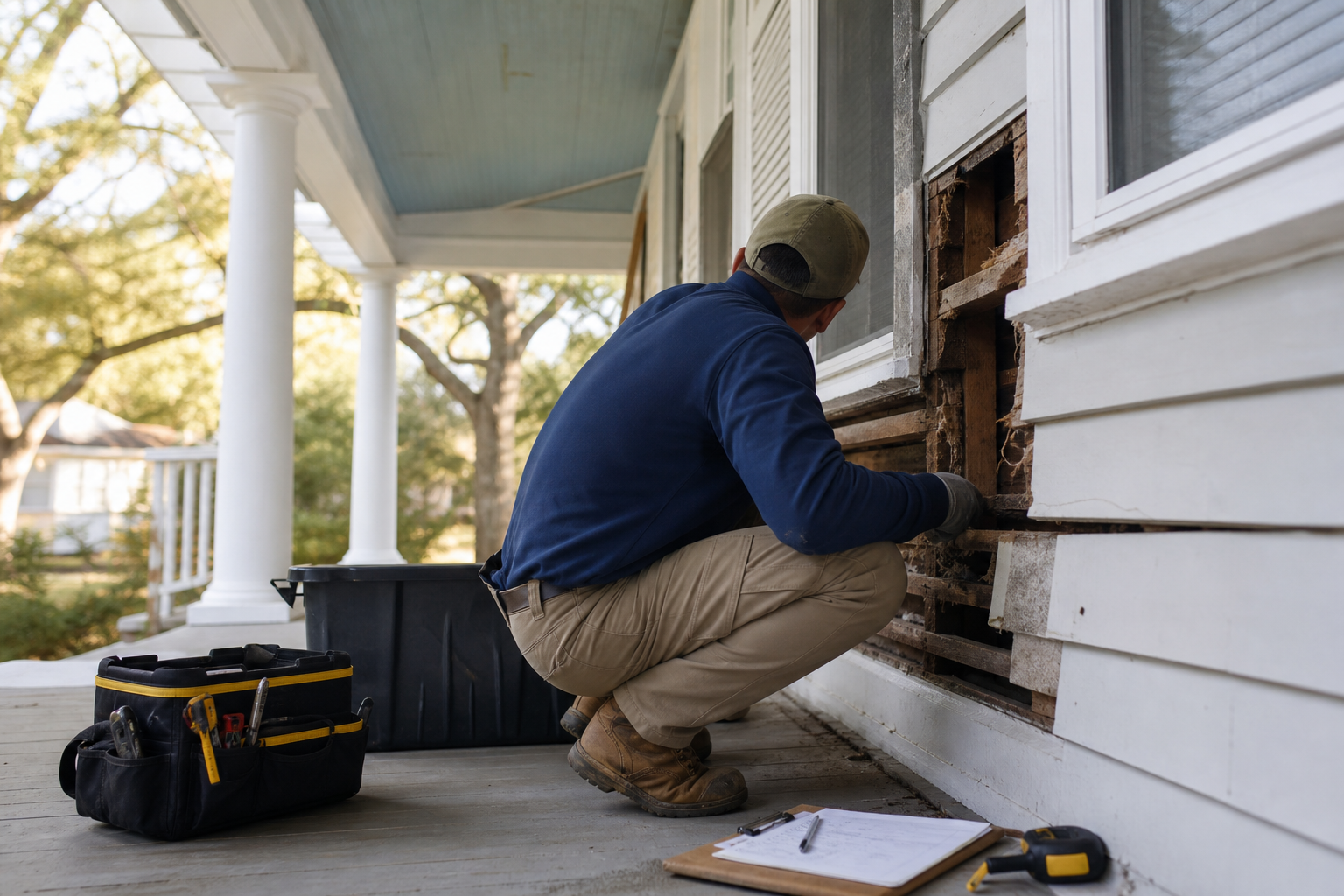
When exploratory openings during a pre-1978 home renovation reveal unexpected materials, moisture, structural irregularities, unknown utilities, unusual odors, or unsafe access conditions, the practical answer is to stop work at that location, secure the area, and route the finding to the appropriate qualified professional or authority before continuing. A fail-closed approach means the default response to an unknown condition is to pause rather than assume the finding is minor and proceed. This protects occupants, workers, and the long-term integrity of the project, and it keeps the owner in control of decisions that carry health, safety, or structural consequences.
This article draws its evidence boundary from published guidance from the U.S. Environmental Protection Agency on lead-safe renovation practices, asbestos in home remodeling, and indoor environmental concerns during remodeling projects. Those sources establish general categories of concern for older homes but do not set project-specific stop conditions, testing thresholds, or approval procedures for any individual property. Homeowners and contractors should treat this article as planning guidance only and confirm current, property-specific requirements with the EPA, a licensed environmental testing professional, a structural engineer, a utility provider, or the local authority having jurisdiction as applicable before demolition or exploratory work begins.
What Current Public Sources Establish
The EPA's Renovation, Repair and Painting Program materials describe practices intended to reduce lead dust exposure when disturbing painted surfaces in homes built before 1978, since these structures may contain lead-based paint. The guidance describes general containment and cleaning concepts associated with regulated renovation activities but does not provide a property-specific test result or a determination for any individual home. The EPA's asbestos remodeling guidance similarly explains that certain building materials common in older homes, such as some insulation, flooring, and joint compounds, may contain asbestos, and that disturbing these materials without proper handling can release fibers into the air.
The EPA's guidance on indoor environmental concerns during remodeling addresses a broader set of issues, including moisture, mold, and ventilation considerations that can arise once walls, floors, or ceilings are opened. None of these three sources function as a step-by-step protocol for a specific renovation project. They establish categories of concern that a homeowner and project team should be aware of before exploratory work begins, and they consistently point toward testing, professional evaluation, or consultation with the appropriate authority rather than self-diagnosis based on appearance alone.
Inputs and Existing Conditions to Document
Before any exploratory opening begins, it helps to gather what is already known about the structure so the project team is not working blind. This includes the approximate construction date, any available renovation history, prior permit records if accessible, and any known locations of previous plumbing, electrical, or structural work. Older homes frequently have undocumented modifications from past owners, and a documented baseline makes it easier to recognize when something found during exploratory work is unexpected versus already known.
Documentation should also include photographs of existing conditions before work starts, a simple floor plan noting suspected utility runs, and a written list of any areas the owner already suspects may need special attention, such as past water damage or a room that was previously renovated. This baseline does not replace testing or inspection, but it gives the project team a reference point so that when an opening reveals something new, everyone can quickly tell whether it matches expectations or represents a stop condition.
Step-by-Step Owner and Project-Team Review
A practical review sequence starts before demolition, continues during each exploratory opening, and closes with a documented decision at each stop point. The owner and project team should agree in advance on what counts as an unexpected material, what moisture level or staining triggers a pause, what structural signs warrant an engineer's review, and what odor or utility discovery requires an immediate stop. Agreeing on these definitions in advance removes ambiguity in the moment when a worker encounters something unfamiliar.
During the work itself, each exploratory opening should be treated as its own decision point rather than an extension of the previous one. A condition found in one wall cavity does not necessarily apply to the next, especially in additions or rooms renovated at different times. After each opening, the team records what was found, whether it matched the documented baseline, and whether the work can continue or must pause for outside evaluation.
- Confirm the construction era and available renovation history before exploratory work begins.
- Agree in writing on what triggers a pause for materials, moisture, structure, utilities, odor, or access.
- Photograph and log each opening before and after work at that location.
- Treat each opening as an independent decision point rather than assuming uniform conditions throughout the home.
Responsibilities, Dependencies, and Hold Points
Clear responsibility assignments reduce the chance that a stop condition is discovered but not acted on. The owner typically holds decision authority over whether to proceed with remediation, testing, or design changes once a condition is flagged, since these decisions often carry cost and schedule implications that belong to the owner rather than the contractor. The project team is generally responsible for recognizing when a stop condition has been met and for halting work at that location until the owner and the relevant professional have weighed in.
Dependencies matter here as much as responsibilities. A structural finding may depend on an engineer's site visit before framing work resumes. A suspected environmental material may depend on laboratory results before the area can be reopened. A utility discovery may depend on the relevant utility provider confirming what the line serves before it is moved or capped. Building these dependencies into the schedule from the outset, rather than treating them as surprises, keeps a fail-closed protocol from becoming a source of unnecessary delay when a stop condition is eventually triggered.
Common Coordination Failures
One frequent failure is treating a stop condition as optional because the project is already behind or because the finding looks minor to an untrained eye. Visual assessment alone is not a reliable way to rule out lead-based paint, asbestos-containing material, or a structural issue, and proceeding without proper evaluation can create exposure risks or compound damage that is more difficult and disruptive to address later. A second common failure is inconsistent communication, where a worker notices something concerning but does not have a clear path to report it, so the finding is addressed informally rather than through the agreed stop-condition process.
A third failure involves scope creep during a pause. Once work stops for one reason, it is common for additional questions to surface, and without a clear owner-approved process for handling these questions, the project can drift into undocumented decisions made under time pressure. Keeping a simple written log of each stop condition, who was contacted, what was found, and what decision was made helps prevent this drift and gives the owner a clear record to reference later.
Questions for the Responsible Authority or Qualified Professional
Because stop conditions can involve different specialists depending on what is found, it helps to prepare questions in advance for each likely scenario. For a suspected lead-based paint or asbestos-containing material finding, questions should focus on what testing method applies, what containment is expected while awaiting results, and what happens to work in adjacent areas during that time. For a structural finding, questions should focus on what temporary support may be needed and what information the engineer needs to render an opinion.
For utility discoveries, questions should focus on identifying the service, confirming whether it is active, and determining who has authority to disconnect or relocate it. For moisture or odor findings, questions should focus on the likely source, whether the area needs to dry or be tested before covering, and whether the finding affects other parts of the home. In every case, the responsible authority having jurisdiction for permitting and code questions should be confirmed separately, since local requirements can vary and can change over time.
- Ask what testing method and turnaround applies to a suspected regulated material before work resumes nearby.
- Ask whether temporary structural support is needed while an engineer's evaluation is pending.
- Ask which utility provider or licensed trade professional has authority over an unidentified line before it is touched.
- Confirm current permit and inspection requirements directly with the local authority having jurisdiction.
Next Action and Related CDG Service Resource
A written older home exploratory work plan built around clear stop conditions gives owners and project teams a shared reference before demolition begins, rather than leaving these decisions to be worked out in the middle of an active project. Establishing these conditions early, documenting existing conditions, and assigning responsibility for each category of concern supports a more orderly renovation process on a pre-1978 home, where unexpected findings are common.
Homeowners planning a renovation on an older property can review general information on CDG's remodeling services page, browse related planning topics on the CDG blog, or request a consultation to discuss how a fail-closed exploratory approach might apply to their specific project. Any property-specific testing, environmental, structural, utility, or code question should still be directed to the appropriate licensed professional or the authority having jurisdiction, since this article provides planning context rather than a determination for any individual home.
- Review general remodeling planning information at /remodeling/.
- Browse related pre-1978 renovation planning topics at /blog/.
- Request a project consultation at /consultation/ to discuss exploratory work planning for a specific property.
Questions homeowners ask
What conditions should pause exploratory openings during renovation?
Work should pause whenever an opening reveals a material that cannot be identified with confidence, active or historic moisture intrusion, structural elements that appear altered or compromised, utility lines that are not documented on existing plans, unusual or chemical odors, or any condition that makes continued access unsafe for workers. In each case, the practical step is to stop at that location, isolate it if needed, and involve the relevant qualified professional or authority before resuming. This is a planning practice, not a substitute for a site-specific safety or code determination.
Who decides whether a paused opening is safe to resume?
That decision belongs to the professional or authority whose expertise matches the finding. Suspected asbestos-containing material or lead-based paint disturbance should be evaluated according to EPA guidance and, where applicable, by a qualified testing or abatement professional. Structural questions belong with a structural engineer, utility questions belong with the relevant utility provider or a licensed trade professional, and any code or permit question belongs with the local authority having jurisdiction. CDG project teams can help coordinate these referrals as part of home remodeling planning, but the underlying technical or regulatory determination is not made by the general contractor alone.
Does a written exploratory work plan replace the need for testing or inspection?
No. A written plan documents expected conditions, defines stop conditions in advance, and assigns who is contacted when a stop condition is triggered. It does not replace laboratory testing, an engineer's evaluation, a utility locate, or an inspection by the authority having jurisdiction. The plan exists so that when an unexpected condition appears, everyone on the project already knows the next step, rather than having to decide in the moment whether to continue work that may already be unsafe.
Plan the next step
Use this article as a planning aid, then confirm project-specific requirements with the responsible authority and qualified professionals. Review CDG's related service, construction articles, or consultation page when you are ready to organize the next decision.
Official sources and verification
- U.S. Environmental Protection Agency: Renovation, Repair and Painting Program for Contractors
- U.S. Environmental Protection Agency: Asbestos and Home Remodeling
- U.S. Environmental Protection Agency: Addressing Indoor Environmental Concerns During Remodeling
Authority pages, forms, fees, review steps, and code references can change. Verify the current path for the property and scope before relying on a planning assumption.