
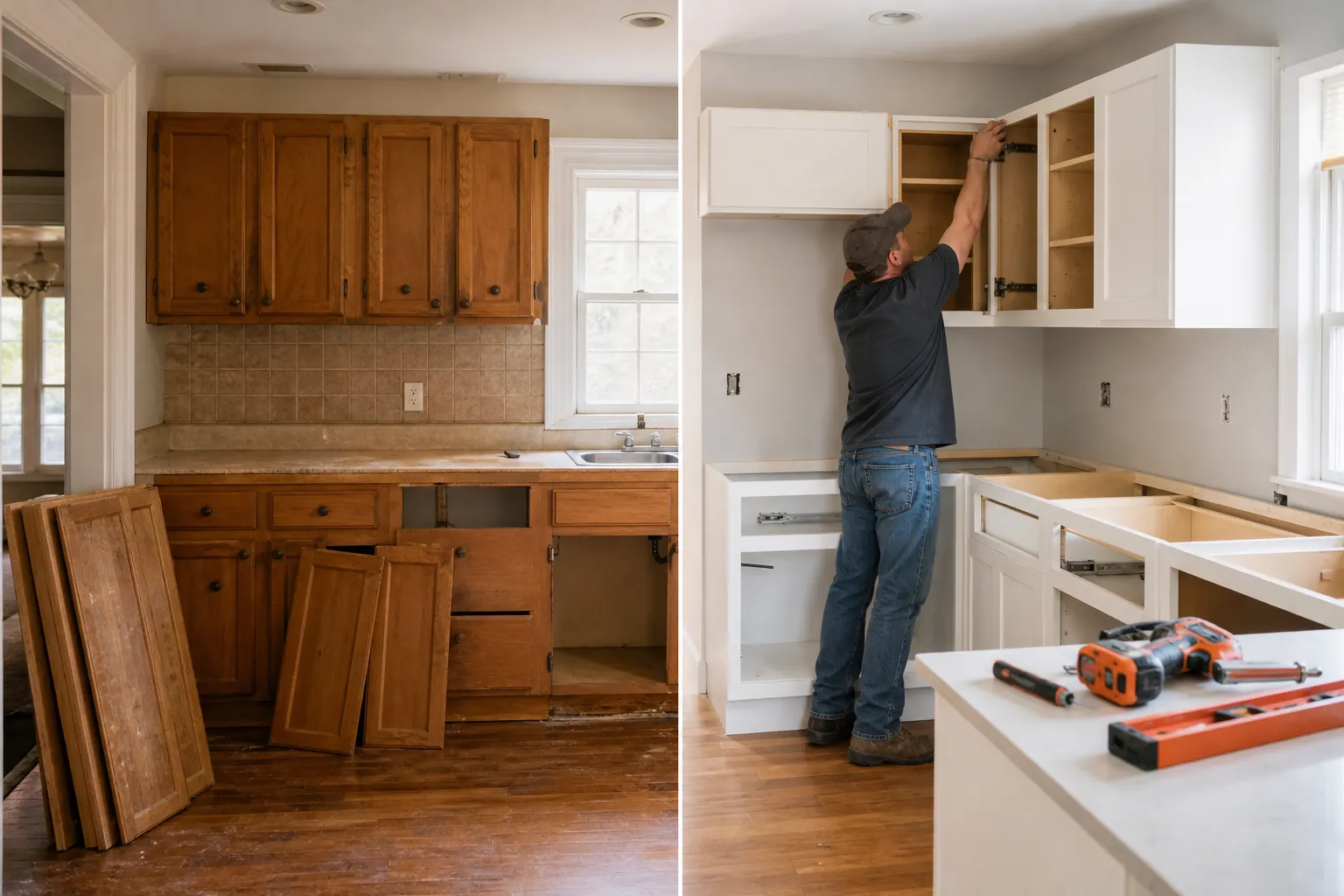
A kitchen remodel does not automatically require new cabinets. If your existing cabinet boxes are sturdy, the storage works, and the layout supports the way you cook, keeping them can be a practical starting point. The challenge is deciding what deserves to stay and what would become an expensive compromise.
For homeowners considering whether to reuse cabinets during a kitchen remodel in Charlotte, the best answer starts with an inspection, not a paint sample. Cabinet condition, appliance dimensions, countertop plans, and the scope of the remodel all affect whether reuse makes sense.
CDG Carolinas can help you evaluate those decisions as part of a broader kitchen remodeling plan. Here is how to think through cabinet reuse before committing to finishes or ordering materials.
Start With The Cabinets You Actually Have
Cabinet doors tell only part of the story. A dated door style may hide a solid cabinet box, while an attractive exterior may conceal swelling, loose joints, or previous repairs. Look inside each cabinet and examine how it connects to the wall, neighboring cabinets, and the countertop.
Pay particular attention to the sink base. Small plumbing leaks can damage the bottom panel, back, and lower edges long before the problem becomes obvious from the room. Dishwasher-adjacent cabinets can also show moisture damage.
Material matters, but condition matters just as much. Well-built plywood boxes are often good candidates for reuse. Particleboard cabinets may also remain serviceable if they are dry and intact, but swollen or crumbling panels are difficult to restore reliably.
- Check whether cabinet boxes feel rigid rather than twisting when doors open or shelves are loaded.
- Look for swelling, delamination, staining, or softened material around plumbing and floor-level edges.
- Test drawers for smooth movement, secure bottoms, and usable clearance.
- Inspect hinges, mounting screws, and drawer slides for loose connections or worn components.
- Confirm that shelves can hold the items you plan to store without excessive sagging.
A crooked door is not necessarily a reason to replace a cabinet. It may need a hinge adjustment. A distorted box, however, can keep causing alignment problems even after new doors and hardware are installed.
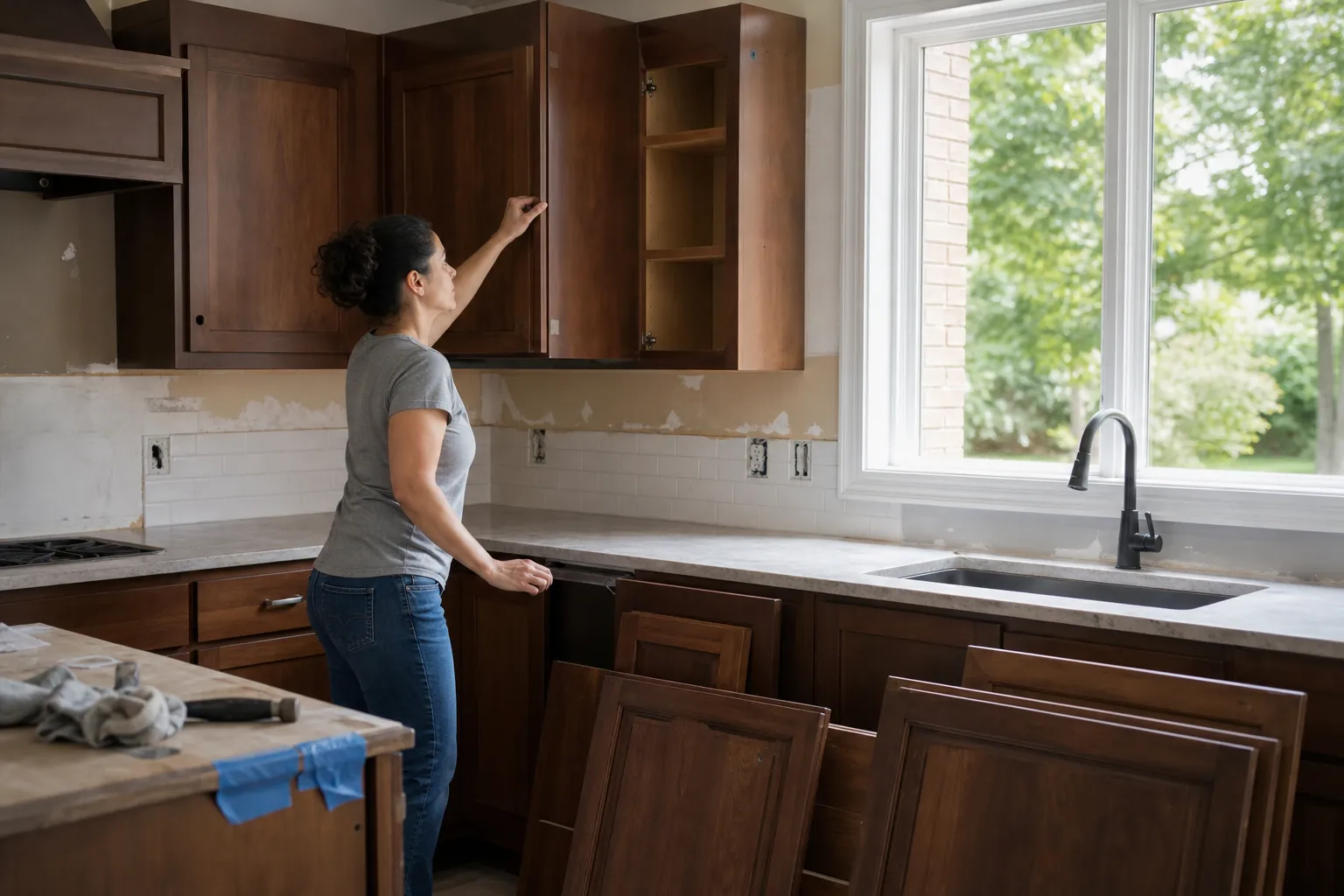
Make Sure The Existing Layout Still Works
Cabinet reuse is easiest when the basic kitchen footprint stays intact. Keeping the sink, range, dishwasher, and major cabinet runs in their current locations reduces the number of modifications needed.
Before deciding to preserve everything, consider your daily routine. Do two people regularly collide at the sink? Does an open dishwasher block the main walkway? Are frequently used items stored beyond comfortable reach? Keeping cabinets should not mean preserving a layout that frustrates you every day.
Measure proposed appliances early. A replacement refrigerator may be deeper or wider than the existing model. A new range, ventilation system, or wall oven can require different openings, clearances, utility connections, or support.
Door and drawer operation also deserves attention. New pulls can project farther into a corner. A larger refrigerator handle may interfere with a nearby drawer. These details are easier to resolve on a measured plan than after installation.
If the remodel includes removing a wall or enlarging the kitchen, reuse becomes more complicated. Existing cabinets may still work in one section, but they should be evaluated against the new layout rather than treated as fixed constraints.
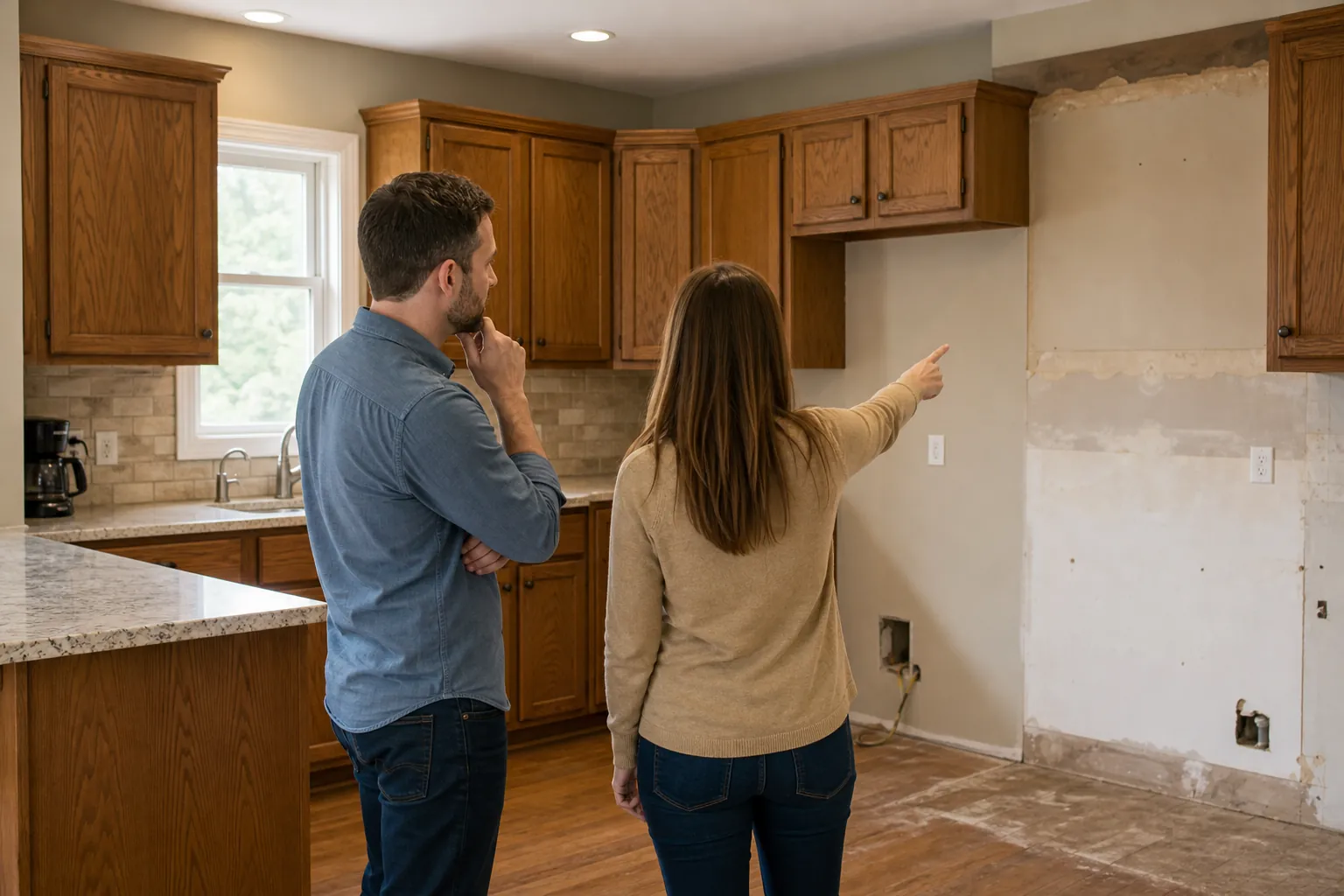
Choose Between Painting, Refinishing, And Refacing
Several cabinet updates can preserve the existing boxes, but they involve different work. Choosing the right method depends on the current finish, door construction, desired appearance, and overall condition.
Painting Existing Cabinets
Painting can change the feel of a kitchen without changing the door style. A durable result requires cleaning, appropriate surface preparation, repairs, compatible primer, and a cabinet-suitable coating system. Simply applying paint over grease or a failing finish is not a lasting solution.
Inspect doors for cracks, loose joints, and peeling surface layers before choosing paint. Wood grain may remain visible, depending on the species and preparation. Ask what the finished surface will realistically look like, rather than assuming every painted cabinet will resemble a new factory-finished product.
Refinishing Wood Cabinets
Refinishing may be appropriate when you like the wood and door profile but want to refresh the finish. The options depend on whether surfaces are solid wood, veneer, or another material. Thin veneer limits how aggressively a surface can be sanded.
Changing from a dark stain to a lighter appearance can be more demanding than expected. Have the proposed process tested on a representative area before approving work throughout the kitchen.
Refacing Cabinet Boxes
Refacing generally keeps suitable boxes while replacing doors and drawer fronts and updating exposed cabinet surfaces. It can offer a more substantial visual change than painting, particularly when the existing door style is the main concern.
Refacing does not automatically correct poor storage or weak boxes. Confirm exactly what the scope includes, such as hinges, drawer slides, end panels, toe kicks, and interior repairs. These details affect both appearance and cost.
Coordinate Reused Cabinets With New Countertops
Countertops and cabinets must be planned together. New countertops need a sound, properly supported base. Existing cabinets should be checked for level, secure attachment, and structural condition before countertop measurements are finalized.
Removing old countertops can damage cabinet edges or expose hidden problems. The risk varies with the existing surface, attachment method, backsplash, and cabinet construction. Discuss that risk before demolition so the project has a plan for repair or replacement if needed.
Heavy countertop materials may require additional support at overhangs or other locations. Support details should follow the countertop fabricator's requirements and account for the cabinets beneath them.
- Complete cabinet repairs and layout adjustments before final countertop templating.
- Select the sink early so its size and mounting requirements can be checked against the sink base.
- Confirm that faucet placement allows enough clearance behind the sink and beneath any nearby window trim.
- Plan island seating and overhang support before approving the countertop shape.
- Decide how backsplash removal and installation will affect walls and exposed cabinet surfaces.
A new countertop can make old cabinets look refreshed, but it can also make their defects more noticeable. Consider the entire composition, including door condition, hardware, lighting, and visible end panels, before investing in the surface alone.
Improve Storage Without Replacing Every Box
Some storage problems can be solved inside existing cabinets. Pullout shelves, drawer organizers, waste-bin hardware, and better shelf placement may improve function while preserving the main cabinet structure.
Interior dimensions matter more than nominal cabinet width. Face frames, hinges, plumbing, and drawer hardware can reduce usable space. Measure the actual opening and interior before purchasing accessories.
For a sink cabinet, account for supply lines, drains, disposal equipment, and maintenance access. An organizer that fits on paper may obstruct plumbing or make future repairs unnecessarily difficult.
Deep base cabinets can benefit from pullouts when the boxes are strong enough and the hardware has suitable mounting surfaces. A cabinet with damaged sides may need repair before it can support a loaded pullout.
Changing a door-front base cabinet into a drawer cabinet can be possible, but it is not a simple accessory swap. Drawer boxes, slides, clearances, and front alignment all need planning. Compare the modification cost with a replacement cabinet before committing.
Small updates also deserve consideration. Improved lighting can make work surfaces easier to use, and thoughtfully placed hardware can improve grip. These changes should complement cabinet reuse rather than distract from unresolved structural or layout problems.
Consider A Mix Of Reused And New Cabinets
Cabinet reuse does not have to be an all-or-nothing choice. You might preserve a sound perimeter run while replacing a damaged sink base, adding an island, or installing a new pantry cabinet.
This approach works best when the old and new components are designed together. Cabinet heights, depths, door profiles, face-frame details, and toe-kick dimensions may differ. Even small differences can become obvious where two cabinets meet.
A matching finish is another challenge. Older wood and finishes change with age, light exposure, and use. A newly manufactured door in the same species may not look identical to an existing door. Samples should be viewed in the actual kitchen under daytime and evening lighting.
Sometimes contrast is more convincing than an imperfect match. A new island in a complementary color can look intentional while the perimeter cabinets remain. The choice should fit the room, not merely disguise a supply problem.
Availability matters too. Existing doors or cabinets may be discontinued, making exact replacements difficult. Identify any missing or damaged components early so they do not become late-stage obstacles.
Understand The Real Cost Of Cabinet Reuse
Keeping cabinets can reduce spending, but the savings depend on the work required. Repairs, finish preparation, replacement doors, upgraded hardware, and careful removal can add up. Compare complete scopes rather than comparing the price of paint with the price of new cabinets.
A useful estimate separates cabinet-related tasks from the rest of the remodel. That makes it easier to see whether reuse supports your budget or whether extensive modification is approaching the cost of replacement.
- Include repairs to boxes, shelves, drawers, and mounting points in the reuse estimate.
- Account for door and drawer-front updates, finish work, and exposed panel treatments.
- Include new hinges, slides, pulls, and storage accessories where they are part of the plan.
- Allow for protection, removal, storage, and reinstallation if cabinets must leave the room.
- Compare the expected function and durability of each option, not just the initial price.
Reusing cabinets may reduce discarded material, but it does not eliminate every environmental impact. New coatings, doors, hardware, and transportation still involve resources. The strongest practical case for reuse is keeping serviceable materials in use without creating a kitchen that will need another major intervention soon.
A contingency is sensible when existing components are being retained. Hidden damage may only become visible during demolition. Agree on how unexpected conditions will be documented, priced, and approved before work begins.
Plan The Work Sequence Before Demolition
Reused cabinets need a coordinated construction sequence. Otherwise, finished surfaces may be damaged by later work, or countertop installation may be delayed by unresolved cabinet repairs.
Start with measurements, condition assessment, layout decisions, and selections. Then establish which cabinets stay in place, which need removal, and which components will be replaced.
If cabinets must be removed, label each box, door, drawer, and hardware group. Photograph the existing arrangement and record dimensions. Removal can stress older joints, so the process should be deliberate rather than treated as ordinary disposal demolition.
Flooring requires special attention. The existing floor may stop at cabinet bases, leaving unfinished areas when cabinets move. New flooring thickness can also affect appliance openings, toe-kick appearance, and transitions to adjoining rooms.
Where cabinets remain in place, discuss how flooring will be installed around them and whether the dishwasher can still be removed for service. A trapped dishwasher is an avoidable consequence of poor sequencing.
Electrical, plumbing, ventilation, and lighting changes should be coordinated with the cabinet plan. Requirements for permits and inspections depend on the work and the local jurisdiction. Confirm those requirements for the project address rather than assuming that keeping cabinets makes the entire remodel cosmetic.
Account For Charlotte-Area Home Conditions
Charlotte-area kitchens vary widely, from older houses with multiple rounds of renovations to newer homes with builder-installed cabinetry. The age of the house alone does not determine whether its cabinets are worth keeping.
In an older North Carolina home, examine earlier alterations carefully. Cabinets may have been cut for plumbing, attached over uneven walls, or modified to fit replacement appliances. A finish update will not correct those underlying issues.
Seasonal humidity can affect wood movement and finish behavior. Persistent moisture problems should be addressed before refinishing or refacing. That includes plumbing leaks and ventilation concerns, not just visible surface damage.
For homes built before 1978, ask whether disturbing painted surfaces requires lead-safe practices. The age of the house does not prove that cabinet coatings contain lead, but it is a reason to assess the work before sanding or demolition.
Your remodeling priorities also matter. A homeowner planning to stay long term may value tailored storage and comfortable workflow more than preserving every existing cabinet. Someone preparing a home for sale may prefer a restrained update, provided the cabinets are genuinely sound.
Decide What To Keep Before Choosing The Look
The best candidates for cabinet reuse have sturdy boxes, a workable layout, repairable components, and a clear role in the finished kitchen. Replacement is more sensible when damage is extensive, appliance changes require major reconstruction, or the existing arrangement cannot support your needs.
Before your consultation, gather photos, appliance model information, rough kitchen dimensions, and a list of daily frustrations. Note any leaks, sticking drawers, loose cabinets, or previous repairs. This helps focus the conversation on practical decisions rather than appearance alone.
If you are planning a kitchen remodel in Charlotte or the surrounding North Carolina area, call CDG Carolinas at (704) 619-6293 to discuss your project. A careful review of the existing cabinets can help you decide what to preserve, what to improve, and where replacement would make the kitchen work better.
Call (704) 619-6293 to talk through next steps.