

A finish can look beautiful on a sample board and still be wrong for the room where it will be installed. The difference usually comes down to daily use: water near a sink, grit at an entry, sunlight across a floor, or repeated cleaning around a cooktop. Selecting finishes that last means looking beyond color and asking how each surface will perform in your home.
For a custom home remodeling project in Lake Norman, North Carolina, durable choices should also feel comfortable and fit the architecture. You do not need the hardest or most expensive material everywhere. You need a sensible combination of materials, installation details, and maintenance expectations. This guide from CDG Carolinas explains how to compare those choices before your selections become costly commitments.
Start With How Each Room Actually Works
Before visiting a showroom, describe what happens in each space. A kitchen used for daily cooking has different demands from one used mainly for entertaining. A bathroom shared by children may need simpler cleaning routines than a guest bath. An entry used after outdoor activities needs a surface that tolerates dirt and moisture.
In Lake Norman homes, outdoor living can influence indoor finish choices. Think about the route from a patio or deck to the kitchen, bathroom, or laundry room. If that route often carries wet shoes or tracked-in debris, it deserves special attention even when the rest of the home sees light use.
Separate requirements from preferences. Easy cleaning may be essential; a particular shade of white may be negotiable. This distinction makes it easier to choose an alternative when a favorite material does not meet the practical needs of the room.
- List the rooms where spills, standing water, or frequent wiping are likely.
- Identify areas where pets, chairs, luggage, or outdoor gear could scratch a surface.
- Note which rooms receive strong sunlight and ask about fading or color changes.
- Decide how much routine maintenance you will realistically perform.
- Consider whether future touch-ups or partial repairs should be possible.
Share this information early with your remodeling team. A clear picture of household routines is more useful than a broad request for something durable. It also helps explain why two rooms might benefit from different finishes.

Choose Flooring For Wear, Water, And Repairability
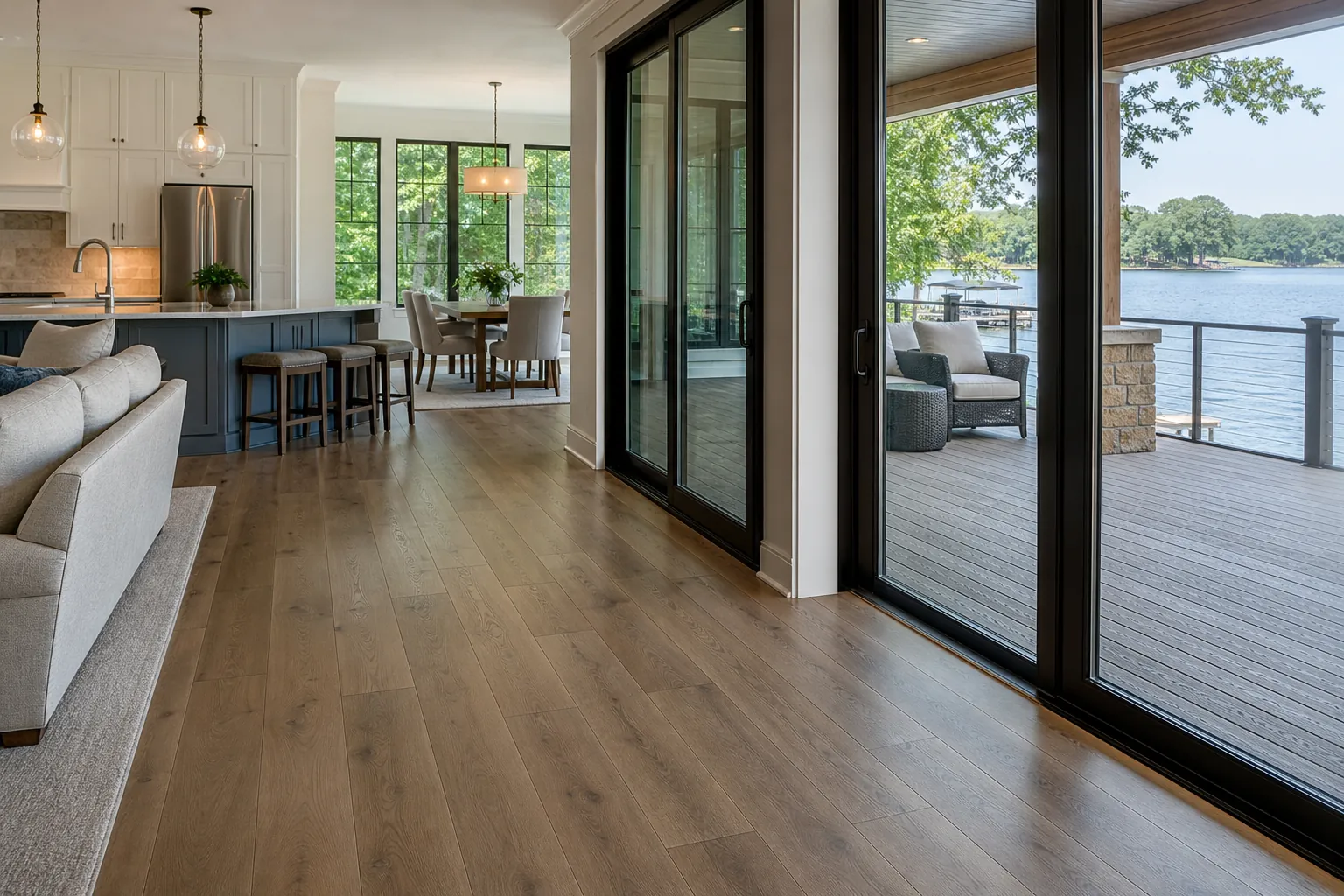
Flooring covers a large area, so an unsuitable choice can affect both comfort and appearance throughout the home. Compare scratch resistance, moisture limitations, cleaning instructions, and repair options rather than relying on a single durability claim.
Wood flooring
Solid and engineered wood can offer lasting value, but they are not interchangeable. Solid wood may allow multiple refinishing cycles when the product and remaining thickness permit. Engineered wood varies widely in construction and wear-layer thickness, which affects whether it can be refinished.
Wood responds to changes in moisture. Product selection, acclimation, subfloor conditions, and indoor humidity control all matter. Ask the installer to explain the manufacturer's requirements before installation, especially when changing flooring over an existing substrate.
A matte or lower-sheen wood finish can make everyday marks less conspicuous than a glossy surface. Grain, texture, and color variation also influence how noticeable dust and wear become. These features do not prevent damage, but they can make ordinary use easier to live with.
Porcelain tile
Porcelain tile is a strong option for bathrooms, laundry rooms, and other moisture-prone areas. However, a durable tile does not make the entire floor assembly waterproof. Substrate preparation, movement accommodation, and waterproofing where required remain essential.
Check whether the tile is appropriate for its intended floor use, including wet conditions where applicable. A highly polished surface may look attractive but be unsuitable for a frequently wet walking area. Grout choice and joint layout also affect cleaning and long-term appearance.
Resilient flooring
Luxury vinyl products can provide practical maintenance benefits, but performance differs by product. Review the wear layer, installation method, temperature limits, and warranty exclusions. A water-resistant or waterproof product claim does not necessarily protect the subfloor or surrounding construction from leaks.
For any flooring, keep spare material from the same production run when possible. A few replacement planks or tiles can make a future repair more manageable, particularly if the pattern or color is discontinued.
Compare Countertops By Their Real Limitations
Countertop selection often begins with appearance, but heat, staining, etching, and edge durability deserve equal attention. Ask what the material tolerates, what damages it, and whether a problem can be repaired. No countertop benefits from being treated as indestructible.
Engineered quartz is often chosen for its consistent appearance and relatively straightforward care. It still requires protection from excessive heat, and cleaning products should follow the manufacturer's guidance. Review restrictions for direct sunlight or outdoor use rather than assuming an indoor product belongs everywhere.
Granite performance varies by stone and finish. Some slabs are more absorbent than others, and sealing needs should be determined for the actual material. View the slab when possible, since a small sample may not represent its movement, color variation, or natural features.
Marble offers distinctive character, but acidic foods and cleaners can etch its surface. That change is different from a stain and is not prevented by sealing. If you prefer a consistently pristine appearance, understand this limitation before selecting marble for a busy kitchen.
Other countertop options, including porcelain slabs and solid surface, have their own fabrication and care considerations. Ask about edge vulnerability, seam placement, sink details, and repair methods. Those details can matter as much as the broad material category.
- Use trivets and cutting boards even when a countertop is marketed as durable.
- Ask whether the selected edge profile creates a vulnerable thin section.
- Confirm how seams will be located and what they will look like.
- Review the maintenance instructions for the exact product or stone.
- Choose a surface whose expected changes you will still appreciate over time.
For heavily used work areas, practical consistency can be more valuable than a dramatic pattern. You can still create visual interest through lighting, cabinetry, or a backsplash without asking the countertop to deliver every design feature.
Look Beyond Cabinet Color To Construction And Coatings
Cabinets experience repeated handling, spills, steam, and contact with cleaning products. Their longevity depends on the cabinet construction, hardware, finish system, and installation. A beautiful door color alone tells you very little about how the cabinetry will age.
Ask how doors, drawer fronts, boxes, and exposed panels are made. Different materials can be appropriate in different parts of a cabinet. What matters is whether each component is suitable for its location and supported by a clearly described specification.
Painted cabinets provide a clean, cohesive appearance, but small joint lines may become visible as wood components move. Stained finishes can make some everyday wear less noticeable, depending on the wood and color. Neither option eliminates the need to manage moisture and clean spills promptly.
Pay particular attention to cabinetry near sinks, dishwashers, and cooking equipment. Water left along an edge or steam repeatedly directed toward a cabinet can shorten its service life. Appliance placement and required clearances should be addressed before finalizing the layout.
Hardware should be evaluated for feel and function, not just appearance. Well-suited hinges and drawer slides help doors and drawers operate consistently. Pulls with comfortable clearance can also reduce repeated contact with the cabinet finish.
- Request written information about the cabinet finish and approved cleaning methods.
- Ask how damaged doors or drawer fronts could be repaired or replaced.
- Check that decorative panels and trim receive a compatible finish.
- Confirm that hardware is appropriate for the size and expected load of each drawer.
Select Paint And Wall Finishes By Location
The best paint choice depends on the substrate and how the room is used. Product quality, surface preparation, primer, and curing time all influence performance. Choosing a sheen without considering those factors can lead to disappointing results.
Higher-sheen finishes can be easier to wipe in some applications, but they also reveal wall imperfections more readily. Modern washable matte products may work well in certain living spaces. Compare the actual product's intended use and care instructions instead of assuming sheen alone determines durability.
For bathrooms, use a coating suited to the expected conditions and provide effective ventilation. Paint is not a substitute for moisture control. Repeated condensation can affect walls, trim, and cabinetry even when the coating is designed for humid environments.
Trim and doors face frequent contact, so their coating should be appropriate for that use. Allow the specified cure time before aggressive cleaning or heavy handling. A finish that feels dry may not yet have reached its full resistance to wear.
Test colors in the room on more than one wall. Lake Norman homes with large windows can show substantial shifts in color as daylight changes. Review samples alongside flooring, cabinets, and countertops so that undertones work together rather than competing.
Make Bathroom Durability An Assembly Decision
Bathrooms demonstrate why selecting finishes that last requires more than choosing attractive surfaces. Tile, grout, fixtures, and glass are visible components, but water management behind and beneath them is fundamental to a successful remodel.
Ask your remodeling team to explain the waterproofing approach for showers and other wet areas. The answer should address transitions, penetrations, corners, and the connection to the drain. Tile and grout alone should not be treated as the waterproofing system.
Shower floors need an appropriate slope and a surface suitable for wet use. Tile size can affect how easily the floor follows the required slope. Smaller tiles introduce more grout joints, while larger formats may require a different layout or drain configuration.
Grout selection should reflect cleaning expectations and the installation requirements. Cementitious and epoxy grouts have different characteristics, and neither removes the need for proper detailing. Changes of plane often require an appropriate flexible sealant rather than rigid grout, depending on the assembly.
Keep fixture finishes consistent where a coordinated look matters, but check care requirements before choosing. Abrasive pads and harsh cleaners can damage some coatings. A finish that works beautifully with gentle cleaning may not suit a household accustomed to stronger products.
Plan access to components that may eventually need service. Durability includes the ability to maintain the room without unnecessary demolition. Sensible access, reliable ventilation, and manageable cleaning details can provide more long-term benefit than another decorative feature.
Evaluate Exterior Finishes For Exposure
Exterior selections should match their exposure to sun, rain, and seasonal weather. A sheltered porch ceiling does not face the same conditions as an exposed deck surface. Review products by location rather than using one finish everywhere for visual consistency.
For painted exterior components, substrate preparation and compatibility with the existing coating are critical. New wood, previously painted trim, and manufactured materials may require different approaches. Follow the relevant product and material instructions for preparation and application conditions.
Decking choices involve maintenance, surface temperature, traction, and appearance. Wood generally requires ongoing care, while composite products still need cleaning and correct installation. Examine samples outdoors and ask about the specific product's limitations before choosing by color alone.
Exterior metal hardware and fasteners should be appropriate for the materials and exposure. Compatibility matters, especially where treated wood or dissimilar metals are involved. Hidden fasteners and connectors deserve the same attention as visible decorative hardware.
Good drainage and detailing protect finishes from persistent moisture. A premium coating cannot compensate for water collecting against trim or entering a poorly detailed joint. Resolve those conditions as part of the remodeling scope rather than treating repainting as the complete solution.
Use Samples, Specifications, And A Realistic Budget
Bring larger samples into your home whenever practical. Compare them in daylight and under the lighting you expect to use after remodeling. Place horizontal materials horizontally and cabinet or wall samples vertically to get a more accurate impression.
Evaluate the whole palette together. A floor that looks neutral by itself may appear warmer beside a cabinet finish. A countertop can make a backsplash seem busier than expected. A restrained combination often remains appealing longer than several competing statement materials.
Budget for the complete installed system. Preparation, underlayment, waterproofing, fabrication, trim, and labor can change the total significantly. A lower material price does not guarantee a lower project cost, especially if the selection requires extensive preparation or specialized handling.
- Record exact product names, colors, finishes, and installation requirements before ordering.
- Confirm lead times before removing materials that will be replaced.
- Keep care instructions, warranty documents, and spare materials together.
- Ask which substitutions would preserve performance if a selection becomes unavailable.
- Reserve room in the budget for necessary preparation rather than spending everything on visible upgrades.
Also distinguish a product warranty from an installation warranty. Coverage, exclusions, and maintenance obligations can differ. Written information helps you understand what is being promised and what remains your responsibility.
Plan A Remodel That Still Works Years Later
Lasting finishes are not simply the ones that resist damage. They are the ones that suit your routines, remain practical to maintain, and belong together visually. A thoughtfully selected floor, a manageable countertop, and properly detailed wet areas can support everyday comfort long after the project is complete.
For your Lake Norman remodel, start with the rooms that work hardest and the maintenance tasks you want to avoid. Then compare materials against those priorities before making final color decisions. This approach keeps the project focused on performance without sacrificing personal style.
If you are planning a custom home remodeling project, call CDG Carolinas at (704) 619-6293 to discuss your goals and finish priorities. A conversation about how you use your home is a practical first step toward choices you can enjoy for years.
Call (704) 619-6293 to talk through next steps.