
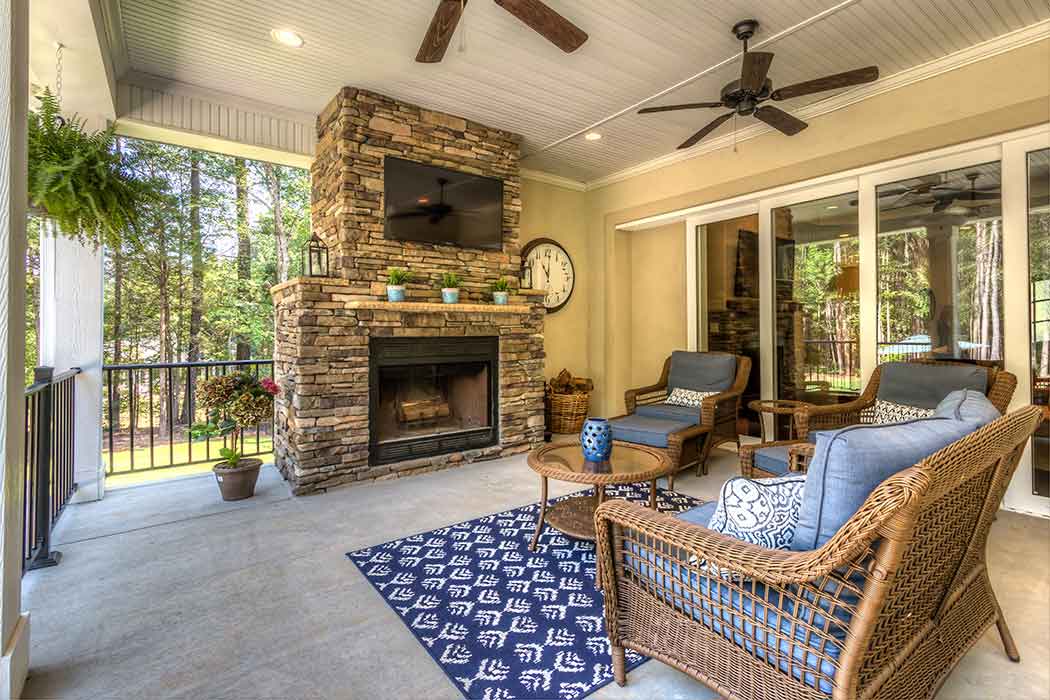
If you are weighing stick-built vs modular custom home Charlotte options, you are really asking three questions at once: which method costs less, which finishes faster, and which holds value better when you sell. After 30+ years building across Charlotte, NC, Lake Wylie, SC, Fort Mill, SC, and Huntersville, NC, our short answer is that stick-built still wins on full-custom flexibility and long-term resale, while modular can win on speed and predictability for the right floor plan and the right lot.
This guide compares both methods on cost, build speed, design flexibility, structural quality, lender behavior in the Charlotte metro, and resale value. Numbers below are typical 2026 ranges, not quotes.
What Is the Quick Answer on Stick-Built vs Modular Homes in Charlotte?
Stick-built homes are framed and finished on-site using traditional trades, offering full design flexibility. Modular homes are built in a factory to state code and craned onto a foundation, offering speed and predictability. Stick-built wins on custom flexibility and resale; modular wins on schedule for the right lot and plan.
A stick-built (site-built) custom home is framed and finished entirely on your lot using dimensional lumber and traditional trades. A modular home is built in climate-controlled factory modules to state and HUD-adjacent codes, trucked in, and craned onto a permanent foundation. Both can be high-quality permanent residences, but the experience and the result differ materially.
For the Charlotte metro and York County, SC, the practical default is still stick-built when buyers want true custom layouts, premium finishes, and waterfront or sloped-lot work. Many of those same buyers later hire bathroom remodel contractors in Lake Wylie, SC for finish-level upgrades once the shell is complete. Modular makes sense when a buyer wants a mainstream floor plan delivered faster, on a flat lot, with a tighter spend than full custom.
- Stick-built: full design flexibility, full custom finishes, longer schedule.
- Modular: faster, more predictable, narrower design and finish menu.
- Both can be permanent real estate; modular is not the same as a manufactured (mobile) home.
- Lot conditions, HOA, and lender stance often decide the answer.
How Do Stick-Built and Modular Costs Compare in 2026?
Stick-built typically runs 5 to 15 percent higher all-in than modular once finishes and structural specs are matched. Modular base pricing looks cheaper but often excludes sitework, foundation, transport, and finish-out, which can push a "$220,000" modular quote to $450,000-$600,000 once fully built out.
Apples-to-apples cost comparisons are hard because most modular quotes do not include sitework, foundation, utility connections, finish-out, and landscaping. The honest read for a comparable 2,500 to 3,500 square foot home in the Charlotte metro right now is that stick-built typically lands 5 to 15 percent higher all-in once you match finishes and structural specs.
Modular Cost Components
Modular base pricing covers the factory build of the modules themselves. Buyers regularly miss the cost of land, sitework, foundation, transport, crane day, button-up of the seam between modules, garage build (often stick-built on site even with modular core), HVAC final, well or sewer connection, septic if rural, and finish landscaping.
Add those in and a “$220,000” modular base can become a $450,000 to $600,000 finished home, depending on lot.
Stick-Built Cost Components
Stick-built costs include all of the above bundled into one builder agreement. Premium finishes, custom millwork, true custom plans, and structural complexity drive the spread. Our pre-construction services price each finish package against your plan and lot so you know the all-in number, not the headline number.
- Modular base prices look lower; full project cost narrows the gap significantly.
- Stick-built typically runs 5-15% higher all-in on comparable specs as of 2026.
- Modular extras to price in: transport, crane, seam button-up, on-site garage, finish landscaping.
- Always compare all-in delivered cost, not factory list price.
Where Does Modular Construction Win on Build Speed?
Modular wins on speed because factory production runs weather-proof in 8 to 14 weeks while sitework happens in parallel, delivering total timelines of 9-14 months versus 14-22 months for stick-built. That speed advantage shrinks significantly on sloped, waterfront, or heavy-sitework lots.
Speed is modular’s strongest argument. Once factory production starts, the modules are usually ready to ship in 8 to 14 weeks, regardless of Carolina weather. Site work and foundation can run in parallel during factory build, and set day moves the structure from delivered modules to a weather-tight shell in a single day.
Stick-built framing of the same home typically takes 6 to 10 weeks on site, weather-dependent.
Across our recent full custom home construction projects in the Charlotte metro, total stick-built timelines have run 14 to 22 months from contract to keys. A comparable modular project in the same metro can finish in 9 to 14 months from contract because the factory phase is largely weather-proof.
The catch is that schedule advantage shrinks if your lot needs heavy sitework, sloped foundations, or shoreline permits, since those steps still take the same calendar regardless of which method builds the house.
- Modular factory build: typically 8-14 weeks once production starts.
- Stick-built framing on site: typically 6-10 weeks, weather-dependent.
- Total timeline modular: roughly 9-14 months in the Charlotte metro.
- Total timeline stick-built: roughly 14-22 months full custom.
- Sitework, permits, and finish-out are similar for both methods.
How Do Design Flexibility and Quality Compare Between the Two Methods?
Stick-built stays ahead on design flexibility, handling vaulted ceilings, complex rooflines, and sloped or waterfront lots that modular catalogs can't accommodate. Modular offers tighter factory tolerances and weather-protected framing, which works well for straightforward two-story or ranch plans on flat lots.
This is where stick-built stays ahead for true custom buyers. On-site framing can accommodate any plan: vaulted ceilings, complex rooflines, oversized windows, multi-story atriums, in-law suites, finished basements, walkout basements, and the sloped or waterfront lots common in Lake Wylie, SC and parts of Lake Norman.
Modular plans are constrained by what fits on a flatbed truck, what can be lifted by crane, and what the factory tooling supports.
Where Modular Holds Up Well
Modular construction is built indoors to consistent tolerances, which means dryer lumber, cleaner framing, and less weather damage during build. For straightforward two-story or ranch plans, modular can produce a very tight, well-built shell. We have seen good modular builds outperform careless stick-built builds on air sealing and framing accuracy.
Where Stick-Built Holds Up Well
For premium finishes, custom millwork, true open spans, complex rooflines, and integrated outdoor living, stick-built is still the practical choice. Most of our clients in Lake Wylie, SC and Fort Mill, SC are doing exactly that kind of build, and modular catalogs do not typically support it without heavy custom upcharges.
- Stick-built: unlimited plan flexibility, premium finishes, complex rooflines and lots.
- Modular: tight factory tolerances, weather-protected framing, narrower plan menu.
- Modular constraints: truck dimensions, crane reach, factory tooling.
- For waterfront and sloped Carolina lots, stick-built is usually the practical default.
How Do Lenders and Appraisers Treat Modular vs Stick-Built in Charlotte?
Most Charlotte-area construction-to-perm lenders finance both, but underwriting and draw schedules differ, with some lenders applying tighter loan-to-value ratios on modular. Appraisers can also struggle to find modular comps in stick-built-dominant neighborhoods, which sometimes hurts first appraisals.
Lenders treat modular and stick-built differently, and that affects everything from your construction loan to your eventual refinance. Most major Charlotte-area construction-to-perm lenders will finance both, but underwriting and draw schedules differ. Some local lenders still apply tighter loan-to-value ratios on modular, especially on rural lots in York County, SC.
Appraisers in Mecklenburg County, NC and York County, SC will pull comparable sales (comps) using “modular” as a stated construction type. In neighborhoods dominated by stick-built homes, modular comps can be thin, which sometimes hurts appraised value in the first appraisal even when the build quality is identical.
Insurance is generally similar for both, but always confirm with your carrier; the North Carolina Department of Insurance publishes guidance worth reviewing before closing.
For permitting, both methods go through the same county building department once foundations and utilities are involved. Mecklenburg County, NC and York County, SC permit modular homes routinely, but the inspection sequence is different (factory inspections plus on-site set inspections vs full on-site inspections for stick-built).
- Both methods are routinely financed in the Charlotte metro, but underwriting differs.
- Modular comps can be thin in stick-built-dominant neighborhoods, hurting first appraisals.
- Permit and inspection paths differ; modular adds factory inspection records.
- Confirm insurance treatment with your carrier before closing.
How Does Resale Value Compare Over a 5 to 10 Year Hold?
Stick-built custom homes generally hold value at or above neighborhood comps, especially in custom and waterfront communities. Modular homes can lag stick-built comps by 3 to 8 percent in custom-home neighborhoods, partly due to buyer perception issues that equate modular with manufactured housing.
Resale is the lever buyers most often forget. In the Charlotte metro, well-built stick-built custom homes generally hold value at or above neighborhood comps, especially in custom-home subdivisions and waterfront communities. Modular homes can hold value well in mixed neighborhoods or in pockets where modular is common, but in custom-home neighborhoods they can lag stick-built comps by 3 to 8 percent on resale, all else equal.
The biggest resale wildcard is buyer perception. Many Charlotte-area buyers still equate “modular” with “manufactured” or “mobile” even though the building method and code path are different. A well-marketed modular home priced correctly will sell, but the listing agent has to do real education work that a stick-built listing does not require.
- Stick-built generally holds neighborhood comps in Charlotte-metro custom subdivisions.
- Modular can lag stick-built comps by 3-8% in custom-home neighborhoods on resale.
- Buyer perception (modular vs manufactured) still affects listings even when wrong.
- For waterfront and high-end lots, stick-built almost always preserves value better.
How Should Charlotte Buyers Decide Between Stick-Built and Modular?
The decision comes down to five questions: how custom is your floor plan, is your lot flat or sloped, how much does schedule matter versus finish quality, what does your lender say, and how long you plan to hold the property. Honest answers to these usually point clearly to the right method.
The right call depends on your lot, your floor plan, your timeline, your finishes, and your hold period. We walk every prospective client through the same five-question decision in our first consultation, regardless of which method they think they want.
Five Questions That Decide the Answer
How custom is the floor plan you actually want? Is the lot flat, sloped, waterfront, or rural? How important is total schedule vs total finish quality? What does your lender say about each method? Do you plan to live in the home long enough that resale lag does not matter, or is resale a priority?
Honest answers to those five questions usually point clearly to one method.
If you want long-term resale strength, true custom design, and premium finishes on a sloped or waterfront Charlotte-metro lot, stick-built is the default. If you want a mainstream plan delivered faster on a flat lot with predictable factory quality, modular deserves a serious look. Either way, our custom home builder services can plan the project end-to-end. Whichever method you choose, vet the builder carefully — our guide to vetting a custom home builder in Lake Wylie, SC walks through reviews, license checks, references, and the red flags that precede a failed build.
- Stick-built: best for full custom plans, premium finishes, sloped or waterfront lots.
- Modular: best for mainstream plans, flat lots, schedule-driven buyers.
- Lender stance and HOA rules can override either preference.
- Hold period changes how much resale lag actually matters.
Frequently Asked Questions
Is modular the same as manufactured or mobile home in the Carolinas?
No. Modular homes are built to state residential code (the same code as stick-built) and placed on permanent foundations, while manufactured homes are built to federal HUD code and can sit on different foundation types. Lenders, appraisers, and insurers treat them differently.
Can a modular home work on a Lake Wylie waterfront lot?
Sometimes, but it is rarely our recommendation. Lake Wylie, SC waterfront lots usually involve sloped foundations, Duke Energy shoreline review, and high-end finishes that modular catalogs do not handle well. Stick-built is the practical default for most Lake Wylie and Lake Norman waterfront builds.
How much faster is modular really for a Charlotte build?
For a comparable 2,500 to 3,500 square foot home, modular typically delivers 4 to 8 months faster than stick-built full custom in the Charlotte metro, because the factory phase is weather-proof and runs in parallel with sitework. The advantage shrinks on complex lots or heavy sitework.
Will my lender treat modular the same as stick-built in Charlotte?
Most major construction-to-perm lenders in the Charlotte metro will finance both, but loan-to-value ratios, draw schedules, and appraisal processes can differ. Always get the lender’s written stance on modular before signing a builder agreement.
Ready to Talk Through Your Charlotte-Area Build?
If you are still on the fence between stick-built and modular for a Charlotte, NC, Huntersville, NC, Lake Wylie, SC, or Fort Mill, SC build, we will walk you through the cost, timeline, and resale tradeoffs for your specific lot and plan.
After 30+ years building custom homes across the Carolinas, we have helped clients land on the right answer many times in both directions. And if you already own a home and are deciding whether to renovate or start over, our luxury remodel vs teardown guide for Charlotte walks through that parallel decision. Call us at (704) 619-6293 or visit our contact page to start the conversation.