
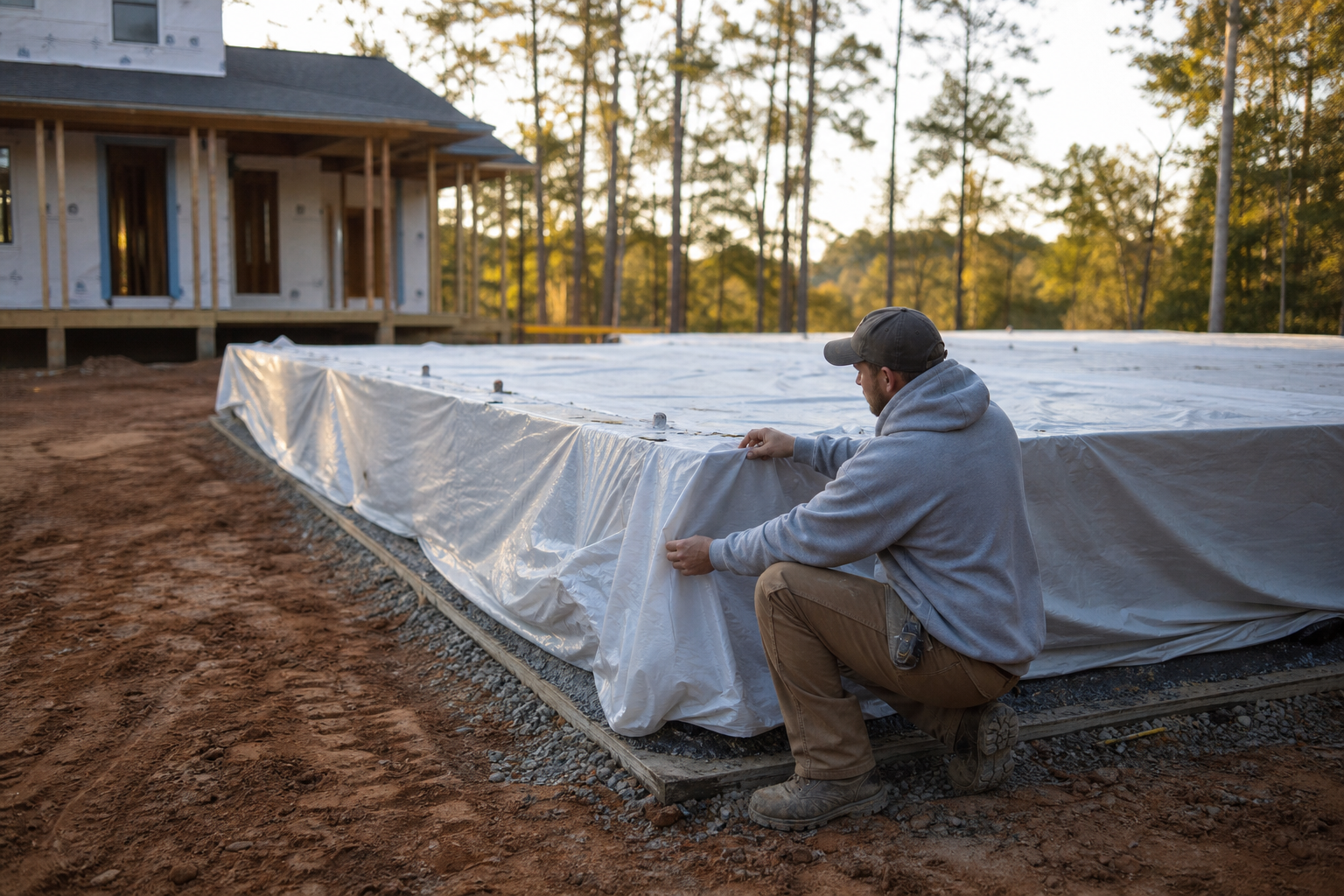
When a whole-home renovation temporarily opens the building enclosure, meaning exterior walls, roof sections, window or door openings, or other points where the home is normally sealed against weather, the practical answer is that someone should walk the site at the end of every workday and check the temporary weather protection remodel measures before the crew leaves. That end-of-day review should cover every opening left exposed, every seam in tarps or plastic sheeting, drainage paths around the work area, the coming weather forecast, interior conditions near the opened area, dated photos of what was found, and a clear record of who owns any correction that is needed before the next work session.
This article separates what published federal and local sources actually establish from practical planning guidance that Cooper Development Group offers based on general renovation coordination experience. The EPA discusses indoor environmental concerns during remodeling in general terms, and Charlotte's stormwater rules address drainage and erosion control at a municipal level, but neither source publishes a specific checklist for nightly weather protection inspections during an occupied remodel. Homeowners should treat the source material as a factual floor, not a complete guide, and should verify any code, permit, or inspection requirement that applies to their specific address with the authority having jurisdiction before relying on it.
What Current Public Sources Establish
The EPA's guidance on addressing indoor environmental concerns during remodeling focuses on protecting occupants from dust, debris, and airborne contaminants that can enter living spaces once walls, ceilings, or other assemblies are disturbed. The agency's material is written for general awareness rather than as a room-by-room or day-by-day inspection protocol, and it does not specify tarp materials, seam-sealing methods, or a required inspection frequency for temporary weather protection during a remodel.
The City of Charlotte's stormwater regulations address how a construction site must manage runoff, erosion, and drainage, which becomes directly relevant any time a project disturbs grading near a home or leaves an excavation or foundation area exposed to rain. These regulations are written for site-level compliance and are enforced by the city, not by a general contractor's internal checklist. Homeowners in Charlotte, Lake Wylie, and surrounding Carolinas communities should confirm current stormwater and drainage requirements directly with the municipality or county responsible for their property, since local rules can be updated and can vary by jurisdiction.
Inputs and Existing Conditions to Document
Before any nightly inspection can be useful, the project team needs a clear starting picture of what the home looked like before the enclosure was opened. This includes the location and size of any removed siding, roofing, windows, or doors, the type of temporary covering installed, and any pre-existing drainage patterns or moisture issues that were present before work began.
Documenting these baseline conditions with dated photos and brief written notes gives everyone, including the homeowner, the contractor, and any future reviewer, a reference point. Without this baseline, it becomes difficult to tell whether an interior stain, a damp subfloor, or a loose tarp edge is a new problem from the day's work or something that predates the renovation.
- Note the exact size and location of each opening in the enclosure, including temporary window and door removals.
- Record the type of temporary weather protection material used, such as sheeting, tarps, or temporary panels.
- Photograph existing grading and drainage paths near the work area before significant excavation or foundation exposure begins.
- Write down any interior conditions, such as musty odors or visible moisture, that existed before the project started.
Step-by-Step Owner and Project-Team Review
A practical nightly review does not need to be complicated, but it does need to be consistent. The goal is to walk the same path each evening, check the same categories of risk, and record what was found in a way that can be referenced later if a problem develops overnight or over a weekend.
This kind of routine works best when it is treated as a normal part of closing out the workday, similar to locking doors or securing tools, rather than as an occasional extra step that gets skipped when the crew is tired or running behind schedule.
- Walk the perimeter of every opening in the enclosure and check that temporary coverings are fully secured at all edges.
- Inspect seams in tarps, plastic sheeting, or temporary flashing for gaps, tears, or areas where wind could lift the material.
- Trace drainage paths around the work area to confirm water will move away from the foundation and any interior opening.
- Check the short-term weather forecast, including wind speed and precipitation chances, for the next 24 to 48 hours.
- Look inside the home near the affected area for signs of moisture intrusion, drafts, or dust migration into occupied rooms.
- Take dated photos of the covered openings, seams, and any drainage points from consistent angles each day.
- Confirm that a specific person has been assigned to correct any issue found, along with a rough sense of when that correction will happen.
Responsibilities, Dependencies, and Hold Points
On most occupied remodel projects, the general contractor's site supervisor is the person best positioned to lead the nightly weather protection check, since they are typically on site through the end of the workday and understand which openings were created that day. However, the homeowner also has a role, particularly in flagging interior conditions such as unusual odors, drafts, or moisture that may not be visible from outside the home.
Certain conditions should function as hold points, meaning work should not continue to the next phase until the issue is resolved. A significant storm forecast within the next day or two, a seam failure discovered during the walk-through, or a drainage path that has become blocked are all situations where waiting for a proper fix, rather than proceeding on schedule, protects the home and its occupants.
- The site supervisor or project lead typically walks the exterior openings and coordinates any needed corrections before leaving for the day.
- The homeowner or occupant is often the first to notice interior signs of a problem, such as a draft, odor, or damp spot, and should have a clear way to report it.
- A significant storm forecast, a failed seam, or blocked drainage should be treated as a reason to pause and correct before continuing work.
- Any correction identified during the nightly review should be assigned to a specific person with a documented expectation for when it will be addressed.
Common Coordination Failures
Many of the problems that occur during occupied remodels are not caused by a single dramatic failure, but by small gaps in coordination that accumulate over several days. A tarp that was secured properly on day one can loosen after a few days of wind without anyone re-checking it, especially if the crew assumes the original installation will hold for the duration of a phase.
Another common failure is a mismatch between who thinks they are responsible for the nightly check and who is actually doing it. On a whole-home renovation with multiple trades, it is easy for each subcontractor to assume the general contractor is handling weather protection, while the general contractor assumes the trade that opened the enclosure that day is responsible for closing it up properly.
- Temporary coverings that were secure when installed are not re-checked after several days of wind or weather exposure.
- No single person is clearly assigned to the nightly weather protection check, so the task is assumed to be someone else's responsibility.
- Photos are taken inconsistently or not at all, making it difficult to compare conditions from one day to the next.
- Interior signs of moisture or drafts are noticed by occupants but not communicated promptly to the project team.
- A forecasted storm is known in advance but the crew does not adjust the schedule or reinforce temporary protection ahead of time.
Questions for the Responsible Authority or Qualified Professional
Some questions raised by an occupied remodel go beyond general planning and require input from the jurisdiction or a licensed professional. Drainage and stormwater questions, for example, often depend on local ordinances that vary by city and county, and the City of Charlotte's stormwater regulations are one example of a local framework that homeowners in that jurisdiction should review directly.
Indoor air quality concerns that arise during remodeling, including dust control and ventilation while the enclosure is open, are addressed in general terms by the EPA, but a homeowner with specific health concerns, an existing respiratory condition in the household, or a suspected moisture or mold issue should consult a qualified environmental or health professional rather than relying solely on general remodeling guidance.
- Ask the local building or stormwater authority whether temporary drainage or erosion control measures require a permit or inspection during the project.
- Ask a qualified professional to evaluate any suspected moisture intrusion or mold growth discovered during the nightly review.
- Ask the project's design or engineering professional whether a specific temporary weather protection method is adequate for the size and location of an opening.
- Confirm with the authority having jurisdiction whether any code requirement applies to temporary enclosures left open overnight or over a weekend.
Next Action and Related CDG Resource
An end-of-day weather protection inspection is a straightforward habit to build into a whole-home renovation, but it only works if it is treated as a standard part of the daily routine rather than an afterthought. Homeowners considering a whole-home renovation, particularly one that will temporarily open the building enclosure for an extended period, should ask any prospective contractor how they plan to handle nightly weather protection checks and who will be responsible for documenting them.
Readers can review Cooper Development Group's whole-home renovation service page for the Lake Wylie, SC area at /whole-home-renovations-lake-wylie-sc/, browse additional planning articles at /blog/, or request a project consultation at /consultation/ to discuss occupied remodel logistics in more detail. Any property-specific code, drainage, or environmental question should still be directed to the appropriate local authority or a qualified professional before work begins.
Questions homeowners ask
What counts as opening the building enclosure during a remodel?
The building enclosure generally refers to the exterior walls, roof, windows, and doors that separate conditioned interior space from the outside. Work that removes siding, cuts into roofing, or takes out a window or door temporarily opens that enclosure and requires some form of temporary weather protection until the assembly is closed back up.
Who should be responsible for the nightly weather protection check?
On most projects the general contractor's site supervisor coordinates the nightly review since they are on site through the end of the workday, but homeowners should confirm this arrangement directly with their contractor at the start of the project. Occupants also play a role by reporting any interior drafts, odors, or moisture they notice, since some issues are only visible from inside the home.
Does a temporary weather protection remodel checklist need to be approved by the city?
General temporary weather protection practices, such as securing tarps or checking seams, typically fall under standard construction practice rather than a specific permit requirement, but drainage and stormwater measures may be regulated locally, as reflected in the City of Charlotte's stormwater regulations. Homeowners should verify current requirements for their specific property with the local building or stormwater authority rather than assuming no permit or inspection applies.
What should happen if a storm is forecast while the enclosure is open?
A significant storm forecast within the next day or two is generally treated as a reason to pause and reinforce temporary protection rather than proceed with the existing schedule. The specific steps to take, including whether additional bracing, covering, or drainage work is needed, should be discussed with the project's contractor and, where relevant, a qualified professional familiar with the site conditions.
Plan the next step
Use this article as a planning aid, then confirm project-specific requirements with the responsible authority and qualified professionals. Review CDG's related service, construction articles, or consultation page when you are ready to organize the next decision.
Official sources and verification
- U.S. Environmental Protection Agency: Addressing Indoor Environmental Concerns During Remodeling
- City of Charlotte: Stormwater Regulations
Authority pages, forms, fees, review steps, and code references can change. Verify the current path for the property and scope before relying on a planning assumption.