
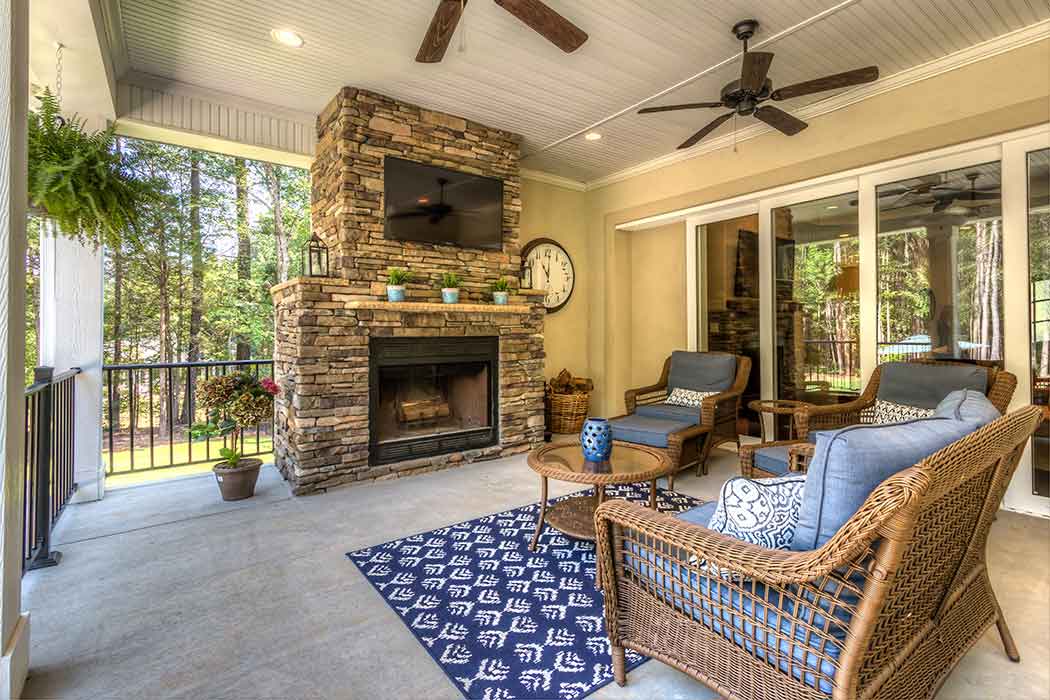
Choosing a custom home builder in Lake Wylie, SC is the single most important decision in your entire project — more important than the floor plan, the lot, or the finishes. The builder controls your money, your timeline, and the quality of the home you’ll live in for decades.
Pick well and the project is a high point of your life. Pick poorly and it becomes a lawsuit. As a custom home builder in Lake Wylie, SC with 30+ years in the Charlotte and York County market, we’ve inherited too many projects from builders who shouldn’t have been hired.
This guide gives you the 12 questions we’d want homeowners asking us — including the uncomfortable ones. If this is your first build, pair this checklist with our first-time buyer's roadmap for Lake Wylie, which walks through the full process from lot search to move-in. For a broader rundown of what separates the top firms in this market, see our overview of the best custom home builders in Lake Wylie, SC. And if your project is a full renovation rather than new construction, the same vetting discipline applies — our whole-home renovation cost guide for Charlotte, NC pairs realistic budgeting with the contractor questions that matter most.
What Should You Verify Before the First Meeting: Licensing and Legitimacy?
Before meeting any builder, verify their South Carolina Residential Builders Commission license is active and in their name, confirm current liability insurance and workers' comp, and check BBB, Google, and Houzz reviews for complaint patterns. A legitimate builder with decades in the Lake Wylie market will have a visible, checkable track record.
Everything starts with license verification. South Carolina requires residential builders to hold an active license issued by the SC Residential Builders Commission. The license must be in the builder’s name (not a vague “general contractor” credential) and must be current. Same for North Carolina licensing if they also build across the state line — NC is regulated by the NC Licensing Board for General Contractors. If you’re still deciding between hiring a dedicated custom home builder or a general contractor for your project, see our breakdown of custom home builder vs. general contractor in Lake Wylie for when each makes sense.
While you’re at it, pull the builder’s name through the BBB, check Google and Houzz reviews, and search their business name plus “lawsuit” or “complaint.” Not every negative result is a real problem, but patterns are. A legitimate custom home builder with 30+ years in Lake Wylie should have a visible track record, not a brand-new LLC with no history.
- Verify SC license number at llr.sc.gov/rbc.
- Verify NC license if they build on both sides of the border.
- Check BBB, Google, Houzz, and Google “business name + complaint”.
- Confirm liability insurance and workers’ comp are current — ask for certificates.
What Are the 12 Questions to Ask Every Lake Wylie Custom Home Builder?
The 12 questions below cover local experience, real project references, allowance transparency, project management load, change order process, backlog timing, payment schedule, warranty terms, subcontractor relationships, lot-specific permitting knowledge, delay procedures, and pricing structure. Asking all 12 before signing surfaces most of the problems that turn into disputes mid-build.
1. How long have you built in the Lake Wylie, SC market specifically?
Local experience matters more than total years in business. Lake Wylie has its own permitting quirks, HOAs, lakefront regulations, and soil conditions. A builder with 25 years in Charlotte but zero Lake Wylie projects is still learning on your dime.
2. Can I see three custom homes you’ve finished in the last 18 months?
Not model homes. Not spec homes. Actual custom projects completed for clients. Ask for addresses, then drive by. Ask for the clients’ phone numbers (a confident builder provides these willingly) and call them.
3. What’s included in your contract price vs what’s an allowance?
“Allowances” are where most custom projects go over budget. Cabinet allowance of $25K sounds fine until the cabinets you picked cost $55K. Ask for a written list of every allowance line item and what’s fixed-price. A good custom builder provides realistic allowances based on the finish level you discussed — not lowball numbers to make the contract look cheaper.
4. Who is the project manager on my build and how many other active projects do they have?
The person who sold you the home is rarely the person who’ll actually run it. Meet the project manager before signing. Three active projects per PM is a healthy load; six is stretched; ten is a disaster waiting to happen.
5. How do you handle change orders?
Every custom project has change orders — that’s normal. What matters: written change orders with cost and schedule impact, signed before work proceeds, and added to the contract. Builders who “just make it work” verbally will hand you a surprise at closing.
6. What’s your current build backlog and when could we break ground?
A good Lake Wylie custom builder is usually 3–6 months out on start dates. If they can break ground next week, that’s a red flag — either they have no work or they’ve lost clients. If they can’t start for 18+ months, the backlog may be unmanageable for their team size.
7. Can I see a sample of your change order process and payment schedule?
Payment schedule should tie to completed milestones (foundation poured, framing complete, drywall hung, final CO) not calendar dates. Front-loaded contracts (where the builder collects 40%+ at contract signing) are a major warning sign.
8. What warranty do you offer and how do warranty calls actually work?
SC requires a 1-year workmanship warranty minimum and a 2-year mechanical warranty on new construction. Good builders offer longer — often 2 years workmanship and 10 years structural. More important than length: do they answer the phone in year two? Ask past clients.
9. Who are your subcontractors and have you worked with them for at least 3 years?
A builder’s quality is determined by their subs. Framers, HVAC installers, and finish carpenters who’ve worked with the same GC for 5+ years are a huge positive signal. New or unknown subs on every project often indicates turnover or payment issues.
10. How do you handle lot-specific issues like Duke Energy shoreline permits or York County septic review?
Specifically for Lake Wylie waterfront and rural lots, the builder needs to know these processes cold. If they give you a blank stare at “Duke Energy Shoreline Management Plan,” they haven’t built a waterfront Lake Wylie home — move on. See our lakefront custom home guide for the waterfront-specific process.
11. What’s your procedure if a subcontractor doesn’t show up or a delivery is late?
Delays happen. What matters is how they’re handled. Listen for a specific process — secondary sub relationships, stocking key materials early, weekly schedule reviews. Vague answers (“we just work through it”) mean there’s no real system.
12. Will you commit to a Not-To-Exceed price or fixed price, and what’s your fee structure?
Custom builders work on three common models: fixed price, cost-plus with percentage fee, or cost-plus with fixed fee. Each has trade-offs. Fixed price is most predictable but requires firm specifications up front. Cost-plus is most transparent but requires trust and active client oversight. No right answer — but the builder should explain their model clearly and consistently.
What Red Flags Should End the Conversation With a Builder?
Walk away from any builder who pressures you to sign quickly, demands cash or a large down payment, hesitates to provide references, handles change orders verbally only, or offers no written contract or specific answers about their process. Even one of these red flags is reason enough to keep interviewing other builders.
- Pressure to sign fast — “We have another client interested, we need an answer this week.” Custom home decisions shouldn’t be rushed.
- Cash-only or large down-payment demands — Anything above 10% at contract signing is aggressive.
- Reluctance to provide references — A confident builder hands over three phone numbers on request.
- Verbal-only change order policy — Always, always get changes in writing.
- No written contract or generic online template — Custom home contracts need custom clauses.
- Negative responses from past clients — Even one serious complaint warrants a deeper look.
What Does a Good Custom Home Contract Actually Include?
A solid custom home contract includes a complete scope of work, a detailed allowance schedule, a milestone-based payment schedule, a written change order procedure, clear warranty terms, insurance and lien protection requirements, and a dispute resolution clause. Having an attorney review the contract before signing is a small cost relative to the size of the commitment.
Once you’ve narrowed to a finalist, the contract review phase matters as much as the selection. Have a real estate or construction attorney read the contract before signing — $400–$800 legal review fee protects $1M+ in construction commitment. Items we expect to see in every custom home contract:
- Complete scope of work with plans and specifications attached as exhibits.
- Detailed allowance schedule for every variable-cost item.
- Payment schedule tied to verifiable milestones, not calendar dates.
- Written change order procedure with required signatures before work begins.
- Warranty terms (workmanship, mechanical, structural).
- Insurance and lien protection requirements for the builder and subs.
- Dispute resolution clause (mediation before litigation).
- Substantial completion criteria and punch list procedure.
Why Does Pre-Construction Serve as a Relationship Test?
The 2 to 4 months between signing and breaking ground reveal more about how a builder operates than any reference call, since this is when plans get finalized, permits get secured, and long-lead items get ordered. A chaotic pre-construction phase with missed meetings and unanswered emails is a strong predictor of a chaotic build.
The 2–4 months between signing and breaking ground tell you more about a builder than any reference call. Good builders use this time to lock in plans, finalize selections, run engineering, secure permits, and pre-buy long-lead items (windows, appliances, custom cabinetry). If the pre-construction phase feels chaotic — missed meetings, unanswered emails, shifting timelines — active construction will be worse.
Our own pre-construction process is documented on the CDG Carolinas pre-construction consultation page, and we walk new clients through it explicitly before any contract gets signed.
What Four Questions Should You Ask When Talking to References?
Instead of asking if a past client was happy, ask whether the final price stayed within 5% of the contract, how the builder handled a mid-project problem, whether the project manager was consistently responsive, and whether they would hire the builder again. These four questions surface the honest details that generic satisfaction questions miss.
When you call past clients, skip “were you happy?” — everyone says yes. Ask these instead:
- “Was the final price within 5% of the original contract?” — If no, ask what drove the variance.
- “How did the builder handle a problem that came up mid-project?” — Every project has one; how it was handled matters.
- “Was the project manager responsive — usually same-day on a text?” — Communication failures are the #1 client complaint.
- “Would you hire them again if you built another house tomorrow?” — The most honest question you can ask.
Frequently Asked Questions
How many builders should I interview before choosing one?
Three is the sweet spot. One gives you no comparison; five dilutes your attention. Vet carefully, interview thoroughly, pick the best fit.
Should I pick the lowest bid?
Almost never. The lowest bid usually means incomplete scope, low allowances, or a builder who’ll hit you with change orders. Pick the most complete, most transparent bid — often it’s not the cheapest.
What does a builder consultation typically cost?
Initial consultations should be free. Detailed pre-construction services (site analysis, preliminary plans, budget development) often carry a fee ($2K–$10K) that’s credited back at contract signing if you hire the builder.
Is it okay to negotiate a custom home builder’s contract?
Yes — reasonable. Most builders expect negotiation on payment schedule, allowance amounts, and warranty terms. Don’t negotiate on lien protection, insurance, or licensing requirements — those protect you.
Start With a Real Conversation
If you’re evaluating custom home builders in the Lake Wylie, SC area — we’d welcome the chance to be one of your three interviews. Call (704) 619-6293 or send us a note through our contact page. Bring your questions, your lot details, and any plans you’ve started.
We’ll be honest about what the project takes — including whether we’re the right fit. Also serving Fort Mill, SC and Rock Hill, SC.
Reference: The SC Residential Builders Commission maintains public license verification, complaint history, and disciplinary records for every licensed residential builder in South Carolina — always run your finalists through it before signing.
One more thing worth doing before you sign anything: ask each finalist how they would handle your specific lot, not a generic Lake Wylie build. A builder who can speak in detail about your street, your HOA's architectural review board, or the septic and soil conditions on your side of the lake is telling you something a polished sales pitch cannot. Builders who have only worked a handful of miles away in Charlotte but never in York County specifically may still be a fine choice, but they should be upfront about the learning curve rather than implying they already know the terrain. The homeowners who end up happiest with their custom build are almost always the ones who asked pointed, sometimes uncomfortable questions before they signed — not the ones who assumed a friendly first meeting meant a smooth eighteen months ahead.