
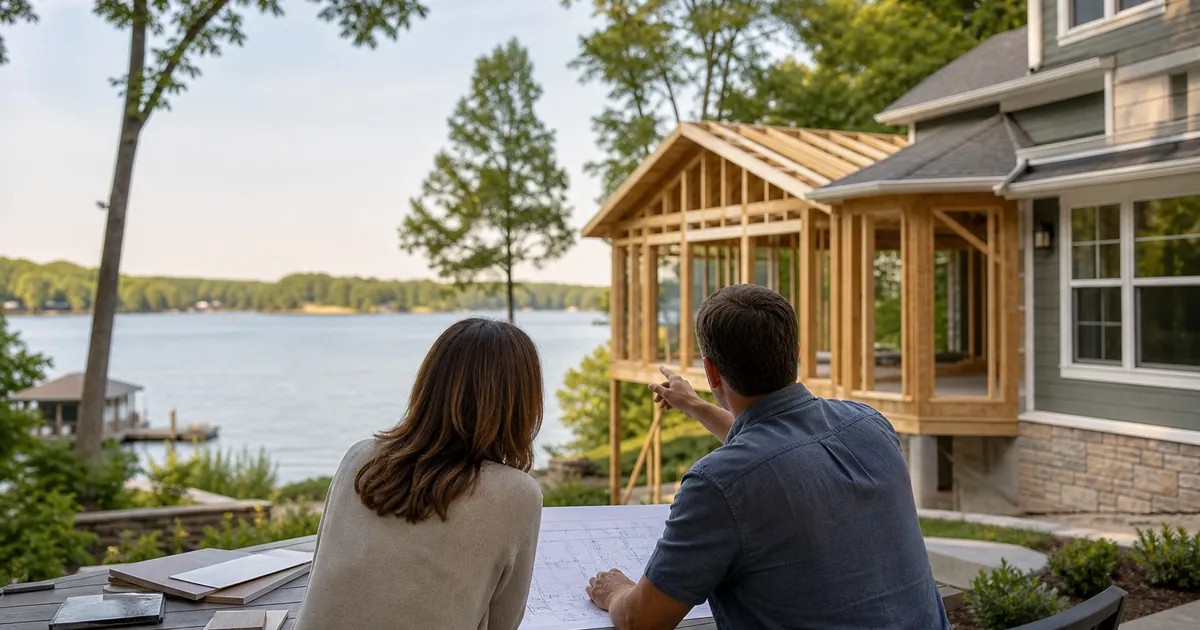
Before choosing a home addition contractor, ask how the team will define the project, review the site, explain costs, and handle approvals and schedule changes. In Lake Norman, NC, confirm which local authority applies to your property. Clear answers can help you compare proposals and decide what to check next.
What should you ask a home addition contractor first?
Start with questions that reveal how the contractor understands your goals and plans to clarify the work. Ask what details are still unknown, who will answer your questions, and how decisions will be recorded. A home addition planning guide and home addition meeting preparation can help you prepare.
Describe how you want to use the new space. A bedroom, work area, or larger family room may call for different choices. You do not need every finish picked before an early discussion. You do need a shared picture of the main goal.
Ask the contractor to explain what is included in the proposed work and what remains undecided. Request plain language rather than broad labels. For example, ask what a listed design, review, or construction task covers. Keep a note of answers so you can compare them later.
Use these questions to guide the first conversation. Ask who will be your main contact and how you will receive updates. Find out how the team handles questions that affect scope, cost, or timing. Confirm which answers will appear in writing before you make a commitment.
- Ask the contractor to restate your main goal for the added space.
- Ask which project details need more information before a proposal can be clear.
- Ask how the team will record choices, open questions, and later changes.
How can you check whether the proposed scope fits your needs?
A useful scope explains the planned work in terms you can review, including what is included, excluded, and still uncertain. Ask how each part supports your goal, then note decisions that need another discussion. The addition planning guide and estimate comparison questions can help you compare scope details.
Read the proposal alongside your notes from earlier talks. Look for clear descriptions of the rooms or areas involved and the work each description covers. If a phrase could mean several things, ask for an example or a more specific written note.
Ask what assumptions shape the proposed scope. The contractor may need more information before some choices can be described. Ask what must be confirmed, who will confirm it, and when you should expect an answer. Do not treat an open item as settled.
A change in one part of the plan can affect other choices. Ask how the contractor will show the effect of a proposed change before you approve it. A written record can help everyone track what changed, why it changed, and which parts still need review.
Keep your own list of priorities. Separate items that are essential from items you might change later. This helps you discuss tradeoffs without losing sight of the reason for the addition. It also gives you a useful way to review a revised proposal.
What should you ask about the property and local review?
Ask how the property and the planned work will be reviewed, and which local authority should answer questions about your address. Requirements can depend on jurisdiction and project details. Mecklenburg County describes residential plan review context, but says the applicable jurisdiction and project requirements must be checked. See the addition planning guide and Mooresville planning guide.
Do not assume that a nearby city or county process applies to your home. Lake Norman covers places with different local boundaries. Ask which authority handles questions for your specific property, then confirm that answer with the authority itself.
Mecklenburg County's Residential Plan Review page offers county plan review context. It does not establish the requirements for every Lake Norman address or for your specific project. The county directs readers to check jurisdiction and project requirements.
Ask the contractor what information they need to discuss the site and proposed work. Ask who will confirm any review steps and how you will learn about items that could change the plan. Keep authority guidance separate from a contractor's description of its own work.
You can also ask whether any site questions remain open before the scope is set. Do not treat a conversation or early document as an approval. If a local decision matters, seek confirmation from the authority responsible for your property.
How should you compare estimates and open cost questions?
Compare estimates by checking what each one describes, excludes, and leaves unresolved. A lower or higher total alone cannot show whether the proposed work matches your needs. Ask for clear notes on assumptions and changes. The estimate comparison guide and addition cost planning questions offer related planning angles.
Read each estimate in the same order. Compare the described work, listed materials or choices, items not included, and questions that still need an answer. If one estimate uses broad wording, ask for more detail before treating it as comparable to another.
Ask how the contractor will explain a change that affects the planned work or expected cost. Find out what information you will receive before deciding whether to accept that change. Keep a record of the proposed revision and your decision.
Do not guess what an unclear line means. Ask who can explain it and whether the answer can be added to the written estimate. If an item depends on a future review or choice, ask what is known now and what remains open.
Your own priorities can guide the comparison. Mark which parts matter most to your goal and which choices could change. This can help you ask focused questions without assuming that every estimate covers the same work.
- Compare the work descriptions before comparing the totals shown in each estimate.
- Ask each contractor to explain exclusions and assumptions in plain language.
- Record which answers could change the scope or cost of the proposed work.
What schedule and communication details belong in your discussion?
Ask how the contractor will describe the planned sequence, share updates, and explain changes to expected timing. A schedule is easier to assess when open items and decision points are visible. The meeting preparation guide and addition planning guide can help you organize these questions.
Ask what the proposed schedule includes and which parts depend on choices or reviews that are not complete. Avoid treating an early estimate of timing as fixed when key details remain unknown. Ask how updates will be shared as the plan develops.
Find out how often you can expect to discuss progress and who will provide those updates. Ask how urgent questions should be raised. The contractor should explain its communication process without leaving you to guess whom to contact.
Ask how schedule changes will be described and recorded. You can request an updated written plan when a decision affects the sequence or timing. This makes it easier to see what changed and which next steps remain.
Before moving ahead, write down the communication details you understand. Note any gaps that need an answer. A clear record can help you compare how each contractor plans to keep you informed, without assuming that every project follows the same timeline.
How can you plan for home life during the work?
Talk through how the proposed work could affect daily routines, access, and the parts of the home you use. Ask what the contractor knows and what remains uncertain. The addition planning scenario and home addition planning guide can help you think through household needs.
Explain which routines matter most to your household. You might need quiet periods, access to certain rooms, or a way to plan around work or care duties. Ask whether the proposed work raises questions about those needs and how the team will discuss them.
Do not assume that every home will have the same disruptions. The details depend on the property, project scope, and work plan. Ask the contractor to describe expected effects in plain terms, while noting which details cannot be known yet.
Ask how questions about access, stored items, and household schedules should be raised. Find out who will discuss those topics with you and how any agreed plan will be recorded. Do not rely on a casual conversation for details you need to remember.
The U.S. EPA's remodeling guidance discusses general indoor environmental concerns. It is not an assessment of your home or a project-specific plan. If you have a particular indoor concern, ask an appropriate qualified professional or relevant authority what guidance applies.
- List the routines that your household wants to protect during the work.
- Ask how the proposed work could affect access to rooms you use.
- Record any household needs that require a clear plan or follow-up.
What should you confirm before choosing a contractor?
Before choosing, review the written scope, open questions, communication plan, and any items that need confirmation from a local authority or qualified professional. Ask for time to understand the terms. The contractor hiring checklist and contractor option comparison offer useful follow-up topics.
Make sure you understand what the written agreement says about the planned work and how changes are handled. If a term is unclear, ask for an explanation before signing. Consider seeking independent advice when a contract term raises a legal question.
Confirm who will answer project questions and how you can reach that person. Ask how decisions will be documented and how you will receive revised information. Make sure the process fits the level of detail you need to make informed choices.
Check that open items are plainly named rather than hidden in broad language. Ask which items need your decision, which need more information, and which depend on outside review. You should know what remains unsettled before relying on the plan.
You can compare contractors without rushing to a choice. Review your notes after each conversation and ask follow-up questions where answers differ. Keep statements about experience, credentials, insurance, and past work separate from assumptions, and verify any such detail directly.
The City of Charlotte's Individual Residential Lot Reviews page describes a Charlotte lot review process only. It does not establish a permit or approval for a particular project, or requirements for every Lake Norman address. Check with the authority for your property.
Questions about next steps? Call CDG Carolinas at (704) 619-6293 or review services.
Frequently Asked Questions
What information should I gather before the first contractor meeting?
Write down your main goal, the spaces involved, and the questions you already have. Bring any records or plans you can readily access, but do not assume they answer every site or review question. Note what you do not know. That list can help the contractor explain what needs more detail before discussing a clear scope.
Should I choose a contractor before the project scope is final?
You can discuss a project before every choice is settled, but keep early ideas separate from agreed work. Ask what details remain open and how they could affect a later proposal. Before you commit, review the written scope and terms. Seek qualified help for legal questions about a contract.
Who can tell me which review rules apply to my Lake Norman property?
Start by identifying the local authority responsible for your address, then ask that authority about the relevant review process. Do not assume that a nearby city or county page applies to your property. A contractor may explain its own process, but the responsible authority is the source for jurisdiction-specific requirements.
How can I compare two proposals when some details are missing?
List the missing details side by side and ask each contractor the same questions. Compare the described work, exclusions, assumptions, and open decisions before comparing totals. If one answer remains unclear, ask for written clarification. Do not assume that similar headings mean the proposals cover the same work.
What should I do if a contractor gives a verbal answer that matters?
Ask for important details to be put in writing, especially when they affect scope, cost, schedule, or a decision you must make. Keep your own dated notes from conversations. If the answer involves local requirements, confirm it with the authority responsible for your property rather than relying on an informal summary.
Sources
- Residential Plan Review, Mecklenburg County
- Addressing Indoor Environmental Concerns During Remodeling, U.S. EPA
- Individual Residential Lot Reviews, City of Charlotte
Call (704) 619-6293 to talk through next steps.