
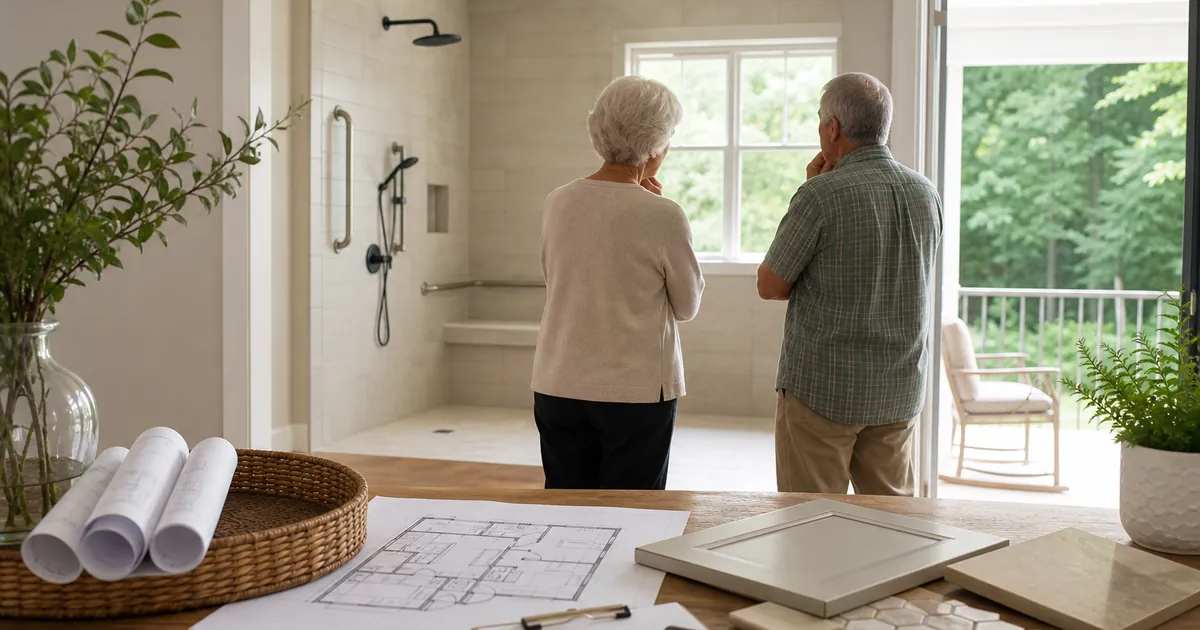
Aging-in-place remodeling costs depend on the home's current layout, the work chosen, and the details of each proposal. In Fort Mill, SC, start by listing daily needs, then ask contractors to explain what each estimate includes. Check payment and insurance questions with the right provider before making decisions.
What shapes the cost of aging-in-place remodeling?
The total cost depends on the work included, the home's existing layout, and any conditions found during planning. A clear scope makes estimates easier to compare. Start with the aging-in-place planning guide and remodel planning first steps to sort needs from possible upgrades.
A project can include one change or several connected changes. The more work included, the more details need review. Existing room layouts, surfaces, and systems may affect what a contractor proposes. Ask for an estimate that names each task and says what it leaves out.
Some needs may be clear now, while others need more discussion. A proposed change can affect nearby areas or add work that was not part of the first conversation. Ask how the contractor will handle a change in scope, and request written updates before approving added work.
Treat early cost discussions as planning, not a final price. The site facts provided for CDG Carolinas do not list specific remodeling services or pricing. Confirm which work the company can consider, what the estimate covers, and what decisions remain open. Do not assume a suggested feature is included unless the written scope says so.
For general indoor-environment topics during remodeling, the U.S. EPA offers information about concerns to consider. That page does not assess a particular home or project. Ask the contractor what conditions they plan to review and whom to contact if a concern needs expert assessment.
Which project choices can change the budget?
The scope, materials, and amount of work can affect a project's budget, but each home needs its own review. Compare choices by what they address and what remains uncertain. The remodeling options comparison and aging-in-place planning checklist can help organize that discussion.
A useful estimate describes the proposed work in plain terms. It should help you see which tasks are included, which choices are still pending, and what could change the scope. If two estimates use different descriptions, ask each contractor to clarify the same set of needs before comparing them.
You can also separate needed changes from optional ideas. This does not decide what is right for your household. It helps show which choices matter most to the people who use the home, and which ones can wait for more information. Keep the list open until everyone involved has had a chance to review it.
The table shows questions to ask, not set prices or required project steps. Costs can vary with the home and the written scope. Ask each contractor to explain any item you do not understand. If a choice depends on a technical or safety judgment, seek guidance from a qualified professional rather than guessing.
| Choice | What to clarify | Why it matters |
|---|---|---|
| One area or several | Which rooms and tasks are included? | The work may differ in scope. |
| Materials or finishes | Which selections are named? | Open choices can change the proposal. |
| Known or uncertain conditions | What needs review before work is set? | Unknowns may affect later decisions. |
| Current work or later phase | What is included now? | Phasing can change the scope. |
How should you compare remodeling estimates?
Compare estimates by checking whether they describe the same work, choices, and limits. A lower total may leave out tasks that another proposal includes. Use the questions for remodel planning and remodel priorities to consider to prepare a shared list for each conversation.
Start with the written scope, not the largest number at the bottom. Check whether each estimate covers the same rooms and tasks. Look for named materials or selections, work that is excluded, and items still awaiting a decision. If a detail is missing, ask for it in writing.
Ask how the contractor will explain changes if new information comes up. Find out who will review a proposed change with you and how you will see its effect on the scope. Do not rely on a verbal summary when the written proposal can be made clearer.
It can help to use one list of questions for every estimate. That gives you a fairer way to spot gaps. It also helps family members or other decision-makers discuss the same facts. Take time to read each proposal and ask for plain explanations of terms you do not know.
Before choosing, confirm which parts of the proposal are firm and which remain open. Ask what decisions you need to make next, and what information the contractor needs from you. If estimates still differ, ask each provider to explain the difference rather than treating the totals as directly comparable.
- Ask each contractor to describe the same rooms, tasks, and desired changes.
- Check which materials or finish choices the written estimate names.
- Note work that is excluded, pending, or subject to later review.
- Request written explanations for unclear terms or differences between proposals.
What should you ask about insurance and payment?
Insurance coverage and payment options depend on your policy, situation, and provider. Do not assume a remodeling cost will be paid or reimbursed. Use the planning guide for aging in place and first steps for remodel planning to make a list of questions before contacting your insurer.
Call your insurer or plan administrator before relying on coverage. Ask whether the specific work you are considering may be eligible, what documents they need, and how they make a decision. Get the answer in writing when possible. A contractor's estimate explains proposed work, but it does not decide what an insurance plan covers.
Ask about limits, exclusions, timing, and any steps required before work begins. The terms can differ among policies and plans, so a general article cannot settle your case. If the answer is unclear, ask the provider to explain it or direct you to someone qualified to review your coverage.
For payment, ask the contractor to explain when payments are due and what each one covers. Review those terms against the written scope. If you plan to use a loan, benefit, or other funding source, ask that provider about its rules and timing. Avoid counting on funds until the responsible provider confirms them.
Keep a record of calls, emails, estimates, and decisions. Note who gave each answer and when. This makes it easier to follow up if details change. Do not share sensitive financial or health information with a contractor unless you understand why it is needed and how it will be used.
How can you plan the work in useful stages?
A staged plan can help you discuss priorities and keep open choices visible, but it does not set a safe order for every home. Review needs with the people affected and qualified professionals. The remodel planning checklist and sample planning story offer ways to organize early conversations.
Begin with the daily tasks that prompted the conversation. Note where people feel uncertain or want a change, without assuming a particular fix will work. Ask the people who use the space what matters to them. If professional input is needed, include that in the planning process before settling on a design.
Next, group ideas by room or by the problem they address. Mark which items seem important now, which need more information, and which are optional. This list is for discussion, not a technical assessment. A qualified professional should review questions that involve building, safety, or other specialized decisions.
Then ask how proposed work might connect across rooms or affect the scope. A contractor can explain the work they are proposing, while the appropriate qualified professional can address questions outside that role. Write down what each person can confirm and what still needs review.
Before agreeing to a stage, check how it fits the full plan. Ask whether later work could affect choices being made now, and whether any decisions should wait for more information. Keep the plan flexible until the people responsible for each decision have reviewed their part.
- Write down the daily tasks and spaces that led you to consider changes.
- Ask household members which concerns matter most to them right now.
- Group ideas by room, need, and the information still missing.
- Review technical questions with a qualified professional before setting the scope.
- Record open decisions and confirm who will answer each one.
What should you check before work begins?
Before work begins, review the final written scope, payment terms, open choices, and points of contact. Make sure you understand what has and has not been decided. The first planning steps and remodeling myths and facts can help frame a careful final review.
Read the full agreement and estimate at a pace that lets you ask questions. Check the described work, selected materials, exclusions, and terms for changes. If anything differs from what you discussed, ask for a written correction before you approve the document.
Confirm who will answer questions during the project and how updates will be shared. Ask what information or choices are still needed from you. Avoid assuming a start date, work sequence, or completion time unless the written documents state it and the responsible parties confirm it.
Think about indoor-environment concerns that may matter during remodeling. The EPA's general remodeling resource can help identify topics to discuss, but it is not a home inspection or project-specific assessment. Ask the contractor what steps apply to the proposed work, and seek qualified advice for concerns outside the contractor's scope.
Local review needs can depend on where a project is located and what it involves. Mecklenburg County's residential plan review information applies to Mecklenburg County, not automatically to Fort Mill. Check with the appropriate local authority about requirements for your own address and project. Do not treat a page for another jurisdiction as approval or direction for your home.
How can Fort Mill homeowners keep decisions clear?
Fort Mill is the location named for this planning discussion, not a claim about a staffed office or a specific service. Keep local questions tied to your address and project. The remodel planning questions and priority planning ideas can help you prepare for conversations.
Start by writing the project address on your notes and asking which local authority handles questions for that property. Do not assume that a rule, process, or review in another town applies. The City of Charlotte's lot review information, for example, concerns Charlotte lots and does not establish a requirement for Fort Mill.
Ask contractors to distinguish what they know from what needs confirmation. A proposal can describe their planned work, but it cannot replace a decision from a local authority, insurer, or qualified specialist. Keep those roles clear as you gather answers.
For each open issue, write down the question, the person or office that can answer it, and any next step they suggest. Then keep the response with your project notes. This simple record can reduce confusion when different people discuss scope, coverage, and local review.
If the project plan changes, revisit the questions that depend on the changed scope. A new choice can affect an estimate or the information a provider needs. Ask for updated written details rather than relying on an older proposal to describe work that has changed.
- Use the project address when asking local authorities about review needs.
- Keep insurance questions with the insurer or plan administrator responsible.
- Ask contractors to explain only the work and terms in their proposals.
- Save written answers so everyone involved can check the same details.
Questions about next steps? Call CDG Carolinas at (704) 619-6293 or review services.
Frequently Asked Questions
Can I get a reliable cost before the scope is clear?
An early discussion can help you explore ideas, but it may not settle the cost of a defined project. The estimate needs a clear description of the work and any choices that affect it. Ask what information is still missing and request an updated written proposal when those details are known.
Does homeowners insurance pay for aging-in-place changes?
Coverage depends on the specific policy and circumstances. Do not assume that a home update will be covered, reimbursed, or treated in a certain way. Ask your insurer about the exact work, required documents, exclusions, and timing. Request clear answers from the provider that makes the coverage decision.
Should I choose the lowest estimate?
Compare the work described before comparing totals. One estimate may include tasks or choices that another leaves open or excludes. Ask each contractor to clarify differences in writing. Then review the scope, payment terms, and unanswered questions. A price alone does not show whether two proposals describe the same project.
Can I plan the work in more than one stage?
You can ask contractors and qualified professionals to discuss a staged approach. The right plan depends on the home, the proposed work, and the needs involved. Ask how a first stage could affect later choices, and confirm any technical or safety questions with an appropriate qualified professional.
Who can confirm local review requirements for a Fort Mill home?
Check with the local authority responsible for the project's address and ask about the specific work being considered. Requirements can depend on location and project details. Information from another city or county may not apply. A contractor can discuss proposed work, but local authorities answer questions about their own review process.
Sources
- Addressing Indoor Environmental Concerns During Remodeling, U.S. EPA
- Residential Plan Review, Mecklenburg County
- Individual Residential Lot Reviews, City of Charlotte
Call (704) 619-6293 to talk through next steps.